You have not yet added any article to your bookmarks!
Join 10k+ people to get notified about new posts, news and tips.
Do not worry we don't spam!
Post by : Saif Rahman
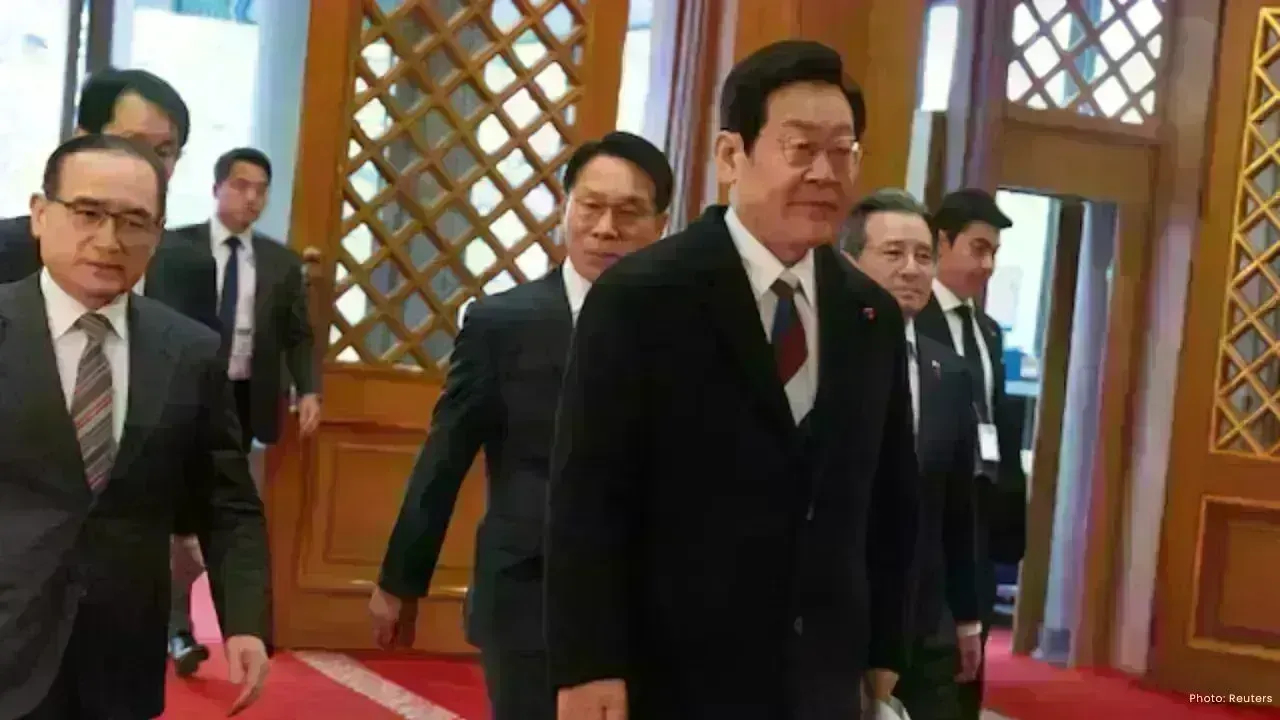
South Korean President Lee Jae Myung has addressed concerns regarding proposed tariffs by the United States on imported semiconductors, cautioning that such tariffs may end up increasing costs for American consumers. During a press briefing in Seoul, Lee emphasized that imposing hefty duties on foreign-made chips would likely inflate prices across the U.S. economy rather than diminish the competitiveness of Asian chip manufacturers.
This statement followed remarks from U.S. Commerce Secretary Howard Lutnick who indicated that chip manufacturers from South Korea and Taiwan might encounter import tariffs as high as 100% unless they expand their production facilities within the U.S. This proposal has sparked widespread apprehension throughout the global technology sector, given that South Korea and Taiwan are leaders in the semiconductor industry.
Lee highlighted that South Korean and Taiwanese firms collectively control approximately 80% to 90% of the global semiconductor supply. Due to this dominance, he explained that any significant tariff would likely be reflected in higher consumer prices. In essence, American consumers and businesses would face increased costs for electronic devices that depend on these chips.
Additionally, Lee noted that South Korea is safeguarded by trade provisions outlined in its agreement with the U.S., designed to ensure fair treatment for Korean chipmakers compared to their international counterparts. He expressed that while they would keep a vigilant eye on unfolding events, he didn’t foresee any immediate risks to the semiconductor sector.
The semiconductor industry is a crucial component of South Korea’s economy. The nation reported a record $709.4 billion in exports in 2025, reflecting a nearly 4% increase compared to the prior year. Exports of semiconductors surged by 22%, driven largely by robust global demand for AI technologies. Notably, chips exported to the U.S. accounted for about 8% of South Korea's total semiconductor exports, with China being the predominant purchaser, followed by Taiwan and Vietnam.
Addressing concerns about the declining South Korean won, Lee mentioned expectations for the currency to recover toward the 1,400 won per U.S. dollar mark in the near future. However, he acknowledged that domestic policies alone may not stabilize currency markets completely. He remarked that the won's fluctuations are also influenced by the Japanese yen, adding that it has held up relatively well compared to some regional currencies.
Apart from economic matters, Lee discussed attempts to revive diplomatic discussions between the United States and North Korea. His administration is leveraging diplomatic avenues to foster dialogue while taking a pragmatic stance towards North Korea’s nuclear ambitions. While Lee recognized that expecting North Korea to entirely relinquish its nuclear arsenal is unrealistic, he suggested that halting further production and exportation of nuclear materials would be a significant milestone.
Up to now, North Korea has dismissed outreach attempts from both President Lee and U.S. President Donald Trump, leading to a stalemate since Trump’s 2019 meetings with North Korean leader Kim Jong Un, which concluded without a resolution concerning sanctions or nuclear disarmament.
President Lee’s statements underscore South Korea’s delicate position—it aims to defend its essential semiconductor industry while also nurturing stable relations with Washington and addressing long-standing security concerns on the Korean Peninsula. With global competition in semiconductor production intensifying, discussions surrounding tariffs are anticipated to stay a critical topic for both nations.






George Russell Wins Dutch GP Sprint, Boosts Mercedes Morale
George Russell wins the Dutch GP Sprint from pole as Mercedes teammate Kimi Antonelli extends his F1

Australia 50/3 After Bangladesh Bowled Out for 64 in Second Test
Australia reached 50/3 after Bangladesh were bowled out for 64 in the second Test, with Mitchell Sta

Jordan Burroughs Returns to Wrestling with 2028 Olympic Dream
Jordan Burroughs returns to wrestling with Real American Freestyle as the Olympic champion eyes a po

Lamborghini Catches Fire on Singapore's ECP, Causing Heavy Traffic
A Lamborghini caught fire on Singapore's ECP, causing heavy traffic and bus delays. No injuries were

Bangkok Airport Duty-Free Area Flooded by Pipe Burst
A burst water pipe flooded the duty-free shopping area at Bangkok's Suvarnabhumi Airport on July 16,
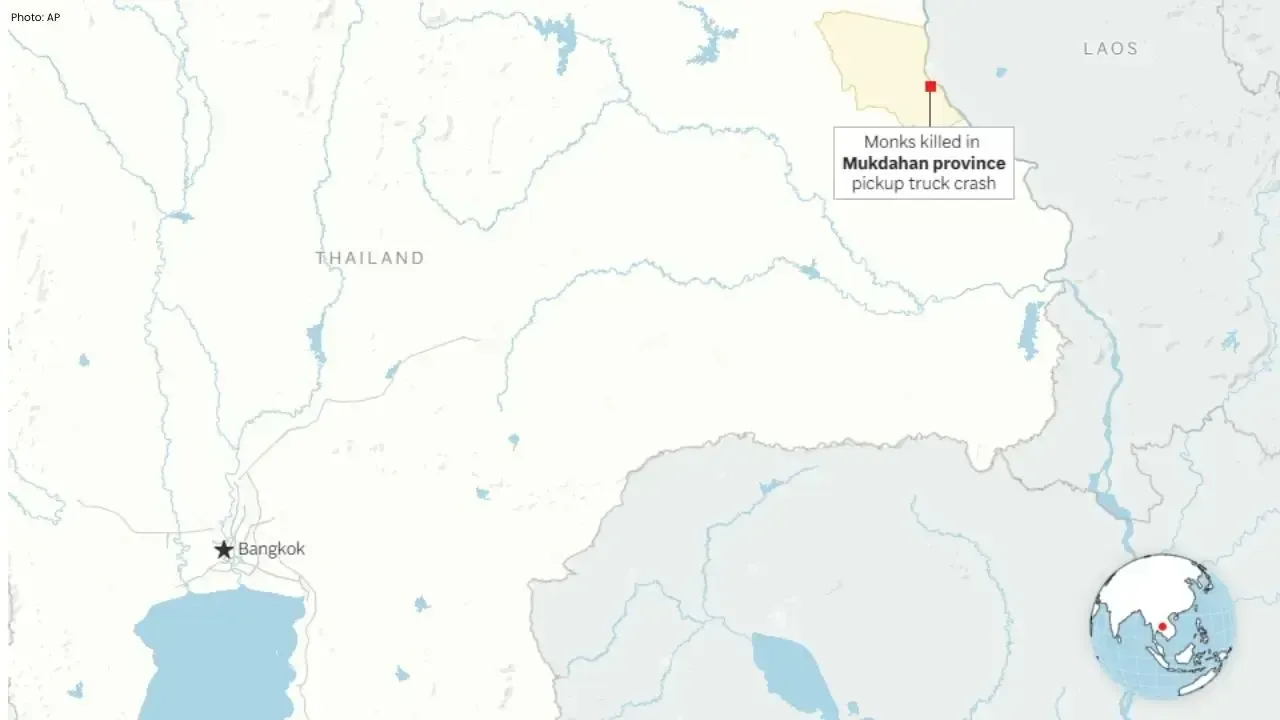
Nine Monks Killed in Thailand Pickup Truck Tragedy
An 11-year-old boy driving a pickup truck crashed into monks during a pilgrimage in northeastern Tha