You have not yet added any article to your bookmarks!
Join 10k+ people to get notified about new posts, news and tips.
Do not worry we don't spam!
Post by : Anis Farhan
Photo: Reuters
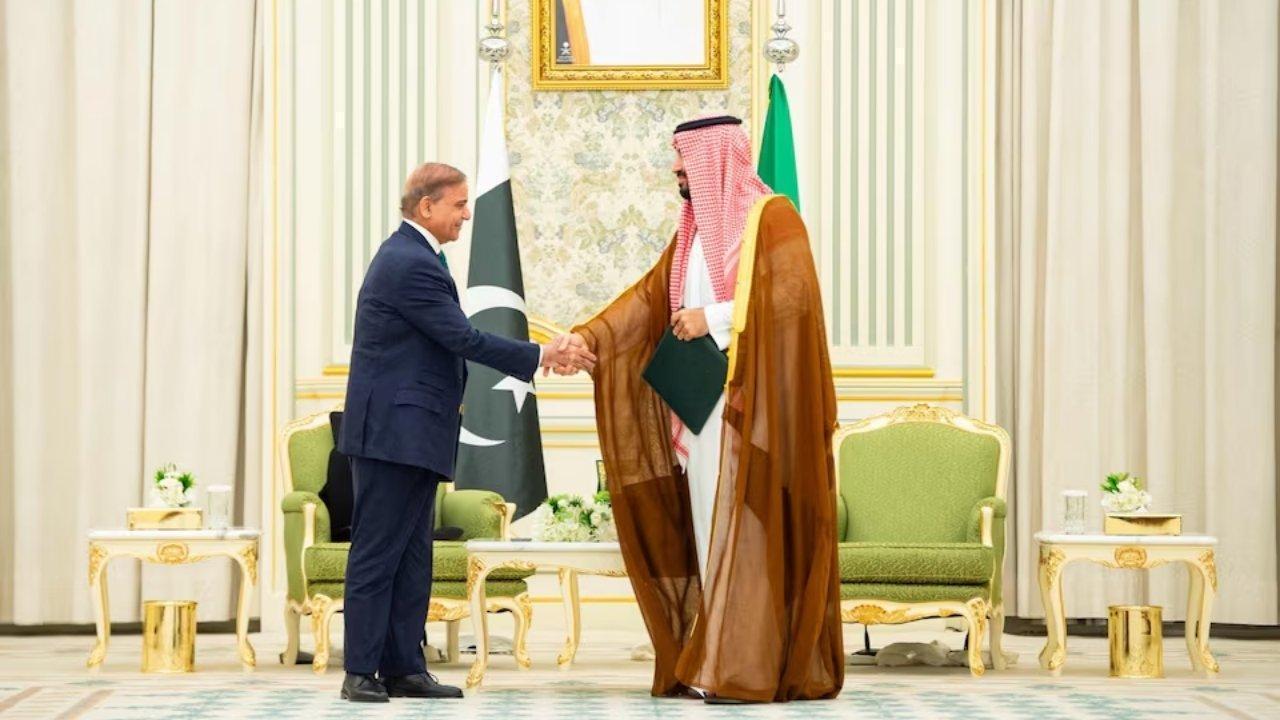
What we’re witnessing is more than just another security agreement. The defence pact between Saudi Arabia and Pakistan marks a significant moment in West Asia politics. For decades, the two countries have had cooperation in various fields—economics, religion, security—but formalising a pact of this magnitude alters the strategic calculus for many in the region, especially for India.
This pact was signed in a climate of anxious geopolitical change. Recent military events in the Middle East, shifting loyalties, and evolving perceptions of external security guarantees have created a new urgency among regional players. For India, which has long navigated a complex relationship with both Pakistan and Saudi Arabia, this is a moment to reassess what’s coming next.
The core feature of the agreement is that both countries will treat aggression against one as aggression against the other. It is a mutual defence confirmation that binds them in shared responsibility for military threats.
It also encompasses deeper military cooperation and joint deterrence. This suggests not only shared strategic planning but possible joint exercises, intelligence sharing, and possibly military logistics coordination.
It has been described by observers as a formalisation of existing ties rather than a completely new alliance. Over time, the two states have cooperated in training, supply, and shared interests; now those ties have been elevated to a treaty-level commitment.
Recent military incidents in the Middle East—particularly airstrikes, diplomatic tensions, and blurred security roles among Gulf states—have raised concerns about the reliability of past security arrangements.
Some Gulf states are reconsidering their dependence on traditional partners. Doubts have grown about how dependable external backing can be in certain conflict scenarios.
Pakistan, for its part, has strategic incentives: security cooperation, financial support, and enhancing its role in a region undergoing fast change. Saudi Arabia similarly seeks reassurance as its regional neighbourhood becomes more volatile.
Strategic & Military Balance
India has long treated its western frontiers and its relations with both Pakistan and Saudi Arabia with careful calibration. With this pact in place:
India will need to factor in that Pakistan now has a formal partner with strong regional influence committing to mutual defence. This could complicate any military calculations in times of crisis.
The spectre of “extended deterrence” looms. While the pact does not explicitly mention nuclear weapons or nuclear guarantees, the presence of Pakistan’s nuclear arsenal in its strategic posture means any instability raises stakes.
Indian defence planning may need to reallocate resources or shift alliance priorities depending on how this pact is operationalised.
Diplomatic Relations
India’s relations with Saudi Arabia have been growing steadily—on energy, trade, and security cooperation. The existence of this pact will test how Saudi Arabia balances its ties with Pakistan alongside its growing cooperation with India.
India will likely engage diplomatically to ensure that its own security concerns are heard in regional discussions. This may mean increased dialogue with Gulf states or efforts to ensure India’s voice is considered in evolving regional security architecture.
Regional Security Architecture
A shift is underway: countries in the Gulf and wider West Asia may seek more formalised defence pacts with like-minded states to counterbalance threats or to hedge bets. India may find itself among states that need to consider deeper security cooperation, possibly through alliances, joint drills, or shared intelligence.
The commitment by Saudi Arabia and Pakistan may prompt others to react—either by forming similar pacts or by strengthening existing ones. For India, this means more complex diplomacy in West Asia and more variables in its foreign policy.
The pact’s practical implementation will matter. Agreements are one thing; logistics, trust, interoperability, timelines are quite another. How the two militaries synchronize, how joint responses are structured, will determine real impact.
India must watch for scenarios where it may be diplomatically isolated if it is not proactive. There could be pressure to choose sides in regional disputes.
Military escalation risk increases. When more parties formally commit to mutual defence, miscalculations can lead to unintended escalation. India needs to maintain strong deterrence while avoiding unnecessary provocations.
Proactive diplomacy: Engage with Saudi Arabia, Pakistan, and other regional powers to clarify how this pact impacts existing agreements and to emphasise that stability matters to all.
Strengthen defence readiness: Monitor shifts in Pakistan-Saudi cooperation, especially in intelligence, logistics, force posture. India should ensure its military is prepared to respond if regional tensions rise.
Deepen strategic partnerships: India could deepen cooperation with Gulf states, Middle Eastern partners, even multilateral forums, to ensure that it has voice and options in unfolding security architectures.
Maintain strategic ambiguity and deterrence: As with many leaders, clarity in posture but flexibility in strategy may help avoid being drawn into unwanted conflict.
The pact is likely to prompt similar moves—a domino effect—among regional states concerned about security shortfalls and external threats.
It may accelerate arms procurement, joint training, even defence cooperation among states that have typically kept distance.
It also raises questions about the role of global powers. External actors may be called on to weigh in, either through diplomatic channels or through security guarantees, which could further complicate regional alignments.
This defence pact between Pakistan and Saudi Arabia is more than just a headline. It is a signal that regional actors are rearranging their alliances in response to shifting threats, uncertain partnerships, and evolving power balances. For India, this means paying attention, planning carefully, and engaging actively. The next few months will reveal how this pact is operationalised—and how India and others respond.
This article is based on information available as of mid-September 2025. Details of the pact’s execution, undisclosed clauses, or future amendments may emerge. Readers are encouraged to follow official statements and expert analyses for updates.






George Russell Wins Dutch GP Sprint, Boosts Mercedes Morale
George Russell wins the Dutch GP Sprint from pole as Mercedes teammate Kimi Antonelli extends his F1

Australia 50/3 After Bangladesh Bowled Out for 64 in Second Test
Australia reached 50/3 after Bangladesh were bowled out for 64 in the second Test, with Mitchell Sta

Jordan Burroughs Returns to Wrestling with 2028 Olympic Dream
Jordan Burroughs returns to wrestling with Real American Freestyle as the Olympic champion eyes a po

Lamborghini Catches Fire on Singapore's ECP, Causing Heavy Traffic
A Lamborghini caught fire on Singapore's ECP, causing heavy traffic and bus delays. No injuries were

Bangkok Airport Duty-Free Area Flooded by Pipe Burst
A burst water pipe flooded the duty-free shopping area at Bangkok's Suvarnabhumi Airport on July 16,
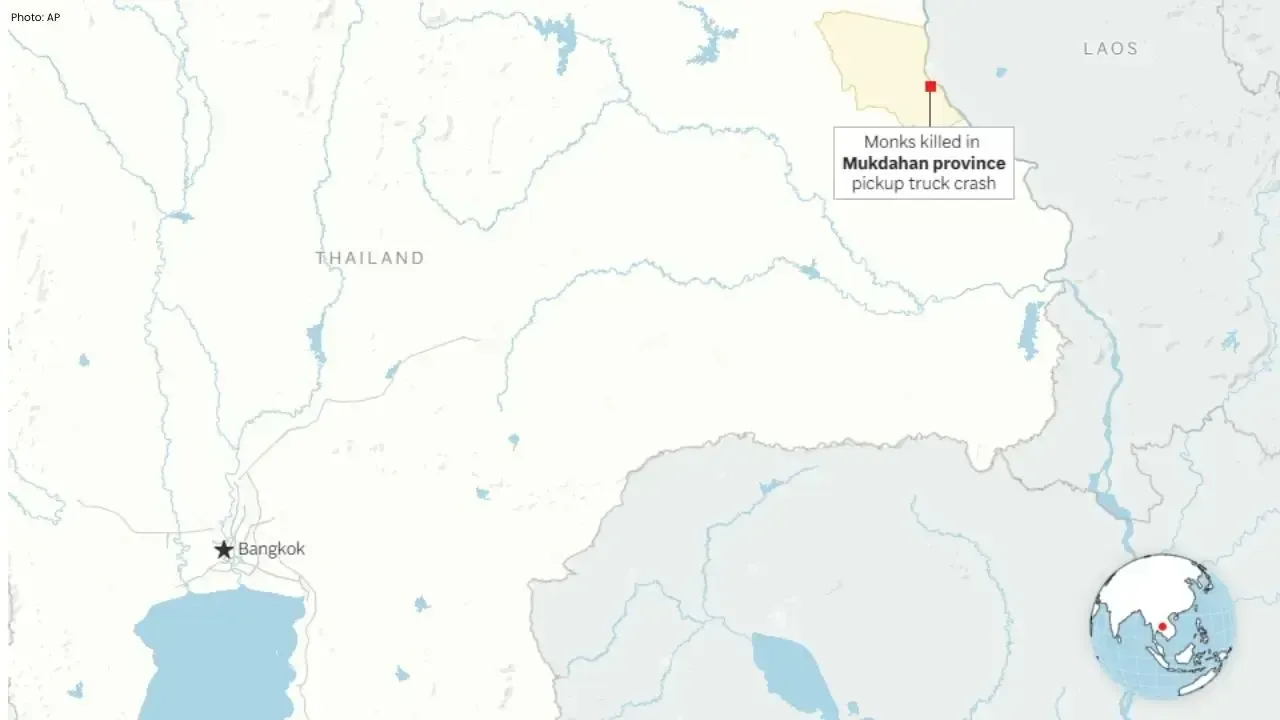
Nine Monks Killed in Thailand Pickup Truck Tragedy
An 11-year-old boy driving a pickup truck crashed into monks during a pilgrimage in northeastern Tha