
You have not yet added any article to your bookmarks!
Join 10k+ people to get notified about new posts, news and tips.
Do not worry we don't spam!
Post by : Saif Rahman
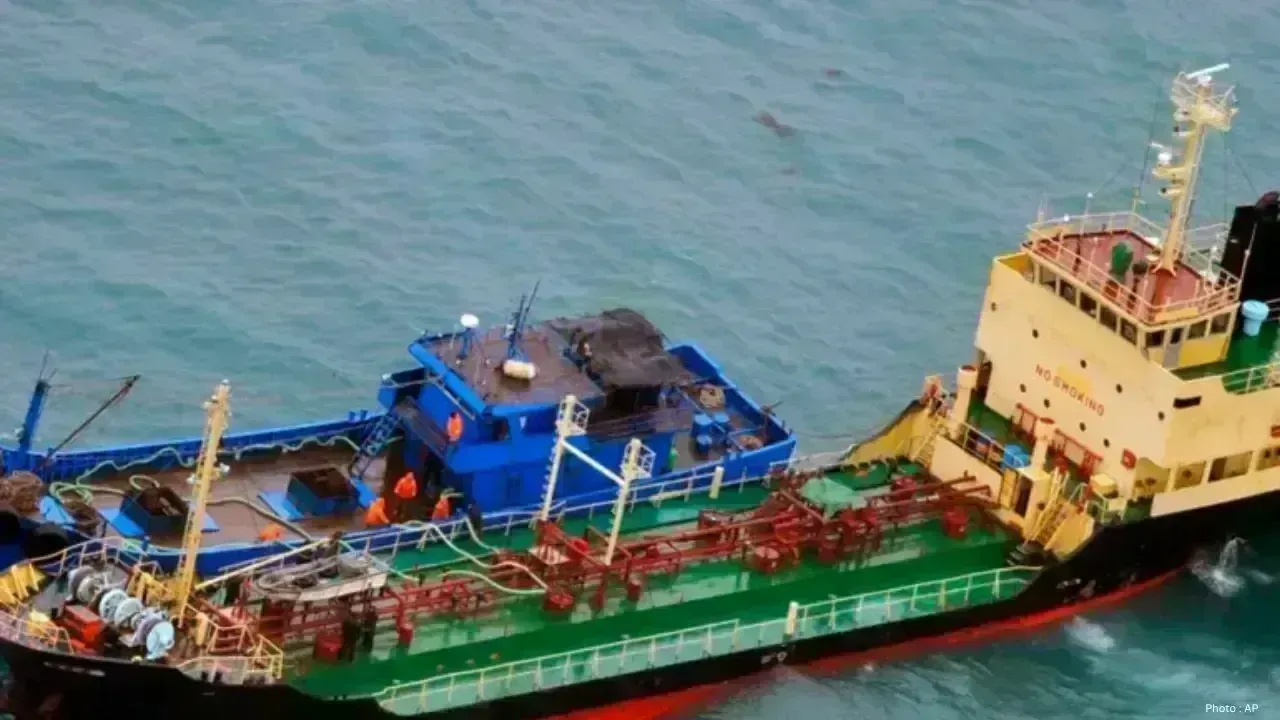
A surveillance mission conducted by a New Zealand spy plane has uncovered what might be a breach of North Korea sanctions in international waters. This development has reignited global scrutiny on the enforcement of international regulations surrounding North Korea.
The aircraft observed atypical interactions between ships, which are suspected of engaging in ship-to-ship transfers—practices often employed to circumvent the restrictions imposed on North Korea.
North Korea has long faced rigorous international sanctions aimed at restricting its access to critical resources that could bolster its weapons programs. However, reports like this indicate that illicit activities may still be occurring.
This operation forms part of a broader coalition of nations dedicated to monitoring and enforcing sanctions. Cooperation among several countries is vital for tracking suspicious maritime activities, especially given the vastness of oceanic territories.
Ship-to-ship transfers present significant hurdles for authorities, as they often occur in remote waters where oversight is limited. This raises the relevance of airborne surveillance and naval patrols in detecting such illegal operations.
The alleged breach underscores the necessity for enhanced monitoring frameworks. While international laws exist, their enforcement demands ongoing effort and collaboration. Without diligent oversight, violations may persist unobserved.
The incident also emphasizes the value of international alliances. Even countries like New Zealand, while not dominant powers, offer critical insights and reports that enrich global intelligence efforts.
Concerns also escalate when sanctions are breached. Non-compliance can undermine the collective global mission to uphold security and peace, as these regulations are designed to mitigate risks.
Moreover, enforcing such measures complicates matters due to geopolitical tensions and vast oceanic expanses. Even with cutting-edge technologies, monitoring every nautical movement remains a formidable task.
Experts advocate for enhanced coordination and technological improvements to address these challenges. More effective tracking, consistent patrol operations, and shared intelligence can significantly diminish violations.
This incident serves as a critical reminder that vigilance is paramount for global security matters. It illustrates how seemingly minor maritime activities can significantly impact worldwide stability.
Ultimately, this occurrence points to broader challenges in the enforcement of international regulations in an intricate world. Continuous vigilance, collaborative efforts, and a steadfast commitment are essential for ensuring adherence to these standards.
As nations unite to tackle these issues, the focus remains on promoting peace, justice, and stability in the global system.










PM Modi Pays Tribute to Mahatma Gandhi, Urges People to Support Khadi
PM Modi pays tribute to Mahatma Gandhi on Gandhi Jayanti and urges citizens to support Khadi and the

Amazon Seeks to Offload $8 Billion in Nvidia Chips to Investors
Amazon plans to move $8 billion in Nvidia chips to investors, using a new financing model to strengt

Samsung Raises Galaxy S26 Prices as Memory Chip Costs Rise
Samsung raises Galaxy S26 prices in South Korea as rising memory chip costs put pressure on smartpho

Lewis Hamilton Calls Singapore Grand Prix One of F1's Toughest Races
Lewis Hamilton discusses the demanding Singapore Grand Prix and brings Plus44 and Almave to Singapor

Denmark's Pandora Opens World's Largest Jewellery Factory in Vietnam
Pandora opens its largest jewellery factory in Vietnam, expanding global production, strengthening s

Gautam Gambhir Questions Batting-Friendly Pitches After India's Record ODI Chase
Gautam Gambhir questions batting-friendly ODI pitches after India’s record chase, calling for a bett

