You have not yet added any article to your bookmarks!
Join 10k+ people to get notified about new posts, news and tips.
Do not worry we don't spam!
Post by : Anis Farhan
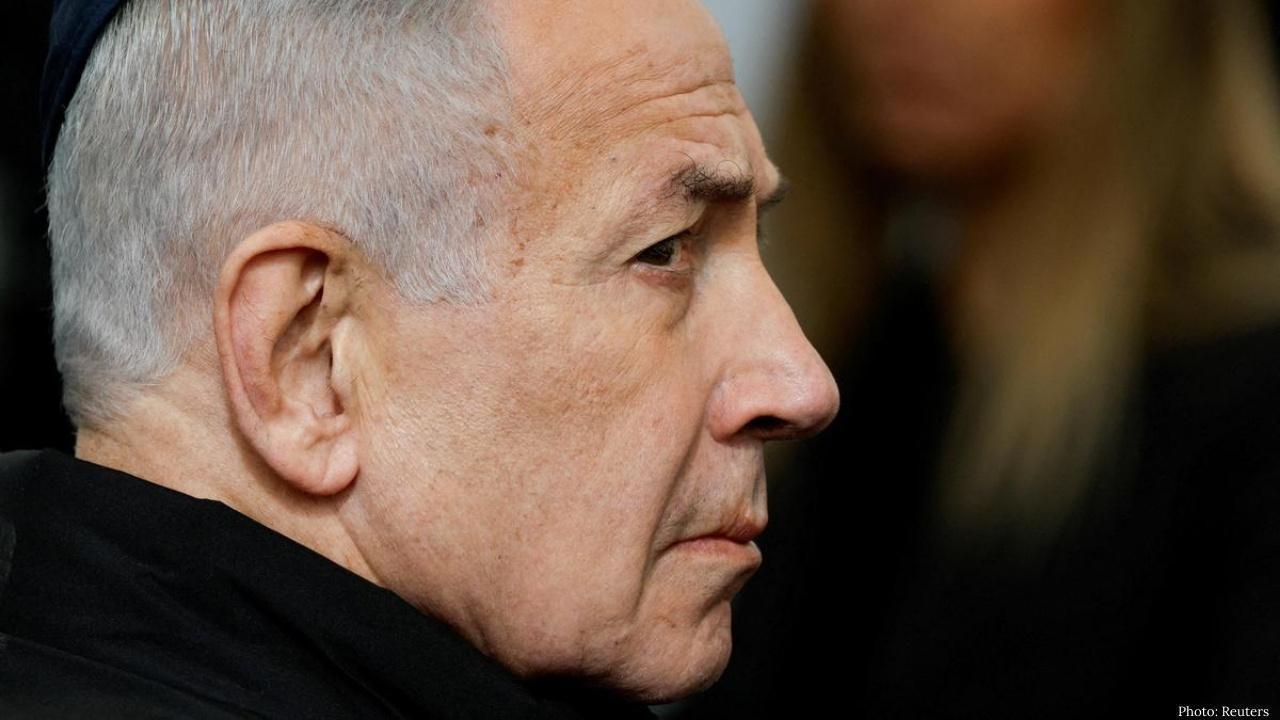
Israeli Prime Minister **Benjamin Netanyahu’s government has taken the unprecedented step of requesting that an Israeli court revoke the citizenship of Palestinian citizens convicted of violent crimes, in what marks the first application of a controversial law enacted in 2023. This move, deeply polarising both domestically and internationally, has sparked intense debate over civil rights, equality before the law, and the future of Israel’s Arab minority — approximately 20 percent of the country’s population.
The case thrust into the spotlight involves at least two Palestinian citizens whose convictions for acts described as terrorism offences have prompted state prosecutors to seek revocation of their citizenship and possible deportation — a measure many analysts see as a defining test of the broader legal framework. Rights organisations warn that such policies could establish a dangerous precedent with far-reaching implications for citizenship rights and minority protections in Israel.
This article examines the background of the law, the specifics of the current legal challenge, the arguments for and against the policy, the broader societal context in which it is unfolding, and what it could mean for Israel’s democracy and civil rights record.
In 2023, the Israeli parliament amended the Citizenship Law to permit the revocation of citizenship for those convicted of certain serious crimes deemed to constitute breaches of allegiance to the state — including terrorism-related offences. Under the statute, individuals convicted of violent acts, particularly those that endanger civilian lives, may have their citizenship stripped and face deportation.
What makes this development particularly significant is that it potentially applies not just to naturalised citizens but to those born with Israeli nationality. This places Israel among a very small number of countries with laws permitting the removal of citizenship from native-born individuals, a move critics say is at odds with international norms that generally prohibit rendering someone stateless.
While other states — such as the United Kingdom and France — have enacted laws permitting the stripping of citizenship from dual nationals in cases involving terrorism, Israel’s potential application to those born within its borders sets it apart in international contexts.
The current controversy began when the Israeli state filed petitions before a district court seeking to revoke the Israeli nationality of two Palestinian citizens convicted of violent crimes. One of the individuals — identified in court filings as Mohamad Hamad, a resident of East Jerusalem — was convicted in 2002 on charges including shootings and trafficking weapons, and served over two decades in prison.
Netanyahu’s legal team argued that Hamad’s crimes, coupled with payments he allegedly received from a Palestinian Authority-linked fund during or after his incarceration, demonstrated a breach of loyalty sufficient to justify revoking his citizenship and deportation to Palestinian-controlled territory.
The government indicates that additional cases are likely imminent, suggesting this is not an isolated application of the law but the first of potentially many similar petitions.
Prime Minister Netanyahu and his supporters argue that the law is a legitimate tool in combating violent extremism and sending a message that serious crimes undermining the state’s security and civic fabric have severe consequences beyond prison sentences. They frame the policy as a security measure, pointing to the gravity of the violent crimes involved and asserting that payments allegedly linked to Palestinian authorities serve to incentivise attacks.
Officials maintain that this mechanism enhances deterrence against terrorism and reinforces the principle that allegiance to the state is a core component of citizenship — a position they argue is especially crucial in the context of regional instability and ongoing security threats.
Opponents of the law, including Israeli and international human rights groups, argue that its application disproportionately targets Palestinian citizens and creates a dual system of justice that treats Jewish and Arab citizens differently. Critics say the law effectively connects the receipt of certain payments — such as social support benefits from Palestinian authorities — with criminal culpability, a linkage they contend is arbitrary and discriminatory.
Hassan Jabareen, director of the Israeli legal centre Adalah, described the enforcement of the law as “a cynical propaganda move” that fundamentally undermines the rule of law by punishing individuals after they have already completed prison sentences. He emphasised that citizenship is the foundation for all civil rights and that stripping it away violates core democratic values.
Human rights advocates point out that this policy also risks violating international conventions, which generally forbid making individuals stateless — an outcome possible if citizenship is revoked without granting another nationality. Countries that revoke citizenship are typically careful to ensure that individuals hold dual nationality; making someone stateless runs afoul of widely recognised human rights norms.
Approximately one in five Israeli citizens is Palestinian, many of whom trace their families’ roots in the region back generations. Despite formal citizenship, many Arab Israelis have long complained of systemic discrimination in housing, employment, resource allocation and public services. These grievances have occasionally spilled into protests, legal challenges and broader political mobilisation.
Rights groups report that Arab citizens of Israel frequently face legal and social challenges that Jewish citizens do not, including higher rates of police scrutiny and disparities in legal outcomes. These concerns have led to accusations that laws like the one now being tested risk deepening divisions and inequality, cementing a perception of second-class citizenship among Arab communities.
The court’s handling of these petitions will be closely watched inside Israel and abroad. Legal experts anticipate significant constitutional challenges, with defence attorneys likely to argue that revocation of citizenship for individuals born in the country violates basic legal rights and protections under Israel’s own legal framework.
Courts may have to balance arguments about national security against constitutional guarantees around equal treatment, due process and protection from discrimination — a task experts warn will be fraught with complexity.
Internationally, the policy has attracted scrutiny from human rights organisations, diplomatic communities and legal scholars. Critics argue that implementing laws that strip citizenship based on associations with Palestinian authorities or convictions for violent acts risks eroding trust in Israel’s commitment to democratic norms. Such policies may feed into broader debates about citizenship rights and minority protections in liberal democracies.
Israel’s effort under Prime Minister Netanyahu to strip Palestinian citizens convicted of violent crimes of their nationality represents a significant flashpoint in the intersection of security policy, civil rights and democratic values. As the first court cases testing this law unfold, they will not only determine the fate of the individuals involved but also shape the future boundaries of Israeli citizenship and minority rights.
Whether the policy becomes a permanent fixture of Israel’s legal landscape or is curtailed by judicial intervention, its implications extend far beyond the courtroom — touching on issues of equality, justice and the very meaning of citizenship in a diverse, democratic society.
Disclaimer: This article is based on reports and evolving developments at the time of publication. Information may be updated as further legal and political responses emerge.









George Russell Wins Dutch GP Sprint, Boosts Mercedes Morale
George Russell wins the Dutch GP Sprint from pole as Mercedes teammate Kimi Antonelli extends his F1

Australia 50/3 After Bangladesh Bowled Out for 64 in Second Test
Australia reached 50/3 after Bangladesh were bowled out for 64 in the second Test, with Mitchell Sta

Jordan Burroughs Returns to Wrestling with 2028 Olympic Dream
Jordan Burroughs returns to wrestling with Real American Freestyle as the Olympic champion eyes a po

Lamborghini Catches Fire on Singapore's ECP, Causing Heavy Traffic
A Lamborghini caught fire on Singapore's ECP, causing heavy traffic and bus delays. No injuries were

Bangkok Airport Duty-Free Area Flooded by Pipe Burst
A burst water pipe flooded the duty-free shopping area at Bangkok's Suvarnabhumi Airport on July 16,

Nine Monks Killed in Thailand Pickup Truck Tragedy
An 11-year-old boy driving a pickup truck crashed into monks during a pilgrimage in northeastern Tha