You have not yet added any article to your bookmarks!
Join 10k+ people to get notified about new posts, news and tips.
Do not worry we don't spam!
Post by : Anis Farhan
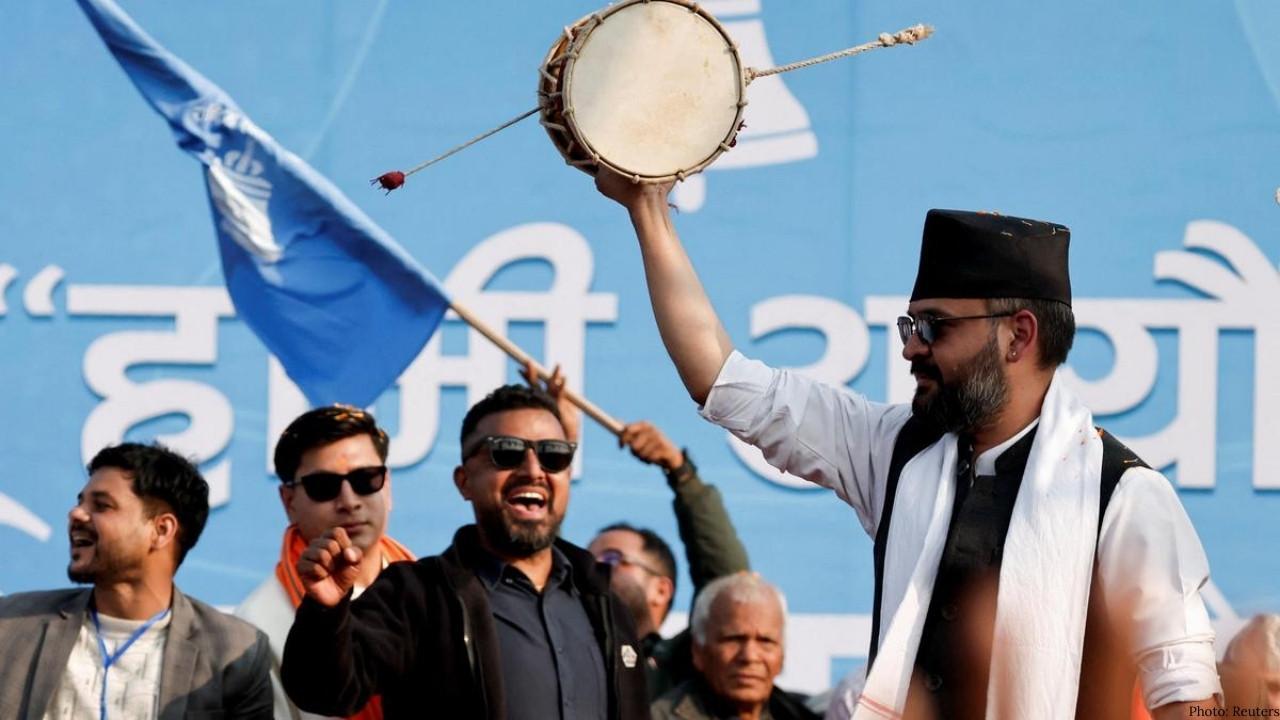
Nepal is in the throes of a pivotal general election that is capturing national and international attention. At the centre of this political stir is the eastern constituency of Jhapa-5, where a contest between seasoned statesman and former prime minister K. P. Sharma Oli and youthful challenger Balendra Shah — popularly known as “Balen” — has encapsulated the wider currents reshaping Nepali politics ahead of the March 5 polls.
This electoral chapter is not merely a regional skirmish but serves as a microcosm of the broader contest between established political forces and emerging leaders, charged by a youthful electorate eager for transformation.
K. P. Sharma Oli’s political career spans decades, marked by multiple tenures as Nepal’s prime minister and stewardship of the Communist Party of Nepal (Unified Marxist–Leninist). Oli’s dominance in Jhapa is rooted in his deep connections to the electorate and a string of electoral victories that made the district a reliable base for his political ambitions. Historically, his stronghold in the region was demonstrated with significant wins in national polls, including a commanding victory in the 2022 general election.
Oli’s political journey has not only been defined by electoral successes but also by a turbulent relationship with Nepal’s shifting political dynamics. His recent tenure ended amid a wave of youth-led protests against perceived governance failures, sparking a political realignment that set the stage for the current electoral confrontation.
Balendra Shah, colloquially known as Balen, represents a distinct departure from traditional political archetypes. His career trajectory — from rapper and civil society figure to mayor of the Kathmandu Metropolitan City and now a prime ministerial candidate — signals a burgeoning wave of leaders who defy conventional political molds. Balen’s entry into national politics under the banner of the Rastriya Swatantra Party positions him squarely as a counterweight to long-established political elites.
His candidacy resonates with younger voters, many of whom are inspired by demands for greater transparency, accountability, and socioeconomic change. It is within this context that the Jhapa contest has come to symbolize broader generational aspirations.
Jhapa’s political significance predates the current election cycle, yet it has acquired renewed prominence due to the high-profile showdown between Oli and Balen. Historically a bastion for Oli and his party, the constituency now embodies a fulcrum where Nepal’s future political course could pivot.
This contest brings into sharp relief the contrast between established political order and insurgent voices advocating for a recalibrated political landscape. Observers across Nepal have noted that this constituency’s election outcome could foreshadow broader shifts in voter sentiment nationwide.
The election environment in Jhapa is characterized by heightened political engagement and robust campaigning from all sides. Security has been intensified across the district as candidates crisscross the region, meeting constituents in rallies, community forums, and grassroots outreach programs designed to sway undecided voters.
Local campaign teams and supporters have highlighted intense door-to-door campaigns, strategic use of social media by younger candidates, and a sustained ground game by established parties. This blend of traditional and modern modes of campaigning has elevated the competitive temperature in Jhapa beyond that seen in previous electoral cycles.
The backdrop to this election includes substantial youth engagement dating back to the Gen Z protests of September last year, which were triggered by allegations of governmental overreach, including restrictions on digital freedoms. These demonstrations culminated in significant civil unrest, forcing Oli’s resignation and establishing an interim government.
This period of upheaval galvanized younger Nepalis, many of whom view the upcoming election as a crucial opportunity to reshape the nation’s political future. For many young voters, the contest in Jhapa is emblematic of their desire for policies that address unemployment, economic stagnation, and systemic corruption.
While generational politics is an important component of the electoral narrative, substantive policy issues have also been central to voter concerns. Economic challenges — such as limited job creation, youth unemployment, and structural barriers to entrepreneurial growth — loom large for many who are casting their ballots. Several local advocacy groups have underscored the need for comprehensive strategies to tackle these persistent socioeconomic dilemmas.
Social cohesion, corruption controls, and institutional reforms have likewise become focal points for discussions among community leaders, public forums, and youth organizations.
Nepal’s political tapestry is composed of a diverse array of parties, each with distinct platforms and voter bases. Among the most influential are:
The Communist Party of Nepal (Unified Marxist–Leninist): Led by K. P. Sharma Oli, this party garners support from traditional leftist constituencies and advocates for state-led development and social equity.
Rastriya Swatantra Party (RSP): A newer political formation that has swiftly risen in public prominence, driven in part by its embrace of independent candidates and reform-oriented policies.
Nepali Congress: A centrist party engaged in a complex internal negotiation over leadership and electoral strategy in this cycle.
Other Minor Parties: Including formations with regional or ideological bases seeking to exert influence in specific districts.
The multiplicity of political actors in Nepal has engendered tactical collaborations and occasional defections. Smaller parties often enter into alliances to amplify their influence or to coordinate against larger rivals. These dynamic shifts reflect a political ecosystem in which adaptability and coalition-building are critical to electoral success.
Independent candidates, particularly those with strong community ties or activist backgrounds, have also contributed to a diversified candidate field.
Should Balen prevail against Oli in Jhapa, it would represent a watershed moment in Nepali politics — a symbolic victory not just for a young leader but for the broader forces urging political change. Such an outcome could accelerate policy debates on governance reform, transparency mechanisms, and youth empowerment frameworks.
Conversely, an Oli victory would reinforce the enduring appeal of political experience and conventional leadership structures, suggesting that even in an era of change, established political figures retain substantial grassroots support.
Beyond Jhapa, the election outcome has potential ramifications for Nepal’s legislative configuration and policy priorities in the coming years. A legislature populated by a broader mix of emergent voices could usher in an era of redefined political discourse, possibly emphasizing coalition governance and cross-party collaboration on reform initiatives.
Conversely, a parliament dominated by traditional parties may recalibrate its approach to governance while maintaining continuity with established policy frameworks.
The unfolding electoral scenario in Jhapa underscores the complex interplay of history, generational change, policy debates, and grassroots activism in shaping Nepal’s democratic journey. As voters prepare to head to the polls on March 5, the contest between Balendra “Balen” Shah and K. P. Sharma Oli stands as a powerful testament to a nation at a crossroads.
Whether driven by calls for innovation or allegiance to seasoned leadership, the electoral decisions of Nepalis in Jhapa and beyond will reverberate throughout the political landscape, shaping Nepal’s path forward in an era defined by both continuity and transformation.
Disclaimer: The information in this article has been compiled and rephrased from widely reported news on the Nepal election climate and related political developments. All efforts have been made to ensure accuracy and context, though interpretations of political events may vary.








George Russell Wins Dutch GP Sprint, Boosts Mercedes Morale
George Russell wins the Dutch GP Sprint from pole as Mercedes teammate Kimi Antonelli extends his F1

Australia 50/3 After Bangladesh Bowled Out for 64 in Second Test
Australia reached 50/3 after Bangladesh were bowled out for 64 in the second Test, with Mitchell Sta

Jordan Burroughs Returns to Wrestling with 2028 Olympic Dream
Jordan Burroughs returns to wrestling with Real American Freestyle as the Olympic champion eyes a po

Lamborghini Catches Fire on Singapore's ECP, Causing Heavy Traffic
A Lamborghini caught fire on Singapore's ECP, causing heavy traffic and bus delays. No injuries were

Bangkok Airport Duty-Free Area Flooded by Pipe Burst
A burst water pipe flooded the duty-free shopping area at Bangkok's Suvarnabhumi Airport on July 16,
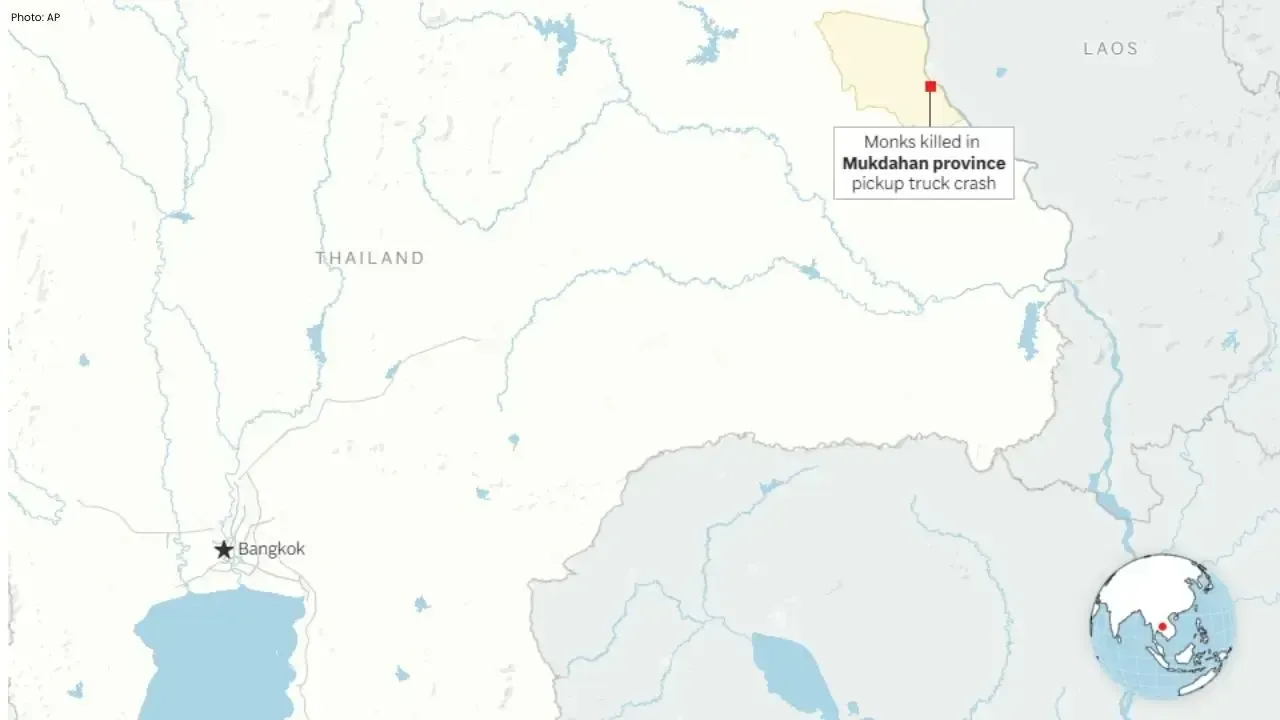
Nine Monks Killed in Thailand Pickup Truck Tragedy
An 11-year-old boy driving a pickup truck crashed into monks during a pilgrimage in northeastern Tha