You have not yet added any article to your bookmarks!
Join 10k+ people to get notified about new posts, news and tips.
Do not worry we don't spam!
Post by : Meena Ariff
Mir Yar Baloch, a leading Baloch nationalist and human rights activist, has launched a sharp condemnation of Pakistan, accusing Islamabad of destroying nearly 40 mosques in the mineral-rich province of Balochistan. His remarks came amid Pakistan’s strong criticism of India’s recent decision to profile mosques, imams, and religious committees in Jammu and Kashmir.
Mir Yar Baloch called out the hypocrisy of Pakistan, highlighting that while Islamabad accuses India of meddling in religious affairs in Pakistan-occupied Jammu and Kashmir (PoJK), Pakistani security forces themselves have been involved in the destruction and desecration of mosques in Balochistan. He said these actions expose Pakistan as a "terrorist state" that uses religious extremists to intimidate and harass minority communities including Hindus, Sikhs, Christians, and others within its borders.
He firmly stated that the Republic of Balochistan supports India’s principled position on PoJK and criticized Pakistan for trying to lecture others about minority rights while it systematically violates those rights at home. According to Mir Yar Baloch, Pakistan’s military and external forces have bombed mosques, burned holy texts like the Quran, and even abducted mosque leaders, all part of a larger campaign to suppress the Baloch people.
The first mosque targeted was the historic mosque of the Khan of Kalat, the former ruler of Balochistan. This mosque suffered heavy shelling when Pakistani tanks and artillery fired upon civilian populations during military operations. The visible marks of mortar shelling on this mosque stand as a harsh reminder of Pakistan’s brutal occupation and what Mir Yar Baloch describes as “un-Islamic behavior.”
Balochistan itself is a province rich in natural resources but economically underdeveloped and politically unstable. The Baloch nationalist movement, which seeks greater autonomy or outright independence, has a long and turbulent history. The insurgency has waxed and waned over the decades but continues to challenge Islamabad’s control. In May 2025, Baloch nationalist leaders declared independence, though the region remains volatile with frequent attacks on Pakistani military and infrastructure projects, including those linked to the China-Pakistan Economic Corridor.
Mir Yar Baloch’s strong statements highlight the ongoing human rights abuses and the deep-rooted political conflict in Balochistan, raising questions about Pakistan’s role and intentions in the region. The destruction of mosques and religious sites further inflames tensions and undermines Pakistan’s claims of protecting religious freedom.






George Russell Wins Dutch GP Sprint, Boosts Mercedes Morale
George Russell wins the Dutch GP Sprint from pole as Mercedes teammate Kimi Antonelli extends his F1

Australia 50/3 After Bangladesh Bowled Out for 64 in Second Test
Australia reached 50/3 after Bangladesh were bowled out for 64 in the second Test, with Mitchell Sta

Jordan Burroughs Returns to Wrestling with 2028 Olympic Dream
Jordan Burroughs returns to wrestling with Real American Freestyle as the Olympic champion eyes a po

Lamborghini Catches Fire on Singapore's ECP, Causing Heavy Traffic
A Lamborghini caught fire on Singapore's ECP, causing heavy traffic and bus delays. No injuries were

Bangkok Airport Duty-Free Area Flooded by Pipe Burst
A burst water pipe flooded the duty-free shopping area at Bangkok's Suvarnabhumi Airport on July 16,
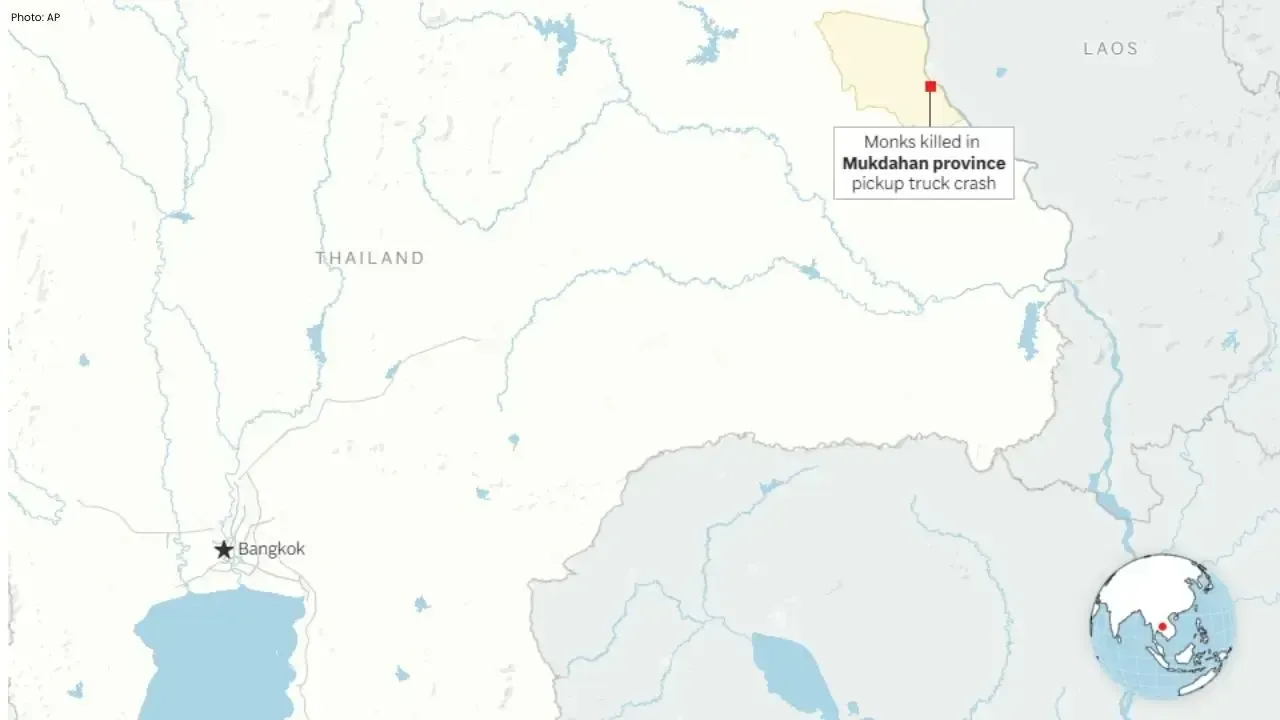
Nine Monks Killed in Thailand Pickup Truck Tragedy
An 11-year-old boy driving a pickup truck crashed into monks during a pilgrimage in northeastern Tha