You have not yet added any article to your bookmarks!
Join 10k+ people to get notified about new posts, news and tips.
Do not worry we don't spam!

Post by : Anis Farhan
Southeast Asia has emerged as a global hub for healthcare and medical tourism. Among the regional leaders, Malaysia and Thailand stand out as major destinations that attract both domestic and international patients. Malaysia’s healthcare system combines affordability with strong government oversight, while Thailand has built its reputation on medical tourism, offering premium services with global marketing strategies. Understanding how these two countries stack up provides important insights for patients, investors, and policymakers.
Malaysia has consistently ranked among the top healthcare destinations in Asia. The country’s healthcare model emphasizes universal access, affordability, and robust oversight from the Ministry of Health. Public hospitals provide care at highly subsidized rates for citizens, while private hospitals cater to wealthier Malaysians and international patients.
In recent years, Malaysia has attracted medical tourists from Indonesia, Singapore, and the Middle East. Its key selling points include lower costs compared to Western nations, English-speaking medical staff, and a strong pool of specialists trained in international institutions. A hip replacement surgery in Malaysia, for example, may cost up to 70% less than in the US, while maintaining high clinical standards.
Malaysia’s regulatory framework also enhances its credibility. The Malaysian Healthcare Travel Council (MHTC) actively promotes the nation as a medical tourism hub while ensuring quality through accreditation and standards compliance.
Thailand has long been the regional pioneer in medical tourism. Its success rests on world-class hospital chains such as Bumrungrad International and Bangkok Hospital, which cater almost exclusively to international patients. These institutions market themselves as luxury healthcare providers, offering hotel-like accommodations alongside medical care.
Thailand’s medical tourism sector attracts over 2 million international patients annually, with clients flying in from the Middle East, Europe, and North America. The appeal lies not just in affordability compared to Western countries but also in the premium, resort-like experience. Patients often combine treatments with wellness retreats, spa therapies, and vacation packages.
Thailand has also been proactive in branding itself as a leader in cosmetic surgery, fertility treatment, and gender reassignment procedures—specialties that drive significant medical tourism revenue.
When comparing Malaysia and Thailand, the distinction lies in the balance of affordability versus luxury. Malaysia is often more affordable for both domestic and international patients, while Thailand positions itself as a premium provider.
For example, a heart bypass in Malaysia might cost around $15,000, while in Thailand it could be $20,000 or higher, though still far cheaper than in the US or Europe. Cosmetic procedures, however, tend to favor Thailand due to its reputation and specialization in this field.
Domestic access also differs. Malaysians enjoy subsidized healthcare in public hospitals, while in Thailand, rural populations sometimes struggle with healthcare access, with international tourism dominating private healthcare resources.
Thailand has mastered the art of global marketing for medical tourism. Its hospitals advertise in international magazines, online platforms, and even collaborate with global insurance providers. Malaysia, in contrast, has a more regionally focused marketing strategy, heavily targeting neighboring countries like Indonesia.
This difference in outreach explains why Thailand attracts more long-haul patients from Europe and the US, while Malaysia attracts more regional travelers who cross borders for affordable treatments.
Malaysia excels in: cardiology, oncology, orthopedics, and general surgery, offering competitive pricing and strong regulatory oversight.
Thailand excels in: cosmetic surgery, fertility treatments, gender reassignment surgery, and luxury hospital stays that resemble five-star hotels.
These specializations reflect broader strategies—Malaysia’s emphasis on affordability and accessibility, versus Thailand’s emphasis on luxury and specialization.
Both countries face challenges as they scale their healthcare industries. For Malaysia, the key challenge is balancing domestic affordability with the growth of international demand. The government must ensure that local patients do not face longer waiting times as hospitals cater more to international medical tourists.
Thailand faces a different challenge: dependence on international patients. Global events such as pandemics or economic slowdowns can sharply reduce medical tourism inflows, leaving private hospitals vulnerable.
Both systems must also adapt to technological disruption, with telemedicine, AI-driven diagnostics, and digital healthcare platforms changing patient expectations.
Looking ahead, both Malaysia and Thailand will remain strong players in regional healthcare and medical tourism. Malaysia is likely to strengthen its role as an affordable and reliable destination, particularly for patients from neighboring countries. Thailand will continue to dominate the premium segment, attracting international clients willing to pay for a luxury medical experience.
Regional collaboration within ASEAN may also lead to integrated healthcare tourism networks, where patients can choose treatments across multiple countries as part of broader medical packages.
This article is intended for informational purposes only. It provides a comparative overview of healthcare systems in Malaysia and Thailand based on publicly available information. Readers should consult official healthcare providers and government agencies for the most accurate and updated details before making medical decisions.








George Russell Wins Dutch GP Sprint, Boosts Mercedes Morale
George Russell wins the Dutch GP Sprint from pole as Mercedes teammate Kimi Antonelli extends his F1

Australia 50/3 After Bangladesh Bowled Out for 64 in Second Test
Australia reached 50/3 after Bangladesh were bowled out for 64 in the second Test, with Mitchell Sta

Jordan Burroughs Returns to Wrestling with 2028 Olympic Dream
Jordan Burroughs returns to wrestling with Real American Freestyle as the Olympic champion eyes a po

Lamborghini Catches Fire on Singapore's ECP, Causing Heavy Traffic
A Lamborghini caught fire on Singapore's ECP, causing heavy traffic and bus delays. No injuries were

Bangkok Airport Duty-Free Area Flooded by Pipe Burst
A burst water pipe flooded the duty-free shopping area at Bangkok's Suvarnabhumi Airport on July 16,
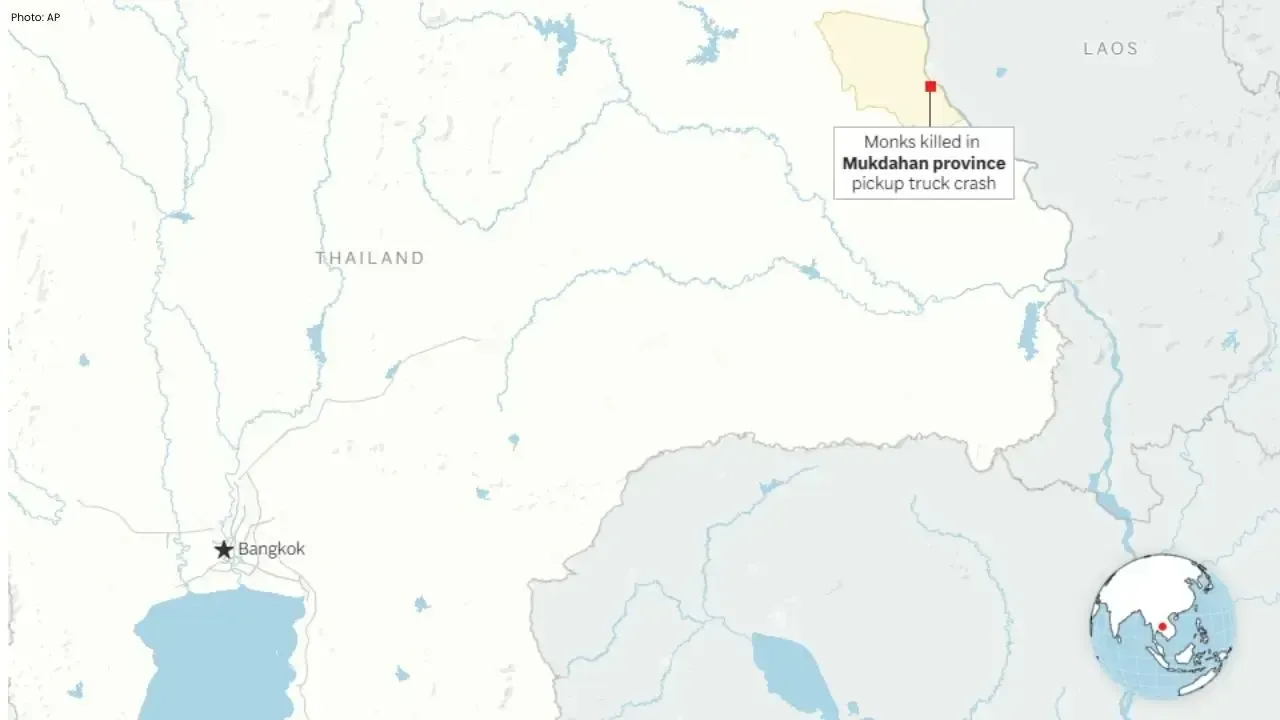
Nine Monks Killed in Thailand Pickup Truck Tragedy
An 11-year-old boy driving a pickup truck crashed into monks during a pilgrimage in northeastern Tha