You have not yet added any article to your bookmarks!
Join 10k+ people to get notified about new posts, news and tips.
Do not worry we don't spam!
Post by : Anis Farhan
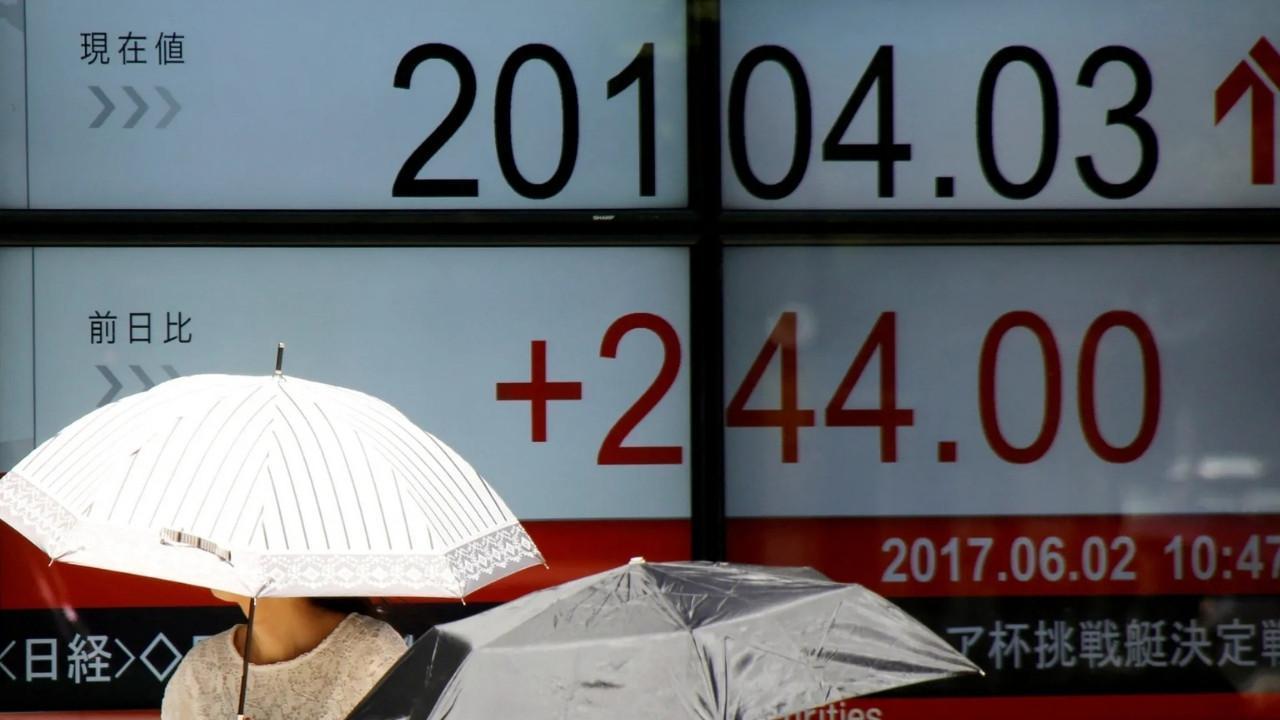
Japan’s stock market surged to a record high after Prime Minister Sanae Takaichi secured a landslide election victory, delivering a clear mandate that investors interpreted as a signal of stability, continuity, and policy momentum. The rally was broad-based, with heavyweight exporters, financials, and technology names leading gains, while the yen’s movement and expectations around fiscal and monetary coordination added extra fuel to the rise.
The election outcome did not simply represent a domestic political milestone. It also carried weight for global investors who have increasingly treated Japan as one of the more predictable major markets in an era marked by geopolitical shocks, uneven growth in China, and political uncertainty in parts of Europe and the United States. For many fund managers, Takaichi’s decisive win reduced near-term policy risk and strengthened the case for staying overweight Japanese equities.
The record-setting move also came at a time when Japan’s corporate sector has been undergoing structural change. Over the past few years, reforms related to shareholder returns, corporate governance, and capital efficiency have steadily reshaped how international investors value Japanese companies. The election result, by reinforcing expectations of continued reform, acted as a catalyst that pushed the market over the psychological threshold of its previous peak.
Japanese shares opened sharply higher following the election result, with the benchmark index quickly climbing to a new all-time high. The surge reflected immediate market relief that there would be no prolonged coalition negotiations, no leadership vacuum, and no sudden reversal in economic strategy. Investors tend to reward clarity, and the scale of Takaichi’s victory provided exactly that.
Market breadth was notable. While large-cap stocks drew headlines, mid-cap and domestically oriented firms also participated, suggesting the rally was not merely speculative positioning in a few global names. Trading desks reported strong buying from both local institutions and foreign funds, with momentum strategies adding to the upside once technical levels were breached.
The rally was also supported by Japan’s persistent appeal as a relative safe haven within Asia. While the region faces multiple cross-currents—ranging from supply-chain shifts to maritime tensions—Japan’s institutional stability and rule-of-law framework remain a major draw for long-term capital.
Export-heavy sectors benefited from renewed expectations that Japan would maintain a growth-friendly stance and avoid policy surprises that could strengthen the currency too quickly. Automakers, electronics manufacturers, and industrial machinery companies were among the strongest performers, reflecting the view that stable governance helps keep Japan competitive in global markets.
Banks and insurers also rallied. Investors interpreted the election as increasing the likelihood of gradual normalization in interest-rate policy and improved profitability for lenders. Financials have long struggled under ultra-low rates, and even modest moves toward a more typical yield environment can materially change earnings outlooks.
Technology and semiconductor-linked stocks joined the advance as well, boosted by the broader global narrative of supply-chain re-engineering and strategic investment in advanced manufacturing. Japan’s role in materials, equipment, and precision components has become more central in recent years, and the election outcome reinforced confidence that industrial policy would remain supportive.
While the election acted as the trigger, the record high was not built on politics alone. The rally reflected a market that had already been trending upward due to a combination of corporate restructuring, improving shareholder returns, and the re-rating of Japanese equities by global investors.
In other words, the election result was less a starting gun and more a confirmation that the existing investment thesis remains intact. Investors who had been waiting for a “clean signal” that the policy environment would not shift abruptly now had their cue.
A landslide victory reduces uncertainty in several ways. It strengthens a prime minister’s negotiating power within the ruling party, reduces the influence of smaller coalition partners, and makes it easier to pass budgets and implement reforms without repeated political bargaining.
Markets generally prefer governments that can execute. Investors may not agree with every policy detail, but they strongly dislike paralysis. Takaichi’s decisive win was interpreted as an outcome that would allow Tokyo to move faster on economic initiatives, industrial strategy, and governance reforms.
One of the clearest market reactions was the assumption that Japan will continue along its current economic path rather than experimenting with abrupt shifts. Predictability is particularly important for international funds allocating capital across multiple regions. When volatility is rising elsewhere, stable policy becomes an asset.
Investors also saw the result as likely to maintain the government’s coordination with the central bank. While the Bank of Japan remains independent, political leadership can influence the tone of fiscal policy and broader economic messaging. Markets interpreted the election as reducing the risk of confrontational policy debates that could destabilize the yen or disrupt bond markets.
Japan’s market has been transformed by reforms aimed at improving corporate efficiency and shareholder returns. These reforms have included pressure on companies to use cash more effectively, unwind cross-shareholdings, and raise capital productivity.
Takaichi’s victory was seen as reinforcing this direction. A government with a strong mandate is more likely to push for continued transparency, improved governance standards, and reforms that encourage companies to prioritize returns rather than hoarding cash.
For equity investors, this matters because Japan has historically traded at a valuation discount due to concerns about low profitability, weak shareholder focus, and slow change. Reforms help shrink that discount.
The rally can be read as a direct message from investors: the current mix of reforms, industrial policy, and growth support is delivering results, and the market wants continuity rather than disruption.
Japan’s stock market often moves in tandem with the yen, particularly because a weaker currency tends to boost the earnings of exporters when overseas profits are translated back into yen. After the election, currency traders weighed the likelihood of policy continuity and the probability that Japan’s rate path would remain gradual.
If markets believe the government will avoid aggressive tightening and continue supporting growth, the yen may remain relatively weaker than it would under a more hawkish policy scenario. That dynamic tends to support exporters and helps explain why large industrial names led the rally.
Foreign investors have played a major role in Japan’s equity surge over recent years. Their returns are influenced not only by stock performance but also by currency moves. When the yen is stable or weakening, foreign funds often find it easier to justify exposure.
A landslide win can reduce political volatility and lower the risk of sudden currency spikes. That stability encourages investors to maintain positions rather than rushing to hedge aggressively.
In global markets, stability has become a premium commodity. With growth uncertainty in China, elections and political fragmentation in other major economies, and recurring geopolitical flare-ups, Japan’s political clarity offered a rare contrast.
A record-breaking stock market is not the same as an economic boom, but it does matter. Rising equities can boost household and business confidence, support investment, and improve the financial health of pension funds and insurers. It can also strengthen Japan’s ability to attract foreign capital and reinforce Tokyo’s standing as a global financial hub.
Markets are now watching whether the government will use its stronger mandate to encourage wage growth and domestic demand. Japan has long struggled with low inflation psychology and cautious consumer behavior. If corporate profits remain strong and wages rise meaningfully, domestic consumption could become a more powerful engine of growth.
Investors also want to see whether companies will reinvest more aggressively in productivity improvements, digital transformation, and supply-chain resilience. These factors could help Japan sustain growth even if global demand slows.
Another critical question is how inflation evolves. Japan has been navigating a delicate shift away from decades of low inflation and deflationary pressure. If inflation remains steady and wage growth strengthens, the central bank may continue a slow normalization path.
The election outcome, by reducing political uncertainty, may allow the central bank to operate with fewer external pressures. Markets will watch for signs of coordination or tension between fiscal and monetary policy.
Japan’s ideal scenario is stable inflation, moderate wage growth, and corporate profitability without triggering a disruptive bond market sell-off. Investors are betting that Takaichi’s government can keep that balance.
While the rally lifted the entire market, certain sectors stand out as potential long-term beneficiaries if policy direction remains consistent.
Japan’s security environment has become more complex, and defense spending has been rising. A strong government mandate may accelerate procurement programs, investment in domestic defense manufacturing, and partnerships with allied countries.
Defense and aerospace suppliers may see more predictable demand, while technology firms linked to cybersecurity and surveillance systems could also benefit.
Japan’s energy policy has been under pressure due to fuel import costs, carbon targets, and the need for supply stability. Investors expect continued spending on energy infrastructure, grid upgrades, and new technologies such as hydrogen and advanced storage.
A stable political environment makes it easier to implement multi-year infrastructure programs. Construction firms, industrial conglomerates, and renewable-linked suppliers could see sustained support.
Japan’s role in the semiconductor ecosystem is strategic. While it may not dominate final chip production in the same way as Taiwan or South Korea, it is essential in equipment, materials, and precision manufacturing.
A government that maintains industrial policy support could keep Japan competitive in this high-stakes global sector.
Even with record highs, markets are not free of risk. Japan’s economy remains exposed to global trade cycles, energy price shocks, and regional geopolitical developments. A political mandate does not eliminate structural challenges such as an aging population and high public debt.
Japan’s exporters benefit from global demand, especially in the United States and Europe. If global growth slows, Japanese earnings could face headwinds regardless of domestic policy stability.
Investors will monitor manufacturing data, trade numbers, and corporate guidance to see whether the rally is supported by fundamentals rather than momentum alone.
Japan’s government debt remains among the highest in the world relative to GDP. As long as borrowing costs remain contained, the system can function. However, if bond yields rise too quickly, the fiscal outlook could become a market concern.
The central bank’s approach to normalization must be carefully managed to avoid destabilizing the bond market.
Japan’s location in East Asia means it is directly affected by tensions in the Taiwan Strait, the Korean Peninsula, and broader U.S.-China strategic rivalry. Any escalation could impact the yen, risk sentiment, and foreign investor positioning.
A record high is a milestone, but it also raises expectations. Investors will now demand results: stronger earnings, continued reform, and credible economic management. If the government’s mandate leads to tangible progress on growth and wages, the rally could extend.
If, however, the election win results in complacency or policy missteps, markets could quickly reassess.
In the months ahead, markets will focus on corporate earnings, wage negotiations, inflation trends, and signals from the central bank. They will also track government budgets, reform announcements, and industrial policy direction.
For global investors, the key question will be whether Japan can sustain its momentum while other major economies slow.
For years, Japan’s stock market was treated as a value trap—cheap but stagnant. The record high following Takaichi’s landslide victory signals that this narrative is changing. Investors increasingly view Japan as a reform story with improving profitability and a stable political backdrop.
Japanese stocks surged to a record high after Prime Minister Sanae Takaichi’s landslide election victory delivered a strong mandate and reduced political uncertainty. The rally reflects investor confidence in policy continuity, corporate reform momentum, and Japan’s role as a stable destination for global capital.
Yet the celebration comes with caveats. Japan must still navigate global economic risks, currency dynamics, and long-term structural challenges. For now, however, markets have delivered their verdict: stability, predictability, and reform remain powerful catalysts in a world hungry for certainty.
Disclaimer: This article is a rephrased and independently written news analysis based on widely reported developments in Japanese politics and market performance. It does not constitute financial advice, investment recommendations, or a forecast of future market movements.









George Russell Wins Dutch GP Sprint, Boosts Mercedes Morale
George Russell wins the Dutch GP Sprint from pole as Mercedes teammate Kimi Antonelli extends his F1

Australia 50/3 After Bangladesh Bowled Out for 64 in Second Test
Australia reached 50/3 after Bangladesh were bowled out for 64 in the second Test, with Mitchell Sta

Jordan Burroughs Returns to Wrestling with 2028 Olympic Dream
Jordan Burroughs returns to wrestling with Real American Freestyle as the Olympic champion eyes a po

Lamborghini Catches Fire on Singapore's ECP, Causing Heavy Traffic
A Lamborghini caught fire on Singapore's ECP, causing heavy traffic and bus delays. No injuries were

Bangkok Airport Duty-Free Area Flooded by Pipe Burst
A burst water pipe flooded the duty-free shopping area at Bangkok's Suvarnabhumi Airport on July 16,

Nine Monks Killed in Thailand Pickup Truck Tragedy
An 11-year-old boy driving a pickup truck crashed into monks during a pilgrimage in northeastern Tha