
You have not yet added any article to your bookmarks!
Join 10k+ people to get notified about new posts, news and tips.
Do not worry we don't spam!
Post by : Saif Rahman
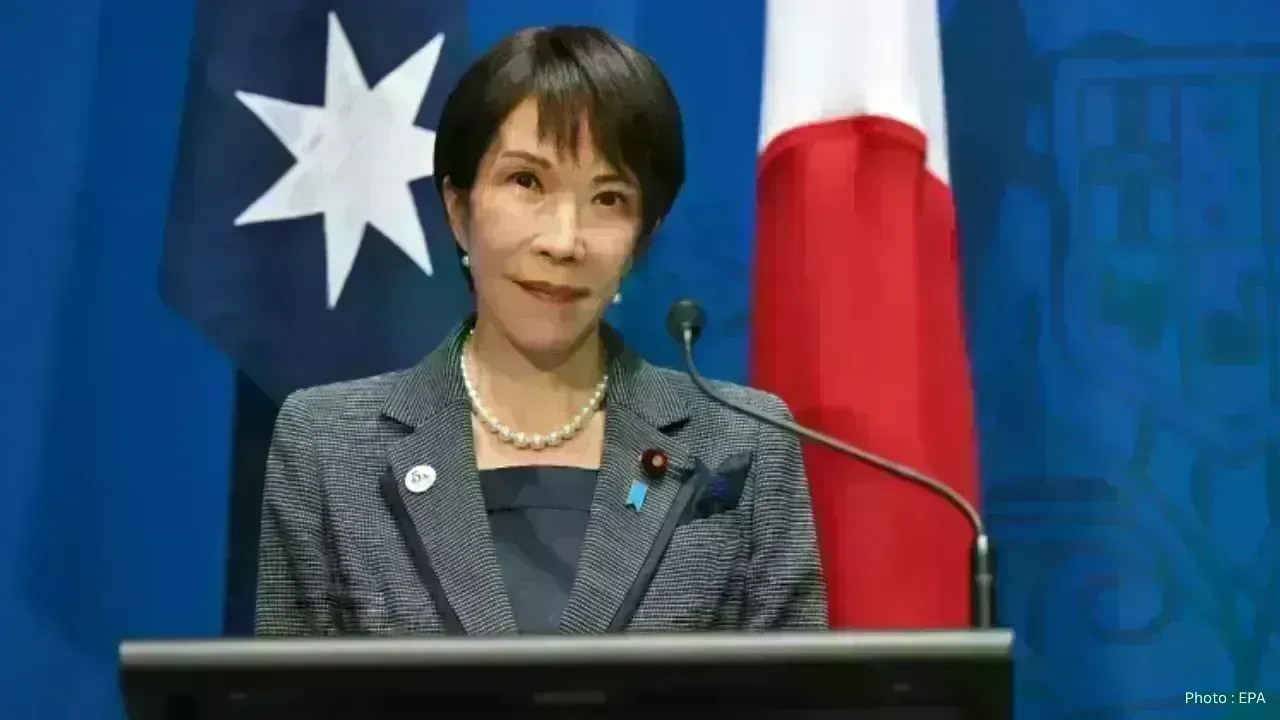
During a recent visit to Australia, Japan’s Prime Minister expressed serious concerns over the ongoing conflict in Iran and its ripple effects on the Asia-Pacific economy. This crisis not only jeopardizes energy supplies but also drives up costs and economic strain in a region vital to global commerce.
Sanae Takaichi emphasized the significant ramifications the crisis poses for the Asia-Pacific, citing disruptions in global oil supplies as a primary concern. These remarks underscored the anxiety surrounding energy security in Australia and neighboring nations.
The conflict has severely impacted shipping through the Strait of Hormuz, a pivotal artery for global oil transport where roughly one-fifth of the world’s oil is normally channeled. Notably, about 80 percent of this oil is directed towards Asia.
The ongoing conflict has resulted in decreased shipping routes in this region, leading to a tighter oil supply and subsequent rise in fuel prices, thereby putting additional economic pressure on nations reliant on imports.
Asian economies, particularly Japan, India, China, and South Korea, face substantial challenges as they source significant volumes of oil from the Middle East. Japan is particularly vulnerable, being heavily reliant on imported oil from this region. This crisis incurs economic strains despite Japan's extensive reserves.
Furthermore, the ramifications extend beyond simply fuel costs. Elevated energy prices are likely to ripple through various aspects of everyday life, impacting transportation, power, and manufacturing. This translates into businesses encountering higher production costs, which may lead to inflated prices on goods and services.
To combat the crisis, Japan and Australia have pledged to enhance their collaboration on energy security. The two nations aim to fortify strategic partnerships in fuel supply and essential minerals to mitigate vulnerabilities associated with dependency on unstable areas.
This collaborative initiative marks a strategic pivot towards long-term solutions to insulate against future disruptions. Countries are increasingly recognizing the necessity of diversifying energy sources and establishing more resilient partnerships.
The ongoing crisis exposes a broader concern: the significant reliance of numerous countries on a singular region for energy. When conflict erupts in such zones, the global ramifications can be extensive.
From an editorial lens, this situation serves as a cautionary tale for global leaders, illustrating the intricate connections among energy, governance, and economic stability. A single regional conflict can yield wide-ranging repercussions.
The Asia-Pacific, a key engine for global economic progress, now confronts potential setbacks due to this crisis. Prolonged instability could hinder economic development and heighten pressures on governmental finances and citizen livelihoods.
Interestingly, this predicament may catalyze nations to channel investments towards alternative energy avenues such as solar, wind, and nuclear power. Reducing oil reliance may foster greater long-term stability.
As of now, efforts are concentrated on acute impacts management. Governments remain focused on securing energy supplies, regulating prices, and shielding their economies from potential fallout.
Japan’s Prime Minister's urgent warning signifies the gravity of the situation. The coming weeks will be crucial in determining whether the crisis abates or continues to adversely affect millions across the Asia-Pacific.










PM Modi Pays Tribute to Mahatma Gandhi, Urges People to Support Khadi
PM Modi pays tribute to Mahatma Gandhi on Gandhi Jayanti and urges citizens to support Khadi and the

Amazon Seeks to Offload $8 Billion in Nvidia Chips to Investors
Amazon plans to move $8 billion in Nvidia chips to investors, using a new financing model to strengt

Samsung Raises Galaxy S26 Prices as Memory Chip Costs Rise
Samsung raises Galaxy S26 prices in South Korea as rising memory chip costs put pressure on smartpho

Lewis Hamilton Calls Singapore Grand Prix One of F1's Toughest Races
Lewis Hamilton discusses the demanding Singapore Grand Prix and brings Plus44 and Almave to Singapor

Denmark's Pandora Opens World's Largest Jewellery Factory in Vietnam
Pandora opens its largest jewellery factory in Vietnam, expanding global production, strengthening s

Gautam Gambhir Questions Batting-Friendly Pitches After India's Record ODI Chase
Gautam Gambhir questions batting-friendly ODI pitches after India’s record chase, calling for a bett

