You have not yet added any article to your bookmarks!
Join 10k+ people to get notified about new posts, news and tips.
Do not worry we don't spam!

Post by : Saif Rahman
Recent airstrikes by Israel along the Syria–Lebanon border and in southern Lebanon have resulted in the death of at least two individuals, with many more injured. These assaults have sparked significant alarm since they occurred despite a declared ceasefire intended to curb violence in the region.
Lebanese officials report that Israeli fighter jets targeted four border points between Syria and Lebanon, often used by civilians and traders. Israel contends these passages are additionally leveraged by Hezbollah for weapons transportation into Lebanon, stating that the strikes aim to curb arms smuggling that jeopardizes its safety.
In conjunction with these raids, Israel struck southern Lebanon, where two individuals lost their lives as vehicles were attacked in separate occurrences. Close to 20 other individuals were hurt, including nearby civilians, with several reported to be in critical condition.
The Lebanese leadership has vocally condemned these airstrikes, asserting that they breach national sovereignty and endanger innocent lives. The Lebanese health ministry indicated that civilians remain vulnerable due to continuous military actions in the southern regions, where inhabitants live under persistent dread.
These incidents transpired despite a ceasefire established to halt hostilities between Israel and Hezbollah. The truce was intended to avert incursions across the border and safeguard civilians on both fronts, yet the ongoing attacks illustrate the tenuous nature of this agreement.
Israel maintains that Hezbollah has not strictly adhered to the ceasefire's stipulations, especially regarding weaponry. Conversely, Hezbollah has accused Israel of perpetually violating the agreement by executing airstrikes and conducting surveillance operations over Lebanon.
The relentless violence continues to burden residents in border areas. Many families in southern Lebanon have endured the loss of homes, livelihoods, and loved ones due to previous conflicts. Each new attack fosters additional anxiety and uncertainty, compelling communities to remain vigilant and ready for potential emergencies.
The Lebanese military is striving to uphold stability in the region; however, ongoing strikes complicate this objective. International observers have cautioned that persistent violence could lead to an escalation into broader conflict.
Voices demanding restraint and adherence to ceasefire accords are echoing stronger from both regional and international leaders, emphasizing that genuine peace can only be achieved through dialogue rather than bombings. For now, nonetheless, high tensions persist, with civilians bearing the brunt of the fallout.









George Russell Wins Dutch GP Sprint, Boosts Mercedes Morale
George Russell wins the Dutch GP Sprint from pole as Mercedes teammate Kimi Antonelli extends his F1

Australia 50/3 After Bangladesh Bowled Out for 64 in Second Test
Australia reached 50/3 after Bangladesh were bowled out for 64 in the second Test, with Mitchell Sta

Jordan Burroughs Returns to Wrestling with 2028 Olympic Dream
Jordan Burroughs returns to wrestling with Real American Freestyle as the Olympic champion eyes a po

Lamborghini Catches Fire on Singapore's ECP, Causing Heavy Traffic
A Lamborghini caught fire on Singapore's ECP, causing heavy traffic and bus delays. No injuries were

Bangkok Airport Duty-Free Area Flooded by Pipe Burst
A burst water pipe flooded the duty-free shopping area at Bangkok's Suvarnabhumi Airport on July 16,
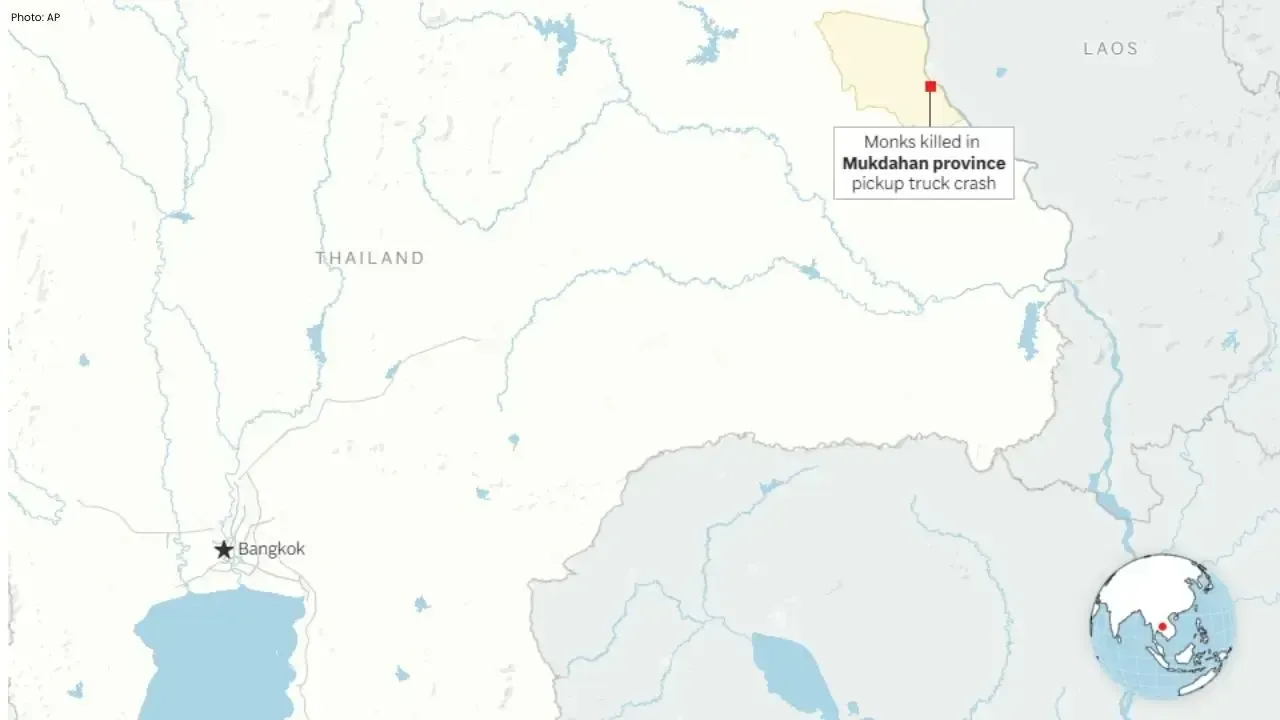
Nine Monks Killed in Thailand Pickup Truck Tragedy
An 11-year-old boy driving a pickup truck crashed into monks during a pilgrimage in northeastern Tha