You have not yet added any article to your bookmarks!
Join 10k+ people to get notified about new posts, news and tips.
Do not worry we don't spam!
Post by : Saif Rahman
The Taiwanese tech firm Inventec has announced complications surrounding the sale of Nvidia’s H200 AI chip to China, with the approval process now hinging on Chinese authorities. This situation underscores the escalating uncertainty in global tech trade, where political factors heavily influence regulations.
As a significant producer of servers and notebooks, Inventec collaborates closely with Nvidia, incorporating its chips in numerous AI-centric products. The company's AI servers for Chinese markets are primarily manufactured at its Shanghai facility, meaning any restrictions on chip exports could severely disrupt its operational and strategic plans.
Although the U.S. granted the necessary export approvals for Nvidia’s H200 AI chip to China last week, these were contingent under certain conditions. This approval implied a willingness from U.S. officials to permit limited sales of the sophisticated chip. However, the landscape shifted when reports indicated that customs officials in China were blocking the chip's entry.
The nature of this obstruction by Chinese customs remains ambiguous—whether it’s a formal prohibition or merely a temporary suspension. Such lack of clarity has left companies in limbo regarding their forthcoming actions. This unpredictability complicates planning for both manufacturers and clients alike.
Jack Tsai, President of Inventec, articulated that the resolution depends on the political and regulatory stance within China. He noted that while the U.S. has signaled its approval, compliance with Chinese regulations remains essential. Should China approve the chip's import, Inventec is prepared to move forward; otherwise, halting operations to adhere to regulations is the only option.
Nvidia’s H200 chip ranks as its second most powerful AI offering and has emerged as a contentious topic amid U.S.-China relations. With Washington imposing limits on the sale of advanced chips over security concerns, Beijing seeks to bolster its domestic chip industry and lessen dependence on external technologies.
Despite significant interest from Chinese enterprises, the fate of the H200 chip remains unclear. China may be weighing the ramifications of U.S. restrictions, looking to bolster local chip manufacturers, or employing this scenario as leverage in negotiations with the U.S.
Companies such as Inventec and Nvidia are left awaiting a decisive verdict from Chinese officials. This scenario exemplifies the increasing impact of political decision-making on global technology markets, eclipsing mere business demands or innovation.






George Russell Wins Dutch GP Sprint, Boosts Mercedes Morale
George Russell wins the Dutch GP Sprint from pole as Mercedes teammate Kimi Antonelli extends his F1

Australia 50/3 After Bangladesh Bowled Out for 64 in Second Test
Australia reached 50/3 after Bangladesh were bowled out for 64 in the second Test, with Mitchell Sta

Jordan Burroughs Returns to Wrestling with 2028 Olympic Dream
Jordan Burroughs returns to wrestling with Real American Freestyle as the Olympic champion eyes a po

Lamborghini Catches Fire on Singapore's ECP, Causing Heavy Traffic
A Lamborghini caught fire on Singapore's ECP, causing heavy traffic and bus delays. No injuries were

Bangkok Airport Duty-Free Area Flooded by Pipe Burst
A burst water pipe flooded the duty-free shopping area at Bangkok's Suvarnabhumi Airport on July 16,
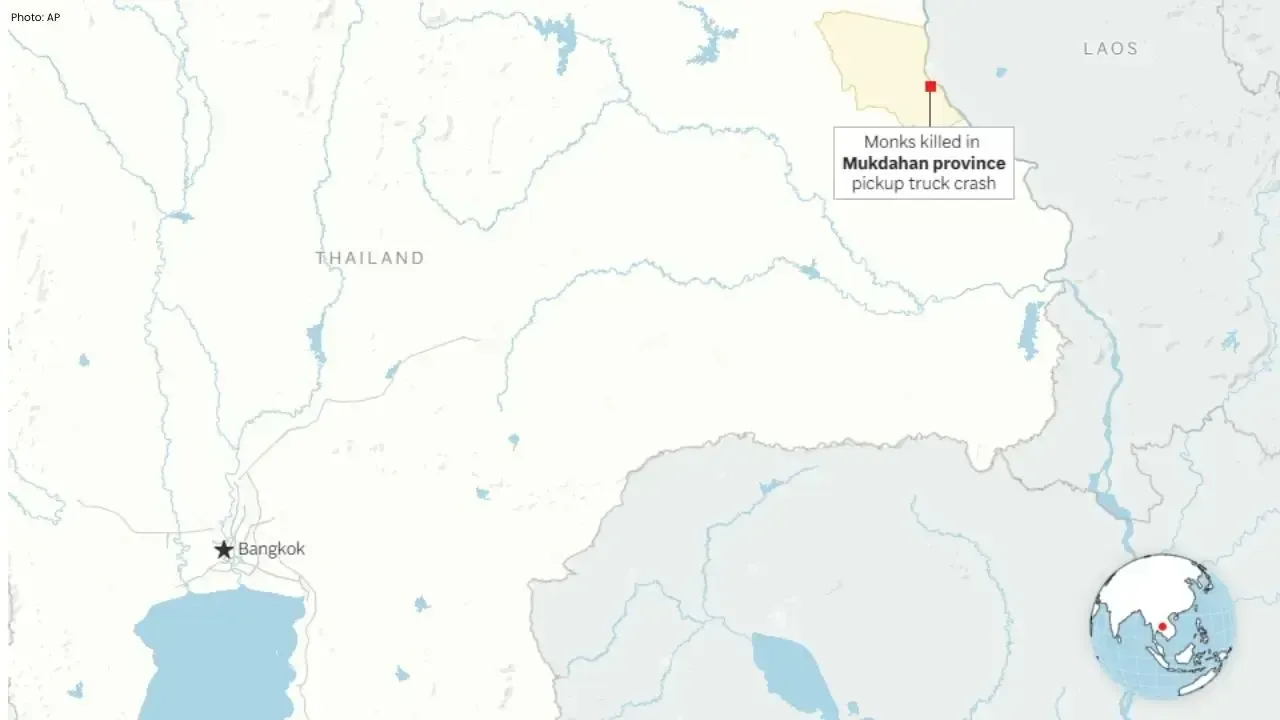
Nine Monks Killed in Thailand Pickup Truck Tragedy
An 11-year-old boy driving a pickup truck crashed into monks during a pilgrimage in northeastern Tha