
You have not yet added any article to your bookmarks!
Join 10k+ people to get notified about new posts, news and tips.
Do not worry we don't spam!
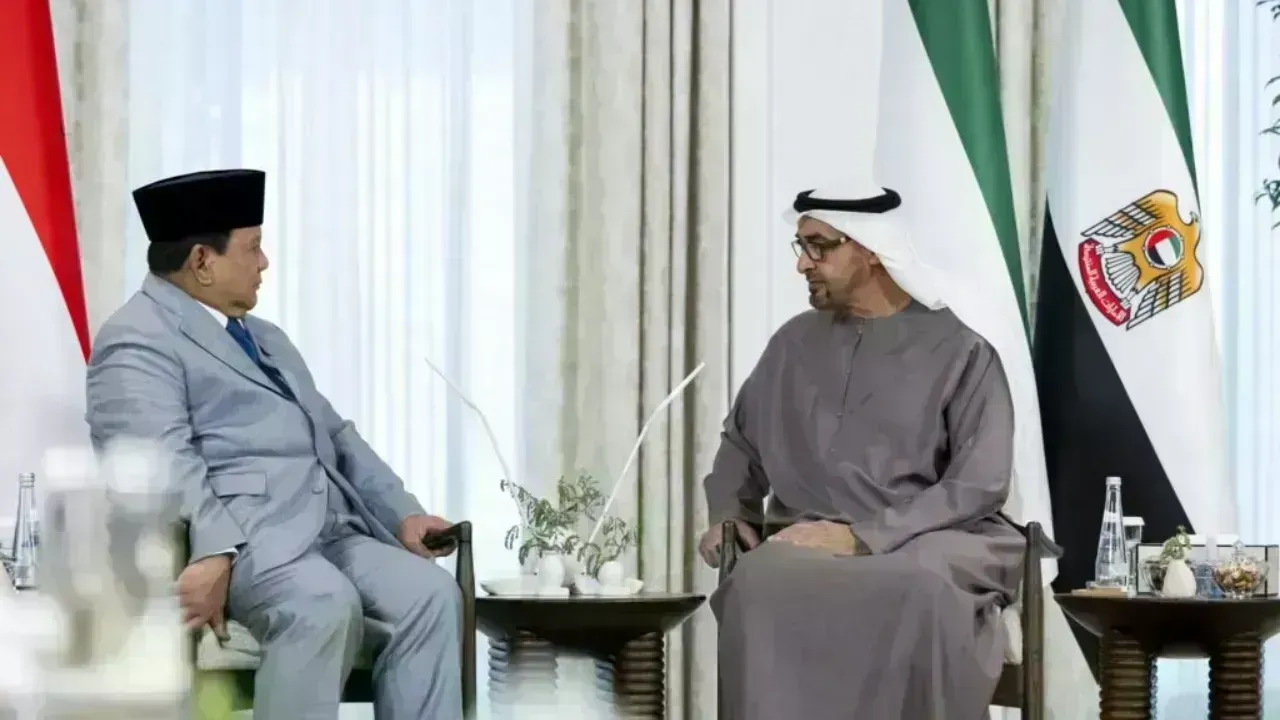
Post by : Anis Farhan
Photo: X
In a significant boost to South–South cooperation, Indonesia and the United Arab Emirates signed a wide-ranging Green Energy and Infrastructure Cooperation Accord in June 2025. The agreement—hailed as a “new pillar of partnership” by both governments—aims to drive more than US$15 billion in clean energy investments across Indonesia’s solar, hydropower, and green hydrogen sectors over the next decade.
This diplomatic breakthrough is more than a typical trade arrangement. It aligns with Indonesia’s domestic energy transition goals under its Just Energy Transition Partnership (JETP) and reinforces the UAE’s ambition to scale its renewable energy footprint across emerging markets in Southeast Asia and Africa.
The deal comes at a critical juncture as both nations seek to leverage diplomacy not just for economic gain, but to shape the climate action narrative from the Global South’s perspective.
The accord covers four broad areas:
Large-scale solar farm development in Java and Kalimantan
Joint investments in Indonesia’s fledgling green hydrogen sector
Infrastructure upgrades for inter-island transmission
Technical knowledge sharing on battery storage and grid balancing
Under the pact, Masdar, the UAE’s leading renewable energy firm, will partner with Indonesia’s PT PLN and Pertamina NRE to construct solar parks with an installed capacity of over 3 GW by 2030. Additionally, the UAE has committed initial funding for a green hydrogen pilot facility in Sulawesi, designed to test export feasibility to the Middle East and Japan.
An accompanying framework for skills transfer, co-hosted by the UAE’s Ministry of Climate Change and Environment and Indonesia’s Ministry of Energy and Mineral Resources, will focus on upskilling 10,000 Indonesian technicians and engineers in clean energy technologies.
For Jakarta, this agreement cements its emerging status as a key renewable energy destination in the Asia-Pacific. Indonesia’s archipelagic geography presents complex challenges for energy distribution, but also immense potential for decentralized solar and hydro solutions. This partnership allows it to leapfrog carbon-heavy energy infrastructure and move directly into a greener grid.
For Abu Dhabi, the deal strengthens the UAE’s long-standing push to diversify beyond oil. As the UAE prepares to host World Future Energy Summit 2026, its role as a renewable investor and green financier in the Global South adds diplomatic heft to its climate agenda. It also expands its influence in Southeast Asia—an increasingly strategic region for energy and logistics.
Moreover, this is the first such bilateral agreement between the two countries that explicitly ties green energy cooperation to foreign policy objectives—with provisions for diplomatic dialogue, multilateral climate coordination, and support in upcoming COP negotiations.
The Indonesia-UAE agreement also signals a shift in global climate diplomacy. With wealthier Western nations often criticized for underdelivering on climate finance, emerging economies are turning to alternative alliances to fund their clean energy aspirations.
The UAE’s ability to finance, build, and operate large-scale renewables makes it an attractive partner for Indonesia, whose own state-run utilities are constrained by debt and regulatory hurdles. Unlike aid-based models, this cooperation emphasizes co-investment, joint ownership, and knowledge parity.
Observers note that this pact could encourage similar South–South energy alliances, potentially redrawing global investment flows away from traditional North–South paradigms.
While the deal has been broadly welcomed, it has drawn some criticism from civil society groups in Indonesia, who warn that megaprojects in Kalimantan and Sulawesi could displace indigenous communities and threaten biodiversity. Environmental assessments and community consultations, they argue, must not be bypassed in the rush to scale.
In response, both governments have agreed to form a Joint Environmental Oversight Panel to ensure compliance with social and ecological safeguards. Additionally, local procurement targets will ensure that at least 40% of the materials and labor used in the projects are sourced within Indonesia.
The first phase of implementation is expected to begin by November 2025, with a ceremonial ground-breaking for the solar installation in East Kalimantan already scheduled.
This landmark agreement represents a broader recalibration of international diplomacy—where climate goals, economic development, and foreign policy converge. By anchoring their bilateral ties in sustainability, Indonesia and the UAE are crafting a model of diplomacy that is as forward-looking as it is pragmatic.
In the coming years, as global climate diplomacy moves from pledges to practice, such South–South collaborations may become the most dynamic force in driving real, measurable progress.
This article is intended for informational purposes only and does not constitute financial, environmental, or legal advice. Readers should consult official government sources and project documents for technical details.










PM Modi Pays Tribute to Mahatma Gandhi, Urges People to Support Khadi
PM Modi pays tribute to Mahatma Gandhi on Gandhi Jayanti and urges citizens to support Khadi and the

Amazon Seeks to Offload $8 Billion in Nvidia Chips to Investors
Amazon plans to move $8 billion in Nvidia chips to investors, using a new financing model to strengt

Samsung Raises Galaxy S26 Prices as Memory Chip Costs Rise
Samsung raises Galaxy S26 prices in South Korea as rising memory chip costs put pressure on smartpho

Lewis Hamilton Calls Singapore Grand Prix One of F1's Toughest Races
Lewis Hamilton discusses the demanding Singapore Grand Prix and brings Plus44 and Almave to Singapor

Denmark's Pandora Opens World's Largest Jewellery Factory in Vietnam
Pandora opens its largest jewellery factory in Vietnam, expanding global production, strengthening s

Gautam Gambhir Questions Batting-Friendly Pitches After India's Record ODI Chase
Gautam Gambhir questions batting-friendly ODI pitches after India’s record chase, calling for a bett

