
You have not yet added any article to your bookmarks!
Join 10k+ people to get notified about new posts, news and tips.
Do not worry we don't spam!
Post by : Shakul
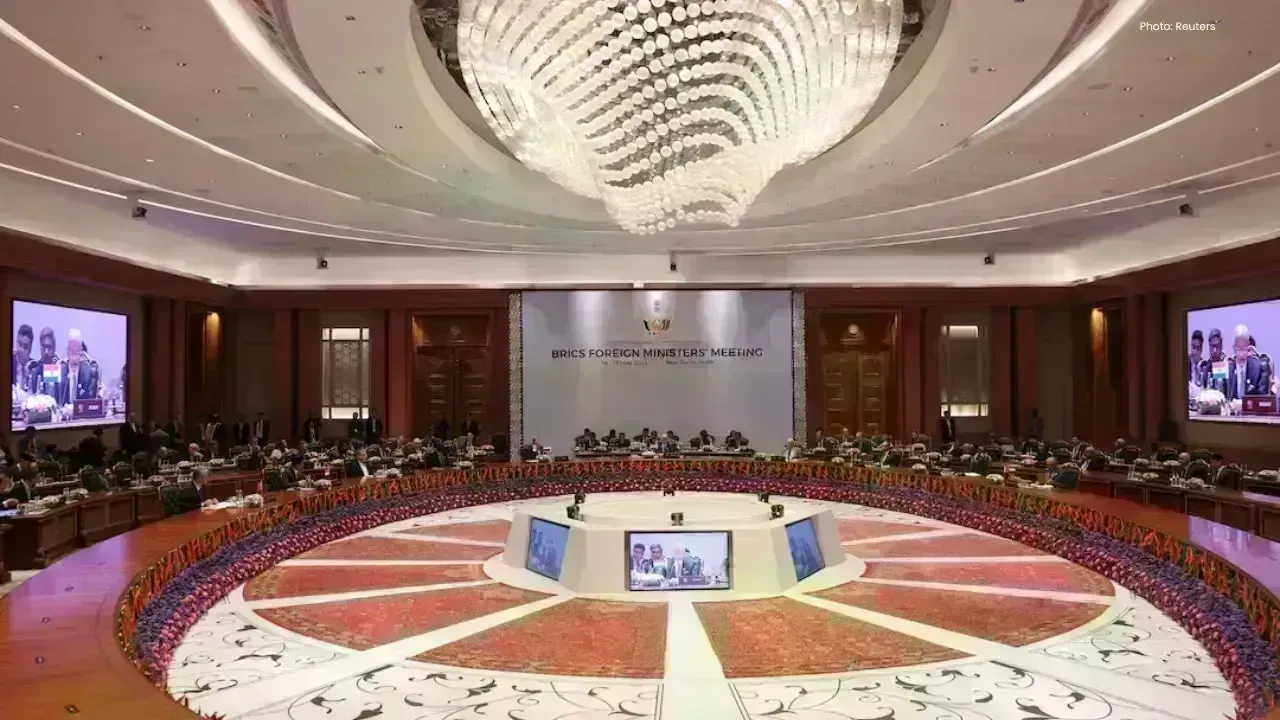
India has emphasized the importance of safe and uninterrupted maritime trade routes for maintaining global economic stability during the BRICS Foreign Ministers meeting held in New Delhi. External Affairs Minister Subrahmanyam Jaishankar stated that international waterways, especially the Strait of Hormuz and the Red Sea, remain extremely important for global trade, energy supply, and economic growth.
Speaking at the opening session of the two-day BRICS meeting, Jaishankar highlighted growing concerns over the ongoing conflict in West Asia and its impact on international shipping and energy markets. He warned that disruptions in major maritime routes could seriously affect the world economy, increase inflation, and create further uncertainty in global trade.
The Indian minister noted that the Strait of Hormuz is one of the world’s most critical shipping routes because a major portion of global oil and gas supplies passes through the region. Recent tensions and military conflict in the Middle East have reportedly disrupted tanker traffic, increased shipping risks, and pushed energy prices sharply higher across international markets.
Jaishankar also stressed that global disputes should be resolved through dialogue and diplomacy instead of unilateral sanctions or coercive measures. He said developing countries are often the most affected by economic restrictions and geopolitical instability. According to him, BRICS nations should work together to support a balanced, stable, and rules-based international system.
The BRICS group currently includes Brazil, Russia, India, China, South Africa, Egypt, Ethiopia, Indonesia, Iran, and the United Arab Emirates. India is serving as the chair of the BRICS grouping for 2026 and is hosting the foreign ministers’ meeting in New Delhi. Several high-level leaders attended the discussions, including Iran’s Foreign Minister Abbas Araqchi and UAE Deputy Foreign Minister Khalifa Shaheen Al Marar.
Officials said the ongoing war involving Iran has created differences among some BRICS member nations, making negotiations over a joint statement more difficult. The conflict has also increased pressure on global energy markets and raised concerns about possible disruptions to international oil supplies.
Economic experts believe the situation in the Strait of Hormuz could become one of the biggest challenges for global trade this year if tensions continue to rise. The route is considered essential for transporting crude oil and liquefied natural gas to Asia, Europe, and other parts of the world. Any long-term disruption could directly impact fuel prices, inflation, shipping costs, and industrial production globally.
India has consistently supported freedom of navigation and secure maritime trade routes because the country depends heavily on imported energy supplies. Government officials say maintaining peace and stability in strategic waterways is necessary for economic security and international cooperation.
The BRICS meeting in New Delhi is expected to continue discussions on global economic stability, trade cooperation, energy security, and diplomatic solutions to international conflicts over the next two days.










PM Modi Pays Tribute to Mahatma Gandhi, Urges People to Support Khadi
PM Modi pays tribute to Mahatma Gandhi on Gandhi Jayanti and urges citizens to support Khadi and the

Amazon Seeks to Offload $8 Billion in Nvidia Chips to Investors
Amazon plans to move $8 billion in Nvidia chips to investors, using a new financing model to strengt

Samsung Raises Galaxy S26 Prices as Memory Chip Costs Rise
Samsung raises Galaxy S26 prices in South Korea as rising memory chip costs put pressure on smartpho

Lewis Hamilton Calls Singapore Grand Prix One of F1's Toughest Races
Lewis Hamilton discusses the demanding Singapore Grand Prix and brings Plus44 and Almave to Singapor

Denmark's Pandora Opens World's Largest Jewellery Factory in Vietnam
Pandora opens its largest jewellery factory in Vietnam, expanding global production, strengthening s

Gautam Gambhir Questions Batting-Friendly Pitches After India's Record ODI Chase
Gautam Gambhir questions batting-friendly ODI pitches after India’s record chase, calling for a bett

