You have not yet added any article to your bookmarks!
Join 10k+ people to get notified about new posts, news and tips.
Do not worry we don't spam!
Post by : Saif Rahman
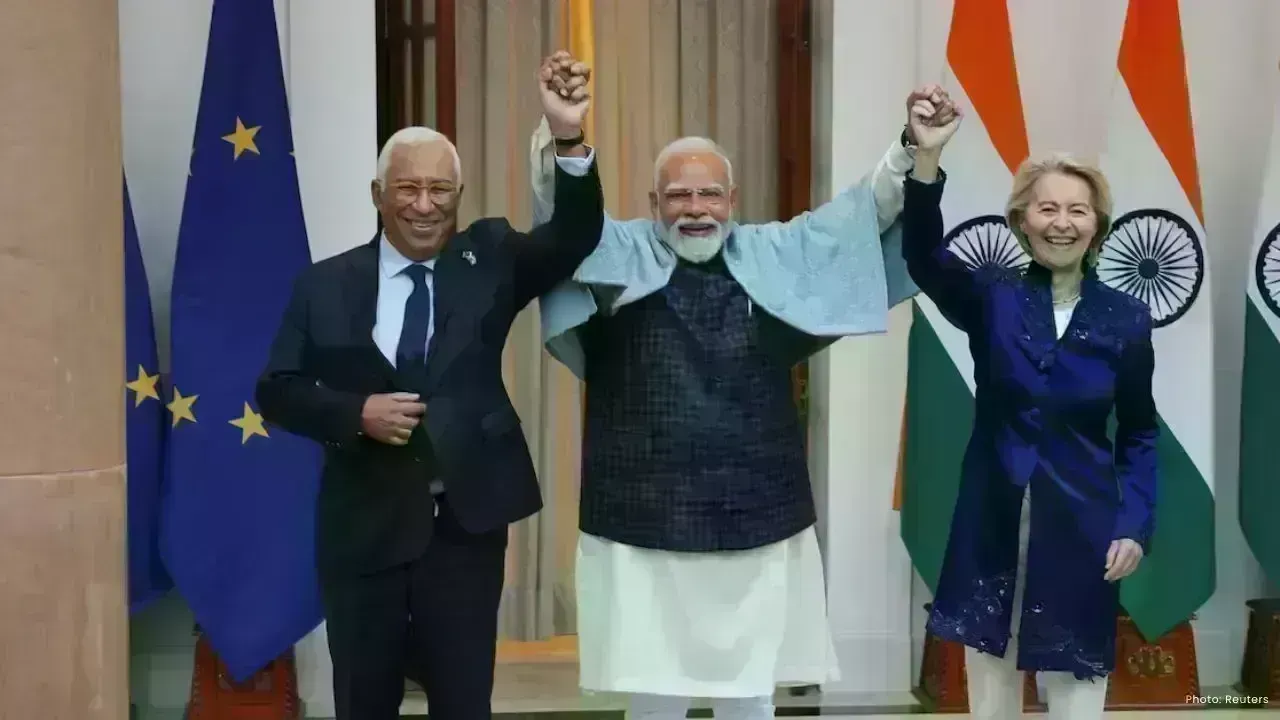
A significant trade agreement has been finalized between India and the European Union, representing one of the largest economic collaborations globally. Prime Minister Narendra Modi marked this achievement on Tuesday, terming it a pivotal juncture in the trade dynamics between the two parties.
This deal concludes nearly 20 years of challenging discussions. Once it is fully ratified, it will connect India’s extensive economy with the 27 EU nations, establishing a trade alliance that accounts for nearly 25% of global economic output and about one-third of international trade.
Prime Minister Modi emphasized the immense potential of this agreement for both sides, projecting benefits for India’s 1.4 billion citizens and people across Europe through expanded market access, job creation, and enhanced investment opportunities. A joint announcement with European Commission President Ursula von der Leyen is set to occur at an India–EU summit in New Delhi, where further details will be presented.
The EU currently stands as India’s largest trading partner, with trade reaching $136.5 billion in the financial year ending March 2025. The new trade agreement is anticipated to significantly increase this figure by lowering tariffs, streamlining trading processes, and enhancing market access for various goods and services.
For India, this agreement suggests an eagerness to cautiously open certain sectors to foreign competition, fostering stronger domestic industries, enhancing product quality, and attracting greater foreign investments. For European businesses, especially in domains such as automobiles, technology, clean energy, and manufacturing, India presents a rapidly expanding market ripe with opportunities.
This agreement is indicative of a broader global trend, as many nations are seeking to bolster trading relationships beyond the United States in response to increasing geopolitical uncertainties. Escalating tensions, including significant U.S. tariffs on Indian products and stalled India–U.S. negotiations, have spurred New Delhi and Brussels to reinforce their collaborative efforts.
In recent weeks, the EU has also finalized substantial trade agreements with groups like the South American Mercosur and other nations. Similarly, India has advanced talks with the UK, New Zealand, and Oman, demonstrating a shift in global trade patterns aimed at protecting national economies from abrupt policy shifts elsewhere.
Although the political aspects of the deal have been settled, it requires legal verification and formalities that will take an additional five to six months before it is officially enacted.
Regardless, the announcement is perceived as a watershed moment. If implemented efficiently, the India–EU trade deal could stimulate economic growth, enhance global supply chains, and provide both parties with enhanced stability amid an unpredictable global economic landscape.





George Russell Wins Dutch GP Sprint, Boosts Mercedes Morale
George Russell wins the Dutch GP Sprint from pole as Mercedes teammate Kimi Antonelli extends his F1

Australia 50/3 After Bangladesh Bowled Out for 64 in Second Test
Australia reached 50/3 after Bangladesh were bowled out for 64 in the second Test, with Mitchell Sta

Jordan Burroughs Returns to Wrestling with 2028 Olympic Dream
Jordan Burroughs returns to wrestling with Real American Freestyle as the Olympic champion eyes a po

Lamborghini Catches Fire on Singapore's ECP, Causing Heavy Traffic
A Lamborghini caught fire on Singapore's ECP, causing heavy traffic and bus delays. No injuries were

Bangkok Airport Duty-Free Area Flooded by Pipe Burst
A burst water pipe flooded the duty-free shopping area at Bangkok's Suvarnabhumi Airport on July 16,
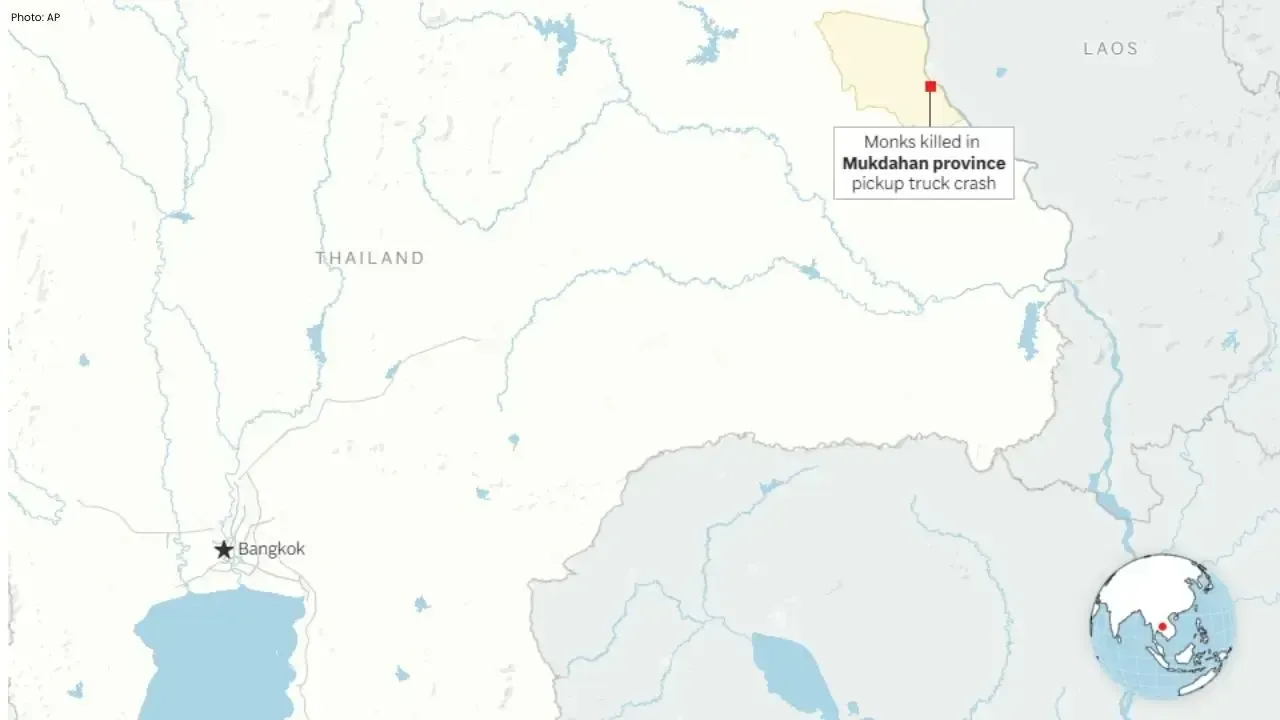
Nine Monks Killed in Thailand Pickup Truck Tragedy
An 11-year-old boy driving a pickup truck crashed into monks during a pilgrimage in northeastern Tha