
You have not yet added any article to your bookmarks!
Join 10k+ people to get notified about new posts, news and tips.
Do not worry we don't spam!
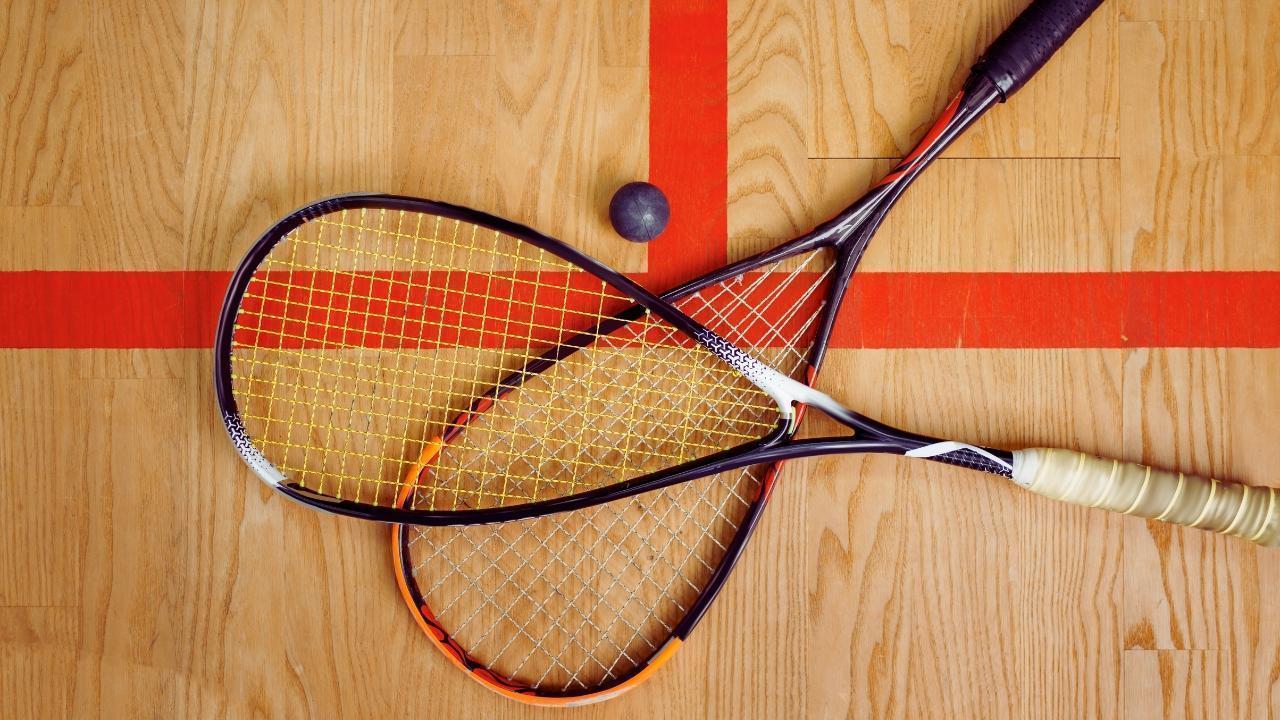
Post by : Anis Farhan
In a landmark achievement for Indian sports, the junior squash team clinched the bronze medal at the 2025 World Junior Team Squash Championship, making headlines in a sport that has long struggled for visibility in the cricket-dominated landscape of the nation. This accomplishment not only marks India’s best performance at the global junior level in recent years but also signals the emergence of a new generation of athletes set to reshape the future of Indian squash.
The road to the bronze medal was anything but easy. Facing formidable competition from countries like Egypt, England, and Malaysia—nations that have traditionally dominated the sport—India’s squad displayed a unique blend of strategy, grit, and technical finesse. The final bronze medal match saw the Indian team edge past Hong Kong in a nail-biting 2–1 victory, a moment that will be etched in the memories of squash enthusiasts across the country.
Key players like Aarav Nair, Kabir Mehra, and Ruhan Chatterjee demonstrated exceptional maturity under pressure, each of them stepping up at critical junctures. The team's ability to adapt to different playing styles and high-altitude indoor courts abroad showed the level of preparation that went into this year’s campaign.
Much of the team’s success can be attributed to the shift in approach by the Squash Rackets Federation of India (SRFI). Over the past two years, SRFI revamped its junior development strategy by roping in international coaches, investing in data analytics, and conducting simulation matches that replicated high-pressure environments.
A key figure in this transition was Coach Rishi Mahajan, whose exposure to international squash circuits brought new tactical dimensions to India’s junior program. Under his guidance, players were not only trained in physical endurance but also in sports psychology, recovery science, and match analytics—factors that contributed significantly to their success in the championship.
Historically, India’s squash ecosystem was centered around a handful of metropolitan cities like Chennai, Mumbai, and Delhi. However, in the past five years, the talent pool has broadened considerably, thanks to grassroots initiatives and government-led sports development programs.
Schemes like Khelo India and Target Olympic Podium (TOPS) have made it easier for young squash players to gain access to international facilities, exposure tours, and mentorship. Several state governments have also upgraded infrastructure, making squash more accessible to students in Tier-II and Tier-III cities.
This year’s bronze medal finish also shattered preconceived notions about squash being an elite, niche sport. The players come from diverse backgrounds—ranging from upper-middle-class families to those who had to navigate financial constraints and lack of access to private coaching. Their journeys are inspiring not just for aspiring squash players but for all young athletes in India looking to break into non-mainstream sports.
One such story is that of Kabir Mehra, who hails from a modest household in Pune and trained on public courts with borrowed equipment. Today, Kabir is being hailed as one of the most promising talents in Asian squash, with several international clubs already eyeing him for future training stints.
India’s performance at the 2025 World Junior Squash Championship is more than a medal win—it’s a signpost of broader change in Indian sports. It indicates that with the right mix of infrastructure, funding, and coaching, Indian athletes can break through global barriers across disciplines.
The success also reflects a growing appetite among Indian audiences for sporting diversity. The widespread media coverage, trending hashtags, and viral social media posts about the team’s performance highlight how far squash has come from being a ‘private club’ activity to a sport capable of uniting a nation.
Despite the bronze medal, there are still significant hurdles that Indian squash needs to address. Infrastructure gaps persist in many parts of the country. There is a severe shortage of certified coaches, particularly in rural areas. Funding and sponsorship remain heavily skewed towards cricket and badminton, leaving squash to compete for limited resources.
Additionally, most promising junior athletes face a cliff once they transition to the senior circuit, where the level of competition, pressure, and physical demands increase exponentially. Without sustained support, many talented players fade into obscurity after promising junior careers.
To keep the momentum going, stakeholders need to ensure this win acts as a catalyst rather than a one-off incident. Some key focus areas include:
Establishing regional training hubs that can scout and train local talent throughout the year.
Partnering with global squash academies for technical training and mentorship.
Bringing squash into the mainstream education system by integrating it as a co-curricular activity in schools.
Improving media coverage and athlete visibility to attract more sponsors and support.
The bronze medal is a perfect springboard for initiating these changes and paving the way for a consistent presence on the global squash stage.
International reactions to India’s performance have been overwhelmingly positive. Commentators and analysts praised the team's resilience, and several former world champions from Australia and Egypt publicly congratulated the young squad on social media. These endorsements further legitimize India’s rise as a serious contender in the world of squash.
The championship also showcased India's potential to host future international squash events. With new venues like the Chennai Squash Academy and Mumbai International Indoor Arena meeting global standards, India is slowly positioning itself as a hub for global tournaments.
The spotlight is now firmly on the young athletes who made the bronze medal dream come true. In the next few months, these players will participate in invitational tournaments across Europe and the Middle East, offering them further international exposure.
There’s also talk of setting up a National Elite Junior Camp, modeled after training programs in Egypt and the UK, that will prepare a core group of athletes for future World Championships, Asian Games, and possibly the Olympics, if squash is included in upcoming editions.
Public sentiment has been overwhelmingly encouraging. Parents, teachers, sports clubs, and local governments are using the team’s performance as a case study to push for more inclusive and better-funded sports programs. Media channels, once indifferent to squash, are now dedicating primetime slots and detailed analysis shows to break down India’s win.
Young fans are flocking to squash clubs across the country, with several facilities reporting a surge in enrollments post the bronze medal win. This kind of response indicates a slow but steady shift in the sports culture of India—a shift that values excellence across multiple disciplines.
This article is intended for informational purposes only. The views and data presented are based on publicly available reports and do not represent the official position of any sporting federation. Newsible Asia does not endorse specific players or events.










PM Modi Pays Tribute to Mahatma Gandhi, Urges People to Support Khadi
PM Modi pays tribute to Mahatma Gandhi on Gandhi Jayanti and urges citizens to support Khadi and the

Amazon Seeks to Offload $8 Billion in Nvidia Chips to Investors
Amazon plans to move $8 billion in Nvidia chips to investors, using a new financing model to strengt

Samsung Raises Galaxy S26 Prices as Memory Chip Costs Rise
Samsung raises Galaxy S26 prices in South Korea as rising memory chip costs put pressure on smartpho

Lewis Hamilton Calls Singapore Grand Prix One of F1's Toughest Races
Lewis Hamilton discusses the demanding Singapore Grand Prix and brings Plus44 and Almave to Singapor

Denmark's Pandora Opens World's Largest Jewellery Factory in Vietnam
Pandora opens its largest jewellery factory in Vietnam, expanding global production, strengthening s

Gautam Gambhir Questions Batting-Friendly Pitches After India's Record ODI Chase
Gautam Gambhir questions batting-friendly ODI pitches after India’s record chase, calling for a bett

