
You have not yet added any article to your bookmarks!
Join 10k+ people to get notified about new posts, news and tips.
Do not worry we don't spam!
Post by : Anis Farhan
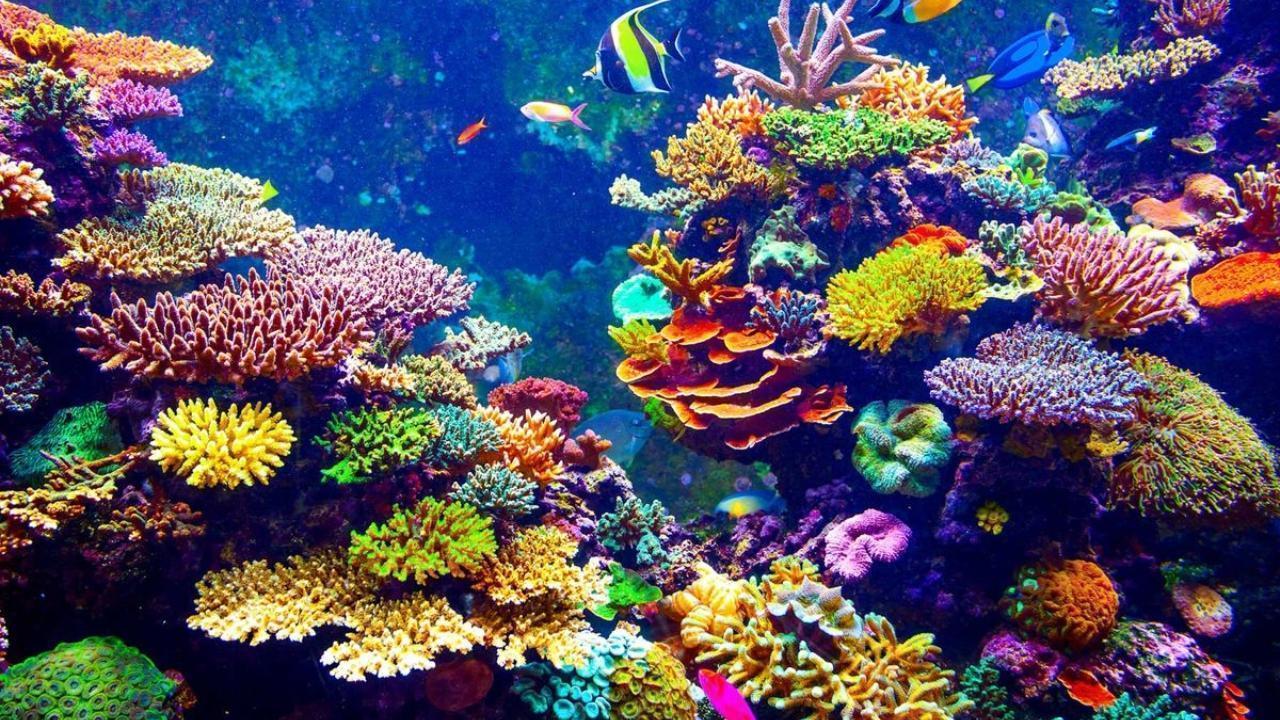
Coral reefs are often called the rainforests of the sea—and for good reason. Although they cover less than one percent of the ocean floor, coral reefs support nearly a quarter of all marine species. From tiny plankton to large predatory fish, an astonishing variety of life depends on these vibrant underwater ecosystems for survival.
Beyond their beauty, coral reefs play a critical role in maintaining ocean health. They provide food, shelter, breeding grounds, and protection for countless marine organisms. Understanding how coral reefs support marine life reveals why their decline poses such a serious threat to the world’s oceans.
Coral reefs are built by small animals called coral polyps. These organisms secrete calcium carbonate, forming hard skeletons that accumulate over thousands of years. As generations of polyps grow and die, their skeletons create the complex reef structures visible today.
Despite resembling plants or rocks, corals are animals that rely on a delicate balance between biology and environment to survive.
Inside coral polyps live microscopic algae known as zooxanthellae. This relationship is mutually beneficial:
The algae use sunlight to produce energy through photosynthesis
Corals receive nutrients that fuel growth and reef building
Algae gain protection and access to sunlight
This partnership forms the foundation of reef productivity and supports the entire ecosystem above it.
Coral reefs create a three-dimensional maze of crevices, ledges, and caves. These structures provide shelter from predators and harsh ocean conditions. Small fish, crustaceans, mollusks, and juvenile species rely on reefs as safe havens.
Many species spend their early life stages on reefs before migrating to deeper waters, making reefs essential nurseries for marine populations.
A single healthy reef can host:
Hundreds of fish species
Sea turtles and rays
Sponges and sea anemones
Crabs, shrimp, and lobsters
Worms, snails, and microscopic organisms
This dense biodiversity creates a balanced ecosystem where each species plays a specific role.
Coral reefs are among the most productive ecosystems on Earth. Energy generated by photosynthetic algae supports corals, which in turn sustain herbivorous fish that graze on algae. These fish become food for larger predators, forming a complex and efficient food web.
Even species that do not live directly on reefs often depend on reef-based food chains for survival.
Many larger marine animals, including sharks, groupers, and barracudas, rely on coral reefs as hunting grounds. The abundance of prey concentrated around reefs makes them vital feeding zones in tropical oceans.
Coral reefs provide ideal conditions for reproduction. Many fish species lay eggs among corals, where structures protect them from strong currents and predators. Others use reefs as spawning aggregation sites, releasing eggs and sperm in synchronised events.
These breeding behaviors are closely tied to reef health and stability.
Young fish and invertebrates face high mortality rates in open waters. Reefs increase survival by offering:
Food-rich environments
Protection from predators
Calm water conditions
Without reefs, many marine species would struggle to replenish their populations.
Herbivorous fish that live on coral reefs play a crucial role in keeping algae under control. Without these grazers, algae can overgrow and smother corals, disrupting the ecosystem.
Healthy reefs maintain a balance where corals dominate rather than being overtaken by algae.
Marine species on reefs are deeply interconnected. Cleaner fish remove parasites from larger fish, predators control population sizes, and scavengers recycle nutrients. This interdependence ensures ecosystem stability and resilience.
Tropical oceans are often nutrient-poor, yet coral reefs thrive. They recycle nutrients efficiently through tight biological loops. Waste from one organism becomes food for another, minimizing loss.
This recycling allows reefs to flourish in environments where other ecosystems could not survive.
Healthy coral reefs help trap sediments and stabilize the seafloor. This keeps surrounding waters clear, allowing sunlight to penetrate and support photosynthesis, further benefiting marine life.
Coral reefs act as natural breakwaters, absorbing wave energy and reducing the force of storms. This protection creates calmer waters behind reefs, benefiting seagrass beds, mangroves, and nearshore marine habitats.
These calmer zones support species that cannot tolerate strong wave action.
Reefs are part of a larger marine network. They connect with:
Mangroves that shelter juvenile fish
Seagrass meadows that provide feeding grounds
Open oceans that support migratory species
The loss of reefs disrupts this entire system.
Millions of people worldwide rely on reef-associated fish for protein and income. Coral reefs support commercial and subsistence fisheries by sustaining fish populations and biodiversity.
When reefs decline, fish stocks often collapse, affecting livelihoods and food supplies.
Beyond ecology, coral reefs support tourism, recreation, and cultural traditions. Healthy reefs attract divers, researchers, and coastal communities whose lives are intertwined with marine ecosystems.
Rising ocean temperatures cause coral bleaching, where corals expel their symbiotic algae. Without algae, corals lose their main energy source and may die if conditions do not improve.
Bleached reefs lose their ability to support marine life effectively.
Runoff, plastic waste, destructive fishing practices, and coastal development damage reefs. Overfishing disrupts food webs, while pollution reduces water quality, making reefs less resilient.
Coral reefs are not just beautiful underwater landscapes. They are life-support systems for the ocean. Their ability to shelter, feed, and sustain marine life makes them irreplaceable.
Protecting coral reefs means protecting marine biodiversity, global fisheries, and the balance of ocean ecosystems.
Coral reefs are the backbone of marine ecosystems. By providing habitat, food, protection, and breeding grounds, they support an extraordinary diversity of life. Their decline threatens not only marine species but also human communities that depend on healthy oceans.










PM Modi Pays Tribute to Mahatma Gandhi, Urges People to Support Khadi
PM Modi pays tribute to Mahatma Gandhi on Gandhi Jayanti and urges citizens to support Khadi and the

Amazon Seeks to Offload $8 Billion in Nvidia Chips to Investors
Amazon plans to move $8 billion in Nvidia chips to investors, using a new financing model to strengt

Samsung Raises Galaxy S26 Prices as Memory Chip Costs Rise
Samsung raises Galaxy S26 prices in South Korea as rising memory chip costs put pressure on smartpho

Lewis Hamilton Calls Singapore Grand Prix One of F1's Toughest Races
Lewis Hamilton discusses the demanding Singapore Grand Prix and brings Plus44 and Almave to Singapor

Denmark's Pandora Opens World's Largest Jewellery Factory in Vietnam
Pandora opens its largest jewellery factory in Vietnam, expanding global production, strengthening s

Gautam Gambhir Questions Batting-Friendly Pitches After India's Record ODI Chase
Gautam Gambhir questions batting-friendly ODI pitches after India’s record chase, calling for a bett

