
You have not yet added any article to your bookmarks!
Join 10k+ people to get notified about new posts, news and tips.
Do not worry we don't spam!
Post by : Anis Farhan
In the race toward net-zero carbon goals, green hydrogen has emerged as a promising contender—a clean, energy-dense fuel that emits only water when burned. From Japan and South Korea to India and Indonesia, Asian governments are betting big on this elusive molecule to decarbonize industries, power transportation, and stabilize grids. But in 2025, as more pilot plants come online and roadmaps shift from paper to pavement, the question remains: is green hydrogen reality—or mostly hype?
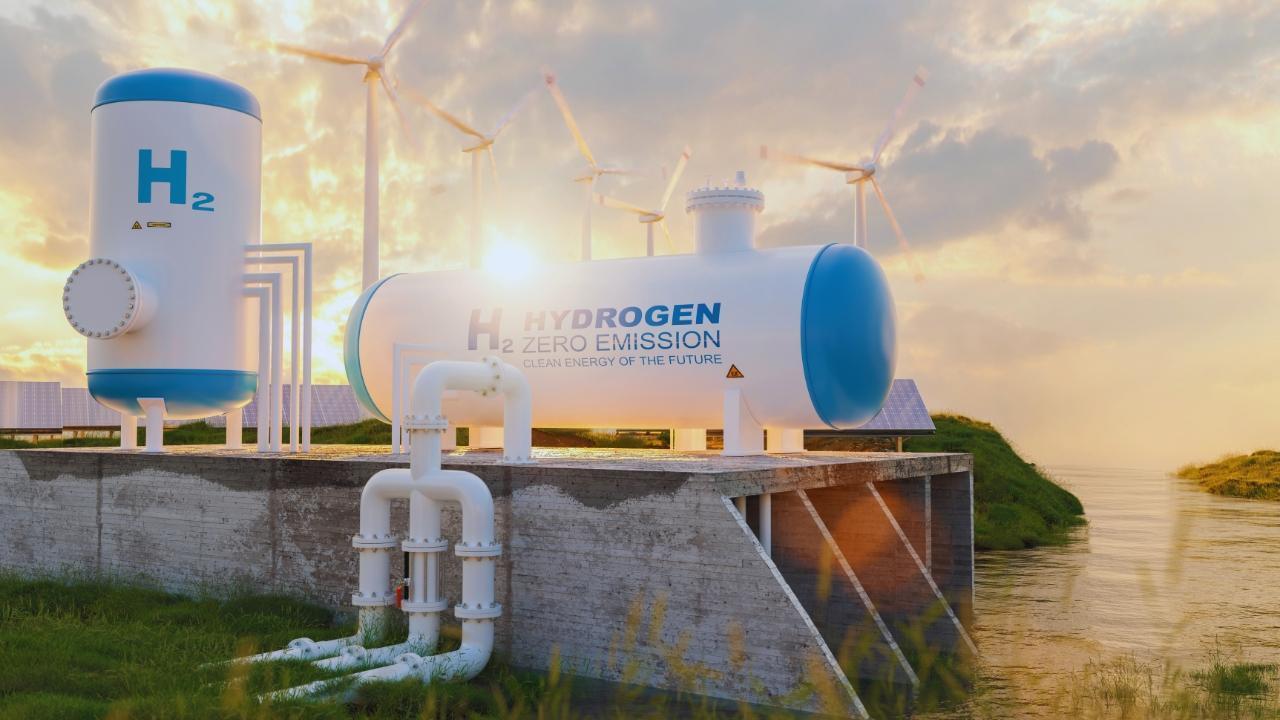
Green hydrogen is produced by using renewable electricity to split water molecules into hydrogen and oxygen through electrolysis. Unlike grey or blue hydrogen, which are derived from fossil fuels and emit significant carbon, green hydrogen is virtually emissions-free—provided the electricity used comes from clean sources.
While the potential is enormous, the technology remains in its early stages, especially in Asia where the challenges of cost, infrastructure, and market readiness are still being worked through. Despite these hurdles, the region is seeing strong momentum, with several governments rolling out national hydrogen missions and private players pouring in capital.
Asia is home to some of the world’s most energy-hungry and pollution-intensive economies. Countries like China, India, and Indonesia rely heavily on coal and imported oil. Meanwhile, industries such as steel, cement, petrochemicals, and long-haul transport are notoriously hard to decarbonize with solar or wind alone.
This is where green hydrogen could be a game changer. It can be used as:
A feedstock for ammonia in fertilizers and shipping fuel
A replacement for coal in steelmaking
A fuel for fuel-cell vehicles in freight, aviation, and rail
A storage medium for surplus renewable energy
According to the International Energy Agency (IEA), hydrogen could account for up to 13% of global energy demand by 2050, but only if production and infrastructure scale quickly—and affordably.
Japan has long been a pioneer in hydrogen, with investments dating back to the early 2000s. Its Basic Hydrogen Strategy, updated in 2023, targets 3 million tons of annual hydrogen consumption by 2030. Toyota, Honda, and Kawasaki are already commercializing fuel-cell vehicles and hydrogen-powered ships.
However, much of Japan’s hydrogen is still “grey” or imported. In 2025, the government is pushing to localize green hydrogen production by expanding offshore wind capacity and deploying large-scale electrolysis units in Fukushima Prefecture.
South Korea, too, is pushing ahead. Its Hydrogen Economy Roadmap aims for 5 million hydrogen vehicles and 1,200 refueling stations by 2040. Incheon and Ulsan are emerging as hydrogen industry hubs, supported by Hyundai’s investment in fuel-cell technology.
India launched its National Green Hydrogen Mission in 2023, allocating over ₹19,700 crore ($2.4 billion) to support electrolyzer manufacturing, pilot projects, and R&D. In 2025, the country has begun construction on its first round of industrial-scale green hydrogen plants in Gujarat and Rajasthan.
The government is targeting 5 million metric tonnes of green hydrogen annually by 2030, focusing initially on replacing grey hydrogen used in refineries and fertilizer units. Major conglomerates like Reliance Industries, Adani, and Indian Oil Corporation are leading the charge, although most projects are still in the pre-commercial phase.
India’s edge lies in its abundant solar power, which could make hydrogen production cost-effective over time. However, water scarcity, transmission issues, and policy clarity remain major concerns.
China is the world’s largest producer and consumer of hydrogen—but most of it is grey. The government has released provincial-level hydrogen roadmaps, and cities like Beijing, Shanghai, and Chengdu are investing in fuel-cell buses, trucks, and trains.
In 2025, China is running pilot green hydrogen projects powered by solar and wind in Inner Mongolia and Xinjiang. Still, scaling green hydrogen to national levels remains a challenge given China’s massive energy needs and continued reliance on coal for grid power.
Experts suggest that China’s strength in electrolyzer manufacturing and infrastructure rollout could give it a lead once green electricity capacity expands further.
Despite promising developments, green hydrogen faces several roadblocks:
High costs: As of 2025, green hydrogen still costs 2 to 4 times more than grey hydrogen, though prices are falling as electrolyzer efficiency improves.
Infrastructure gaps: There is a lack of pipelines, storage, and refueling stations to support widespread use.
Energy losses: Converting electricity to hydrogen and back into usable energy is inefficient—up to 30–40% energy is lost in the cycle.
Water consumption: Electrolysis requires pure water, which may strain arid regions already facing climate stress.
Lack of standards: Regulatory clarity around certification, safety, and cross-border trade is still evolving.
Until these issues are addressed, most green hydrogen projects remain limited to industrial pilots or transport prototypes, rather than mass-market rollouts.
Governments are stepping up policy support. In 2025, ASEAN announced a Hydrogen Readiness Framework to coordinate safety standards and regional production. Japan and Australia are deepening their hydrogen trade alliance, while India and UAE are exploring green hydrogen export corridors.
Private-sector innovation is also accelerating. Startups are developing modular electrolyzers, hydrogen-based microgrids, and AI-driven efficiency tools. Cross-border investment funds are being set up to scale high-risk projects.
Meanwhile, global climate pressure is pushing companies to decarbonize supply chains. Multinational firms are already signing green hydrogen purchase agreements, which could become a key demand driver—especially in sectors like shipping, aviation, and steel.
Green hydrogen is not a silver bullet, but it’s fast becoming an essential arrow in the clean energy quiver—especially for sectors that cannot be electrified easily. For Asia, the stakes are high. With the right investment, collaboration, and policy clarity, green hydrogen could help the region leapfrog toward a low-carbon future.
Yet caution is warranted. Without proper planning, the hydrogen push risks becoming yet another tech-driven bubble, disconnected from on-the-ground realities like infrastructure readiness and social equity.
As of 2025, the hype is real—but so is the progress. Whether that translates into scalable impact depends on decisions made today.
This article is for informational purposes only. It does not constitute technical, investment, or energy policy advice. Readers are encouraged to consult national roadmaps and regulatory authorities for project-specific developments.










PM Modi Pays Tribute to Mahatma Gandhi, Urges People to Support Khadi
PM Modi pays tribute to Mahatma Gandhi on Gandhi Jayanti and urges citizens to support Khadi and the

Amazon Seeks to Offload $8 Billion in Nvidia Chips to Investors
Amazon plans to move $8 billion in Nvidia chips to investors, using a new financing model to strengt

Samsung Raises Galaxy S26 Prices as Memory Chip Costs Rise
Samsung raises Galaxy S26 prices in South Korea as rising memory chip costs put pressure on smartpho

Lewis Hamilton Calls Singapore Grand Prix One of F1's Toughest Races
Lewis Hamilton discusses the demanding Singapore Grand Prix and brings Plus44 and Almave to Singapor

Denmark's Pandora Opens World's Largest Jewellery Factory in Vietnam
Pandora opens its largest jewellery factory in Vietnam, expanding global production, strengthening s

Gautam Gambhir Questions Batting-Friendly Pitches After India's Record ODI Chase
Gautam Gambhir questions batting-friendly ODI pitches after India’s record chase, calling for a bett

