You have not yet added any article to your bookmarks!
Join 10k+ people to get notified about new posts, news and tips.
Do not worry we don't spam!
Post by : Anis Farhan
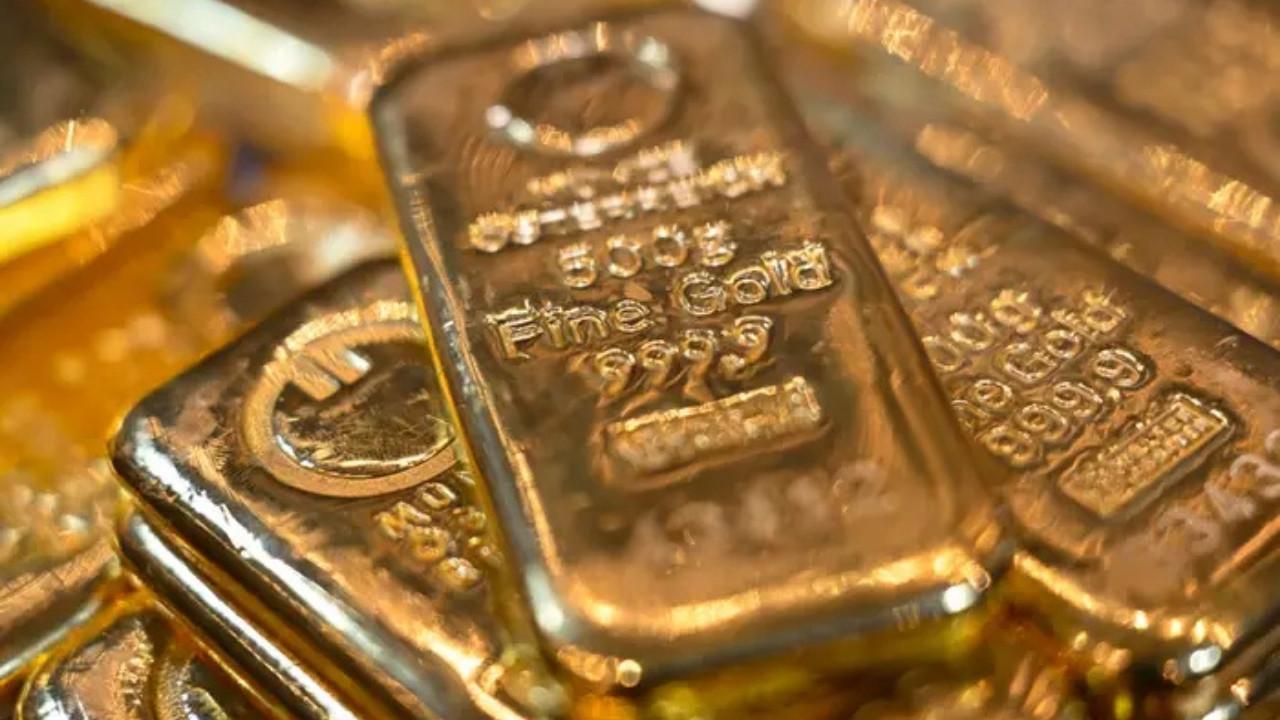
Gold reached a historically significant price level in early 2026 — climbing past the $5,000 per troy ounce mark during trading sessions. This unprecedented move reflected profound shifts in investor behaviour, market sentiment, and macroeconomic dynamics. For decades, gold has been viewed as a safe-haven asset, a store of wealth during times of uncertainty. In 2026, that role intensified, with prices pushing to levels never seen before in global markets.
This surge comes after years of gradual price appreciation and a period of heightened financial volatility, geopolitical tensions, and shifting monetary policies. For investors, policymakers, and consumers, gold’s ascent beyond $5,000 per ounce signals more than just a record-breaking headline — it points to deep structural changes in global finance, risk management strategies, and the role of precious metals in portfolio diversification.
On 13 February 2026, gold prices surged past the $5,000 per ounce level in trading, with intraday highs reaching around $5,019. This milestone came after a volatile period when prices temporarily dipped below the level earlier, but strong buying momentum and renewed investor interest helped it rebound strongly.
Gold’s passage of the $5,000 mark was not just symbolic; it represents one of the most dynamic movements in the precious-metals market. Breaking through such a major psychological barrier has pushed gold into uncharted territory and opened fresh debates on where prices might go next.
The gold rally did not occur in isolation. Other precious metals like silver, platinum, and palladium also experienced significant gains. Silver notably climbed back above $80 per ounce and saw renewed strength after recent volatility, while platinum and palladium exhibited supportive trends.
This broader strengthening of the metals sector indicates a flight to tangible assets, where investors hedge against macroeconomic risk by moving into physical or commodity-linked holdings. Gold’s leadership in this trend underpins its role as a cornerstone of safe-haven portfolios.
Gold is widely regarded as a hedge during economic and geopolitical instability. In the past year, rising tensions between major economies, concerns about fiscal policies, and fears of financial turbulence have driven investors toward safe assets — particularly gold.
Increased speculation around geopolitical events — including trade disputes, tariff wars, and global policy shifts — has pushed gold higher as market participants seek to protect their capital. This safe-haven demand has been a major factor underlying the surge toward $5,000 per ounce.
Central banks around the world have been accumulating gold as a diversification strategy away from traditional reserve assets like U.S. Treasuries. This institutional demand provides a structural floor that supports elevated gold prices, even amid broader market fluctuations.
Additionally, expectations of monetary easing and possible interest-rate cuts — particularly from major central banks — have increased gold’s appeal. Lower interest rates reduce the opportunity cost of holding non-yielding assets like gold, making them more attractive relative to other financial instruments.
Gold and the U.S. dollar often show an inverse relationship. When the dollar weakens, gold tends to strengthen as it becomes cheaper for foreign investors to acquire. Recent currency pressures, including softness in the dollar index and concerns about fiscal stability in major economies, have boosted demand for gold.
This dynamic was particularly evident as currency markets reacted to trade policy uncertainty and macroeconomic data that suggested limited near-term growth prospects. In such environments, gold becomes a preferred hedge against currency risk.
Traders across global commodity markets responded to gold’s breakthrough into seven-figure valuation (in dollar terms) with mixed reactions. Some took profits during early surges, while others doubled down on gold holdings, viewing the rally as part of a long-term bullish trend.
Analysts have noted that gold’s stability around the $5,000 mark is essential for its long-term trajectory. Momentum investors see this level as a psychological anchoring point, which could either act as support or resistance depending on future market signals.
Financial strategists and commodity experts have projected further upside for gold:
Some analysts suggest prices may target $5,500 and above in the near-to-mid term, reflecting ongoing safe-haven demand.
Long-term forecasts — driven by structural shifts in reserves, inflation expectations, and geopolitical uncertainty — propose gold could reach $7,000 or higher over extended periods.
Despite occasional volatility and profit-taking pressures, the overall sentiment remains bullish, supported by macro trends that favour precious metals as core components of diversified portfolios.
Gold’s rise above $5,000 has broader implications across commodity markets. The shift in investor focus towards precious metals often coincides with reduced appetite for risk assets like equities and bonds, especially where flux in monetary policy and economic indicators triggers asset reallocation.
Metals such as silver and platinum, which have industrial and investment demand, also benefit indirectly from this momentum, reinforcing the broader commodities rally.
In regions where gold holds cultural and economic significance — such as the Middle East, South Asia, and parts of Africa — the price surge has direct implications for consumers and investors:
Retail gold purchases may slow as prices climb sharply, especially for jewellery and luxury segments.
Investment demand — through bullion, ETFs, and sovereign-linked instruments — tends to increase as physical holdings are viewed as safer stores of value.
In markets like the UAE, local gold pricing dynamics reflect global trends, with 24-carat and 22-carat bullion values pushed higher in line with international benchmarks.
High asset valuations often come with increased volatility. Gold’s rapid ascent has seen occasional pullbacks and sharp movements as traders rebalance portfolios or take profits. These corrections — while normal in commodity markets — can test investor confidence at key price levels.
Analysts caution that profit-taking and speculative shifts can induce short-term volatility, even as long-term fundamentals support the bullish story.
Disruptive policy changes — such as sudden shifts in interest rates, unexpected inflation data, or new fiscal initiatives — could influence gold’s direction. Central bank responses and government interventions in currency and bond markets remain key variables that will shape the precious metals landscape through 2026 and beyond.
Gold’s surge past $5,000 per ounce in 2026 marks one of the most significant events in modern commodity markets. This milestone is rooted in heightened safe-haven demand, central bank accumulation, monetary policy expectations, and currency dynamics. The rally underscores the enduring importance of gold as a strategic hedge against uncertainty and a core asset in diversified portfolios.
While volatility and economic crosscurrents remain, gold’s momentum reflects broader shifts in investor sentiment and global risk perception. As markets adapt to changing policy environments and geopolitical signals, the precious metal’s trajectory will continue to be a barometer of confidence — and trepidation — in the global financial system.
This article is based on verified market data and publicly available reports on gold prices breaking the $5,000 per ounce milestone. It has been independently written and does not reproduce copyrighted material from original sources.









George Russell Wins Dutch GP Sprint, Boosts Mercedes Morale
George Russell wins the Dutch GP Sprint from pole as Mercedes teammate Kimi Antonelli extends his F1

Australia 50/3 After Bangladesh Bowled Out for 64 in Second Test
Australia reached 50/3 after Bangladesh were bowled out for 64 in the second Test, with Mitchell Sta

Jordan Burroughs Returns to Wrestling with 2028 Olympic Dream
Jordan Burroughs returns to wrestling with Real American Freestyle as the Olympic champion eyes a po

Lamborghini Catches Fire on Singapore's ECP, Causing Heavy Traffic
A Lamborghini caught fire on Singapore's ECP, causing heavy traffic and bus delays. No injuries were

Bangkok Airport Duty-Free Area Flooded by Pipe Burst
A burst water pipe flooded the duty-free shopping area at Bangkok's Suvarnabhumi Airport on July 16,

Nine Monks Killed in Thailand Pickup Truck Tragedy
An 11-year-old boy driving a pickup truck crashed into monks during a pilgrimage in northeastern Tha