
You have not yet added any article to your bookmarks!
Join 10k+ people to get notified about new posts, news and tips.
Do not worry we don't spam!
Post by : Anis Farhan
In July 2025, the world took a historic step toward reversing one of the planet’s most pressing environmental disasters. After nearly three years of intense negotiations, 150 countries signed the first-ever Global Plastic Pollution Treaty in Geneva, Switzerland—an agreement hailed as the most ambitious environmental pact since the Paris Climate Accord.
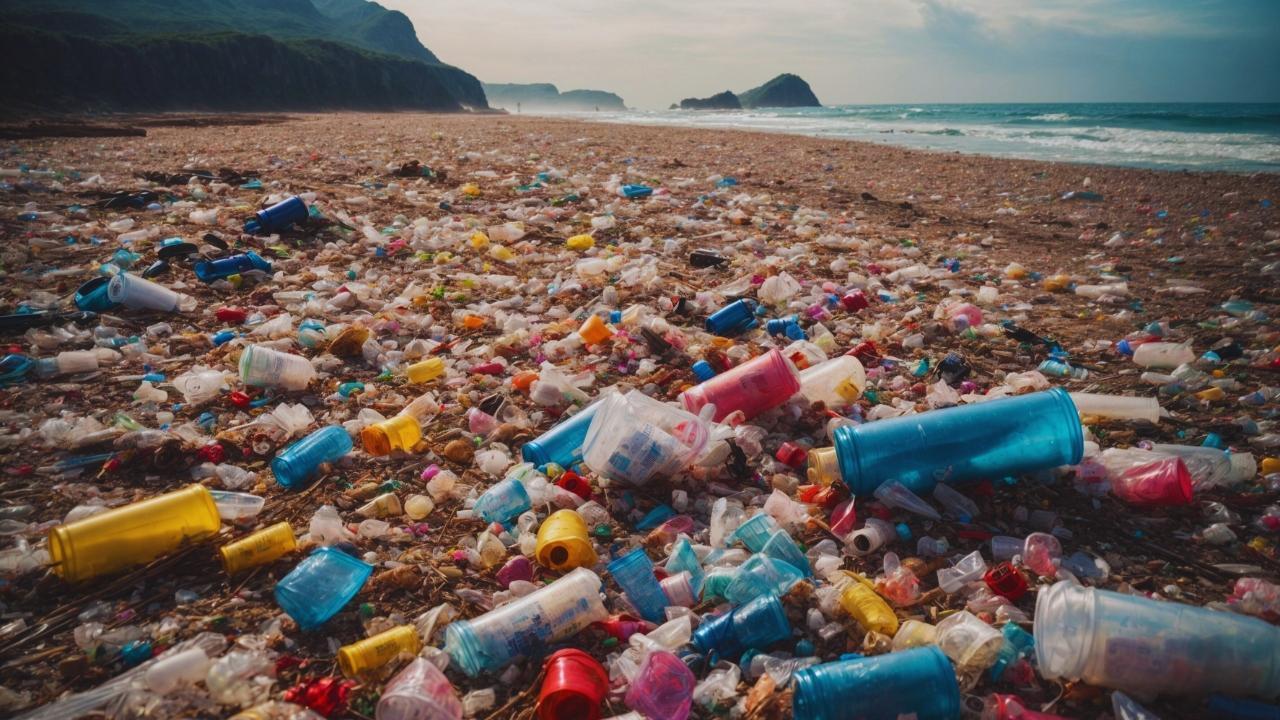
The treaty, negotiated under the United Nations Environment Programme (UNEP), seeks to curb plastic production, eliminate single-use waste, and regulate the full lifecycle of plastics—from extraction to disposal. With plastic waste suffocating oceans, infiltrating food chains, and now being found in human blood, this treaty marks a bold, if overdue, response to a crisis spiraling out of control.
But as celebratory handshakes give way to the hard work of implementation, many are asking: Can this global deal truly solve the plastic pollution problem?
The world produces over 430 million tonnes of plastic annually, and that number is expected to triple by 2060 if current trends continue. An estimated 11 million tonnes of plastic flow into the oceans each year, devastating marine life and ecosystems. Plastic micro-particles are now found in everything from Arctic ice to the placentas of newborns.
Previous national bans, corporate pledges, and recycling efforts have failed to stem the tide. The problem isn’t just plastic waste—it’s the entire system built around fossil fuel-based plastic production, poor waste management, and unchecked global consumption.
A legally binding international treaty was seen as the only way to bring coordinated, enforceable, and scientifically guided action to all corners of the world.
Unlike the voluntary Paris Agreement, the Global Plastic Treaty is legally binding. Here's what it covers:
Global reduction targets: Countries must submit five-year plans to reduce plastic production and use, with annual audits.
Ban on problematic plastics: By 2030, nations must eliminate most single-use items, including plastic cutlery, straws, sachets, and microbeads.
Lifecycle regulation: The treaty applies not only to plastic waste but to raw material extraction, design, packaging, and reuse.
Extended producer responsibility (EPR): Corporations must collect and recycle a percentage of their plastic output—escalating each year.
Technology transfer fund: A $12 billion global fund will support waste management infrastructure in low-income countries.
Trade restrictions: Exporting plastic waste to developing nations will be heavily restricted to prevent "garbage colonialism."
Critically, the treaty is structured around a “polluter pays” model, meaning companies and countries that produce and consume the most plastic will shoulder the highest responsibilities and costs.
Of the 193 UN member states, 150 have signed the treaty, including major players like the EU, India, Brazil, and even China. However, some of the world's largest plastic producers—the United States, Russia, and Saudi Arabia—have not signed the agreement, citing concerns over economic impact and sovereignty.
The U.S. in particular lobbied for a “bottom-up” approach, where countries could set their own targets, similar to the Paris framework. While it hasn’t rejected the treaty entirely, its refusal to commit to binding targets has disappointed many environmental groups.
Nevertheless, the momentum remains strong. Multinational corporations like Nestlé, Unilever, and Coca-Cola—long criticized for their role in the plastic problem—have pledged support for the treaty’s goals, albeit cautiously.
Some companies have responded with enthusiasm. IKEA announced a full phase-out of fossil-based plastics in its product lines by 2028. Danone has committed to using only biodegradable and compostable packaging by 2030.
Others are more wary. The American Chemistry Council, representing plastic manufacturers, warned the treaty could “cripple industrial innovation” and “increase costs for consumers.” Oil-rich nations, where plastic production is often a key economic pillar, have also expressed concerns.
Still, with ESG (Environmental, Social, and Governance) criteria gaining importance in global finance, companies that lag behind could face reputational damage and investment loss.
Despite its promise, the treaty faces enormous implementation challenges:
Monitoring compliance: Developing robust systems to verify data and prevent “greenwashing” will be essential.
Economic pushback: Plastic is cheap, durable, and profitable. Changing this equation will require disrupting powerful economic interests.
Technological gaps: Many countries still lack adequate recycling infrastructure or alternatives to plastic packaging.
Global inequality: Wealthier nations may more easily transition, while poorer countries risk being left behind unless funding and support are delivered.
There’s also the cultural challenge. Plastic is deeply embedded in modern life—from medical devices to food security. A truly circular economy demands not just policy changes but lifestyle shifts across billions of consumers.
Environmental activists have largely welcomed the treaty but remain cautious. Greenpeace International called it a “milestone with asterisks,” urging world leaders to enforce—not just sign—the treaty.
“We’ve seen too many beautiful documents die in committee rooms,” said Mona Ratcliffe, Greenpeace’s plastics campaigner. “This one must live in factories, markets, oceans, and homes.”
Meanwhile, youth-led movements across the globe have mobilized to track implementation. Digital watchdogs and citizen science groups are building apps and databases to report illegal dumping, monitor corporate compliance, and measure local plastic footprints.
The treaty may take years to fully come into effect, but changes will start appearing soon. Consumers will notice:
Fewer plastic items at grocery stores and restaurants
Higher prices on goods with excessive packaging
A push toward reusable and refillable options
Public campaigns on sorting and reducing household waste
Schools, businesses, and local governments are expected to play key roles in educating citizens and adapting infrastructure.
The Global Plastic Treaty is not a silver bullet. But it is a first step toward systemic change in how humanity consumes, disposes of, and thinks about plastic.
For the first time, the world is uniting under one legal framework to tackle a crisis that respects no borders. It will test our cooperation, our creativity, and our political will.
But if followed through, it might just give us a chance to reverse the plastic tide before it becomes an irreversible flood.
This editorial report is published by Newsible Asia. It reflects the latest global policy developments as of July 2025 and is based on verified reports, treaty texts, and stakeholder interviews. Opinions quoted are those of their respective individuals or organizations.










PM Modi Pays Tribute to Mahatma Gandhi, Urges People to Support Khadi
PM Modi pays tribute to Mahatma Gandhi on Gandhi Jayanti and urges citizens to support Khadi and the

Amazon Seeks to Offload $8 Billion in Nvidia Chips to Investors
Amazon plans to move $8 billion in Nvidia chips to investors, using a new financing model to strengt

Samsung Raises Galaxy S26 Prices as Memory Chip Costs Rise
Samsung raises Galaxy S26 prices in South Korea as rising memory chip costs put pressure on smartpho

Lewis Hamilton Calls Singapore Grand Prix One of F1's Toughest Races
Lewis Hamilton discusses the demanding Singapore Grand Prix and brings Plus44 and Almave to Singapor

Denmark's Pandora Opens World's Largest Jewellery Factory in Vietnam
Pandora opens its largest jewellery factory in Vietnam, expanding global production, strengthening s

Gautam Gambhir Questions Batting-Friendly Pitches After India's Record ODI Chase
Gautam Gambhir questions batting-friendly ODI pitches after India’s record chase, calling for a bett

