You have not yet added any article to your bookmarks!
Join 10k+ people to get notified about new posts, news and tips.
Do not worry we don't spam!
Post by : Saif Rahman
As Gaza transitions into the second phase of the ceasefire, many residents are grappling with harsh realities. While “ceasefire” ignites hope, individuals on the ground express disappointment, indicating that peace on paper often fails to translate into real relief.
This next phase of the ceasefire primarily focuses on managing daily life in Gaza and initiating the extensive rebuilding process. A newly formed administrative body, comprising professionals, is expected to oversee essential services and reconstruction efforts. However, past experiences have led to widespread skepticism about its effectiveness.
One of the most pressing concerns for Gazans remains their access to the outside world. Border crossings continue to be heavily restricted, hampering the import of food, medicine, fuel, and building materials. Many individuals in need of medical attention are unable to exit Gaza for necessary treatments, and aid trickles in at a slow pace.
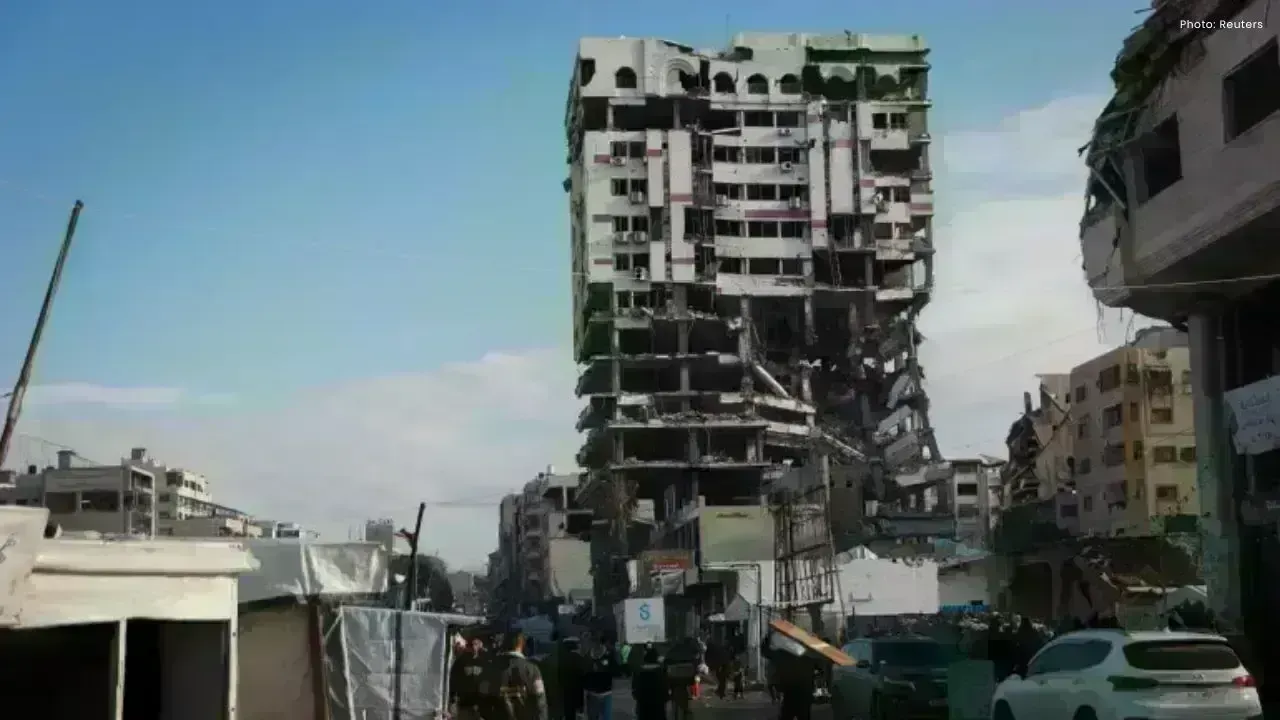
A significant portion of the territory remains devastated. Numerous homes, schools, hospitals, and roads remain in disrepair following the violence. Thousands find themselves living in temporary shelters or compromised buildings. With even basic amenities like fresh water and electricity often unreliable, the prospect of rebuilding feels elusive.
Security anxieties persist as well. Despite the cessation of major hostilities, underlying fears linger. Parents find it challenging to assure their children's safety, and there’s a pervasive anxiety about a potential return to violence, complicating any plans for the future.
The uncertainty surrounding political commitments is another cause for concern. Many Palestinians express skepticism over past assurances, noting that tangible improvements have often been superficial. Without concrete measures—such as unrestricted access for aid, freedom of movement, and durable assurances—optimism remains tenuous.
However, amid these hurdles, the desire for peace remains strong among Gazans. They aspire to reconstruct their lives, send their children to school, and pursue normalcy without the shadow of fear. The second phase of the ceasefire is viewed as a critical juncture; it could boost trust if genuine relief is achieved or lead to deepening disappointment otherwise.
For the moment, Palestinians in Gaza remain on edge, awaiting definitive change while cautiously observing whether this phase will be a turning point or yet another missed opportunity in their long journey of hardship.








George Russell Wins Dutch GP Sprint, Boosts Mercedes Morale
George Russell wins the Dutch GP Sprint from pole as Mercedes teammate Kimi Antonelli extends his F1

Australia 50/3 After Bangladesh Bowled Out for 64 in Second Test
Australia reached 50/3 after Bangladesh were bowled out for 64 in the second Test, with Mitchell Sta

Jordan Burroughs Returns to Wrestling with 2028 Olympic Dream
Jordan Burroughs returns to wrestling with Real American Freestyle as the Olympic champion eyes a po

Lamborghini Catches Fire on Singapore's ECP, Causing Heavy Traffic
A Lamborghini caught fire on Singapore's ECP, causing heavy traffic and bus delays. No injuries were

Bangkok Airport Duty-Free Area Flooded by Pipe Burst
A burst water pipe flooded the duty-free shopping area at Bangkok's Suvarnabhumi Airport on July 16,

Nine Monks Killed in Thailand Pickup Truck Tragedy
An 11-year-old boy driving a pickup truck crashed into monks during a pilgrimage in northeastern Tha