
You have not yet added any article to your bookmarks!
Join 10k+ people to get notified about new posts, news and tips.
Do not worry we don't spam!
Post by : Anis Farhan
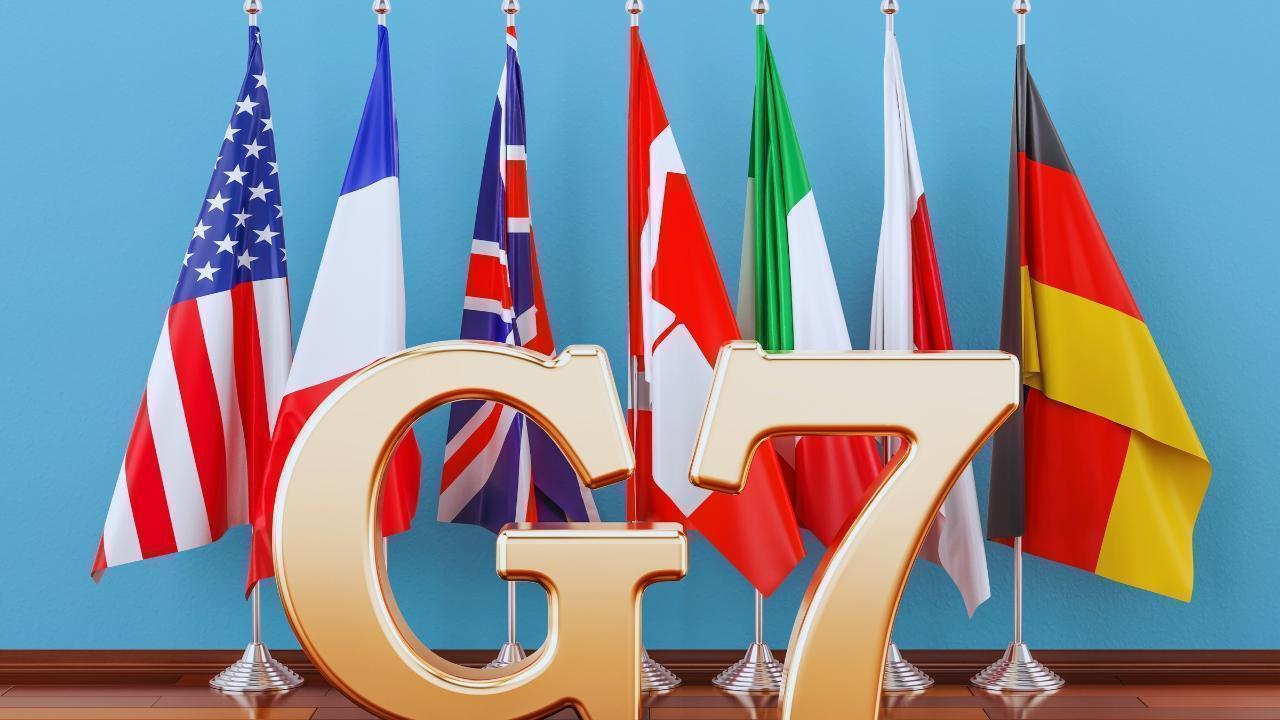
This year’s summit was unique in tone: fewer joint declarations and more issue-based action plans. While the G7 countries—Canada, France, Germany, Italy, Japan, UK, US, plus EU observers—formally met between June 15 and 17, the premature exit of the U.S. president created a shift. Traditional unity was replaced by six themed statements on topics ranging from AI and mineral supply to migrant smuggling and quantum innovation.
AI was front and center as both opportunity and challenge. Leaders issued a “Leaders’ Statement on AI for Prosperity” that focused on growth, competitiveness, and SME adoption rather than strict regulation. Canada and the UK entered a tech pact to drive AI uptake in government and small businesses.
Notably, key players like the U.S. and UK declined to sign broader declarations on inclusive AI, sparking concerns that ethical frameworks aren’t keeping pace with technology.
G7 nations reaffirmed their collective energy transition for zero-emissions power generation by 2035, and committed to new wildfire resilience plans. But critics argue efforts fell short on climate finance, fossil fuel subsidy phase-outs, and support for vulnerable nations.
Canada’s leadership did pitch new digital infrastructure funds and dialogues on resilience—but these lack clear timelines or funding guarantees.
Trade ministers committed to addressing economic imbalances and resisting non-market practices like subsidies and currency manipulation. Although China wasn’t named explicitly, it was widely understood as the target.
A flagship deliverable was the newly announced G7 Critical Minerals Action Plan, aiming to diversify and secure supply chains for minerals essential to climate tech and AI hardware.
While Ukraine’s president attended and urged peace negotiations, the summit ended without a formal joint statement on the crisis. The U.S., led by President Trump, blocked stronger language—highlighting fracture lines within the bloc.
Similarly, discussions around escalating tension between Iran and Israel produced only modest language urging de-escalation—not consensus on action. Leaders instead issued a watered-down statement supporting Israel’s right to self-defense and opposing Iranian nuclear ambitions.
As host, Prime Minister Mark Carney emphasized AI transparency, climate resilience, and global public infrastructure. He introduced proposals like:
A GovAI Grand Challenge to accelerate AI adoption in government and SMEs.
A Digital Development Partnership, financing sovereign digital infrastructure in emerging economies.
Biennial Resilience Dialogues to assess global vulnerabilities.
Carney's technocratic leadership contrasted sharply with more polarized political stances, reinforcing Canada's influence despite U.S. withdrawal mid-summit.
Invited as an outreach guest, Prime Minister Narendra Modi contributed to sessions on AI governance, sustainable development, and shared AI norms. India advocated for watermarking AI-generated content and promoted its digital public infrastructure model—like UPI and Aadhaar—as scalable, inclusive innovations.
Despite these initiatives, critics voiced disappointment. Civil society warned the summit omitted core issues—like poverty, democratic freedoms, aid budgets, and gender equality—from both major statements and contextual debates. G7’s shrinking development assistance and blurred commitments to global justice remain concerns.
The lack of ambitious climate finance pledges, especially to poorer countries facing climate-health crises, drew significant ire.
Even amid division, the summit solidified new norms in global governance:
Focus on issue-specific collaboration over unified declarations.
AI and mineral security moved from policy talk into formal action plans.
Middle-power leadership, notably Canada, showed how diplomatic bridges form amid turbulence.
Despite political fracture, the G7 remains a platform where democracies negotiate shared principles—even when consensus is partial.
Asia’s tech hubs must watch the G7’s roadmap—expect pressure to align with transparency, fairness, and SME access.
Critical minerals like lithium and cobalt are now geopolitically valuable. Countries with supply potential may find new diplomatic and trade leverage.
Policies will favor reduced dependency on single markets. Countries like India, Australia, and Canada, invited as guests, signal an intentional shift toward strategic diversification.
Even without potent unity, the G7 continues to signal global priorities. For regional players, watching these shifts offers insight into the emerging digital and climate order.
The 2025 G7 Summit may not have delivered eloquent declarations, but it marked a new era of focused action. AI adoption plans, mineral security standards, climate resilience frameworks—all emerged from the summit’s fragmented yet consequential discussions.
In an age of competing national interests, the G7’s adaptability—its capacity to collaborate in absence of full unity—is what will determine its relevance. For Newsible Asia readers, the lesson is clear: navigating global change means anticipating partial alignment and building strategic responses, not waiting for consensus.
This article is intended for informational purposes only. It does not reflect the official positions of any government or organization. Readers should consult primary summit documents and expert analyses when making policy or strategic decisions.










PM Modi Pays Tribute to Mahatma Gandhi, Urges People to Support Khadi
PM Modi pays tribute to Mahatma Gandhi on Gandhi Jayanti and urges citizens to support Khadi and the

Amazon Seeks to Offload $8 Billion in Nvidia Chips to Investors
Amazon plans to move $8 billion in Nvidia chips to investors, using a new financing model to strengt

Samsung Raises Galaxy S26 Prices as Memory Chip Costs Rise
Samsung raises Galaxy S26 prices in South Korea as rising memory chip costs put pressure on smartpho

Lewis Hamilton Calls Singapore Grand Prix One of F1's Toughest Races
Lewis Hamilton discusses the demanding Singapore Grand Prix and brings Plus44 and Almave to Singapor

Denmark's Pandora Opens World's Largest Jewellery Factory in Vietnam
Pandora opens its largest jewellery factory in Vietnam, expanding global production, strengthening s

Gautam Gambhir Questions Batting-Friendly Pitches After India's Record ODI Chase
Gautam Gambhir questions batting-friendly ODI pitches after India’s record chase, calling for a bett

