
You have not yet added any article to your bookmarks!
Join 10k+ people to get notified about new posts, news and tips.
Do not worry we don't spam!
Post by : Anis Farhan
The heart of Pakistan’s capital, Islamabad, was shaken by one of the deadliest attacks in recent memory when a suicide bomber targeted a crowded Shiite mosque during Friday prayers. The explosion killed at least 31 people and left more than 169 others wounded in a brutal assault that has reverberated across the country and drawn condemnation from international governments and organizations. In a statement released shortly after the attack, the Islamic State (IS) claimed responsibility for the bombing, marking a stark reminder of the continuing threat of militant violence in Pakistan.
During the holy day of Friday, mosques across the Muslim world are filled with worshippers. It was at this sacred time that the Khadija Tul Kubra Imambargah mosque, located in the Tarlai area on the edge of Islamabad, became the scene of carnage and chaos. According to security officials, the attacker was confronted by mosque guards at the entrance, exchanged gunfire with them, and detonated an explosive vest amid the worshippers. The powerful blast tore through the building, causing mass casualties and panic among those inside.
The Islamic State militant group, affiliated with extremist networks across South Asia, claimed it orchestrated the suicide bombing. The group released a statement through its Amaq News Agency declaring the attack and identifying the perpetrator as one of its fighters. This claim has underlined the continued capacity of extremist groups to strike high-profile targets, even in cities regarded as relatively secure.
The targeting of the Shiite minority — who have been victims of sectarian violence in Pakistan for decades — reflects a chilling pattern used by extremist organizations to stoke sectarian tensions. Shiites form a minority in the predominantly Sunni nation, and militant groups such as Islamic State and the Tehrik-e-Taliban Pakistan (TTP) have frequently singled them out in previous attacks.
Reports from the scene painted a harrowing picture. Survivors spoke of hearing gunshots moments before the blast, followed by the deafening explosion that ripped through the mosque. Witnesses described bodies scattered amid debris and glass, with cries for help echoing as rescue teams and ordinary citizens rushed to assist the wounded. Emergency responders transported injured worshippers — adults and children alike — to nearby hospitals, where medical staff worked frantically to treat the flood of casualties.
Security forces quickly secured the blast site as investigators began collecting evidence and surveying the damage. Pakistani officials said the bomber was intercepted at the mosque’s gate, sparking a brief gunfight that ended with the explosion inside the crowded prayer hall. Local authorities emphasized that the death toll could rise as rescue operations continued and more victims were treated for serious injuries.
The local administration reported that 169 patients were transported to hospitals following the blast. Among the wounded were individuals in critical condition, raising fears that the number of fatalities could increase as the full extent of the injuries became known.
In statements issued after the attack, Pakistan’s Defence Minister described the bombing as a “heinous act of terrorism” and suggested that the attacker had crossed borders in recent months, implying possible links to militants operating from neighbouring Afghanistan. He further accused other countries of involvement in fostering conditions that allow such extremist elements to thrive, though evidence to substantiate these claims has not been publicly disclosed.
The attack drew strong international condemnation. Countries around the world expressed sorrow for the loss of life and offered condolences to the families of the victims. Governments and international organizations reiterated their support for Pakistan in combating terrorism and extremism. Many also called for unity against sectarian violence and emphasized the need to protect places of worship and civilian populations.
India, which was referenced by Pakistani officials in the context of broader geopolitical tensions, categorically rejected any allegations of involvement. India’s Ministry of External Affairs condemned the bombing as a tragic act of violence, urging Pakistan to focus on addressing internal challenges rather than attributing blame externally. The statement underscored that suggestions of foreign interference were unfounded and detracted from efforts to address the root causes of terrorism.
Regional powers and international bodies, including the United Nations, also denounced the attack. Condemnations highlighted that targeting civilians during religious observances constituted a grave violation of human rights and international norms. These responses reflected widespread concern about the growing capabilities of militant groups and the destabilizing impact of sectarian violence on broader regional security.
Pakistan has long grappled with militant threats, particularly from extremist organizations that have targeted civilian, military, and religious sites. While the capital city of Islamabad has generally been considered more secure than other regions prone to militancy, this deadly attack has shattered that perception, marking it as one of the most significant security breaches in recent years. Counterterrorism analysts pointed out that although suicide bombings have become less frequent compared with past decades, isolated incidents — especially those claiming responsibility by groups linked to global jihadist networks — continue to pose a grave threat.
The Shiite community in Pakistan has repeatedly been targeted by extremist factions. These attacks often occur during significant religious observances, maximizing casualty figures and amplifying sectarian strain. The bombing at the Islamabad mosque comes amid a broader pattern of sectarian assaults, underscoring persistent vulnerabilities in national security strategies despite ongoing efforts to counteract militancy.
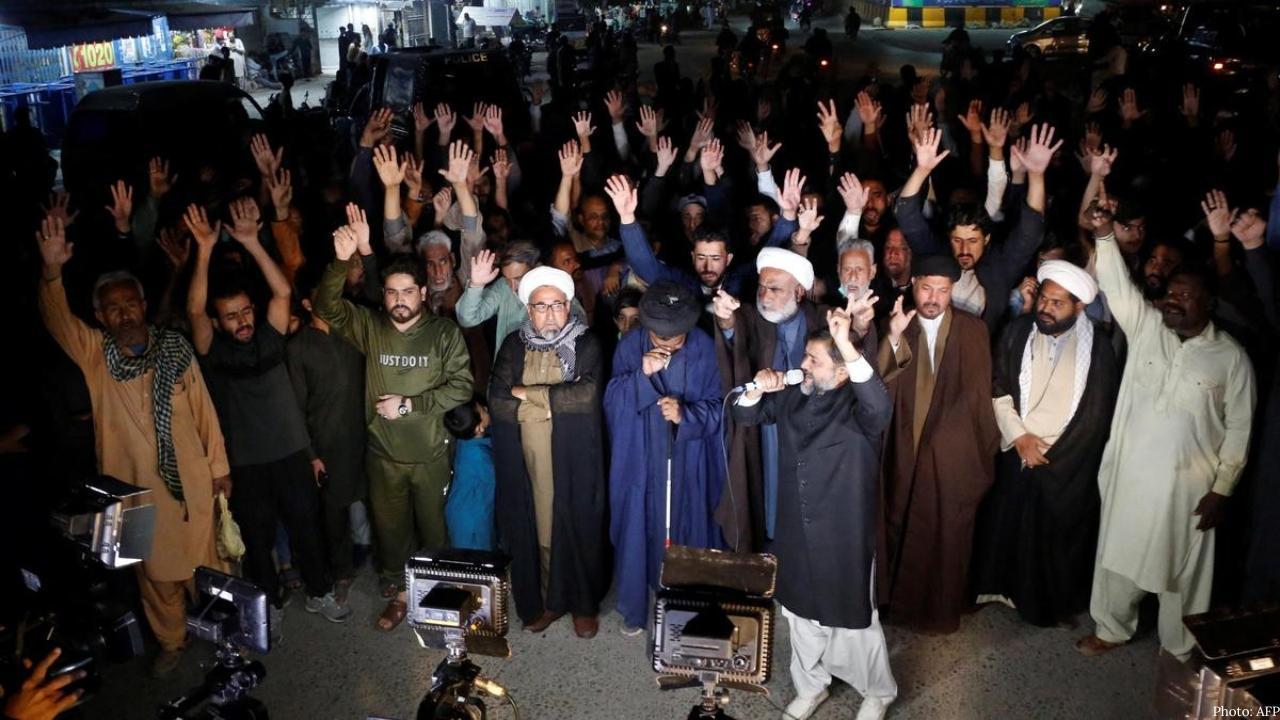
In the days following the explosion, thousands of mourners gathered in Islamabad to pay their respects to those killed in the attack. Funeral processions were held under tight security, with community members and dignitaries alike offering prayers and eulogies for the deceased. The scenes of collective grief highlighted the deep emotional and social impact of the tragedy on families and communities who had lost loved ones.
The psychological toll on survivors and witnesses is expected to be profound, as many grapple with the traumatic memories of the attack. Experts emphasize the need for comprehensive support — including mental health services and community healing initiatives — to aid recovery in the aftermath of such brutal violence.
Prime Minister Shehbaz Sharif, alongside national and security officials, has vowed to bring those responsible to justice. The government announced plans to intensify counterterrorism operations, tighten security measures around religious sites, and enhance intelligence cooperation to prevent future attacks. These actions are intended to reassure a nation shaken by violence and deter militants from exploiting similar vulnerabilities again.
Authorities have also indicated that investigations are ongoing, with multiple leads being pursued to uncover the logistical and operational networks behind the attack. Arrests and raids have been reported in Islamabad and neighbouring regions, signaling a nationwide effort to dismantle extremist cells believed to be involved in this and other militant activities.
This devastating attack at a mosque in Islamabad has far-reaching implications for Pakistan’s internal security and regional stability. Beyond the immediate human toll, it highlights persistent challenges in countering extremist ideologies and protecting minority communities. The assault may influence future policymaking on national security, sectarian harmony, and international cooperation against terrorism.
As the nation mourns and grapples with the aftermath, the government faces mounting pressure to implement lasting solutions that address both the symptoms and causes of militant violence. The effectiveness of these measures will be closely watched, not only within Pakistan but also by the international community concerned about the broader ramifications of escalating sectarian attacks.










PM Modi Pays Tribute to Mahatma Gandhi, Urges People to Support Khadi
PM Modi pays tribute to Mahatma Gandhi on Gandhi Jayanti and urges citizens to support Khadi and the

Amazon Seeks to Offload $8 Billion in Nvidia Chips to Investors
Amazon plans to move $8 billion in Nvidia chips to investors, using a new financing model to strengt

Samsung Raises Galaxy S26 Prices as Memory Chip Costs Rise
Samsung raises Galaxy S26 prices in South Korea as rising memory chip costs put pressure on smartpho

Lewis Hamilton Calls Singapore Grand Prix One of F1's Toughest Races
Lewis Hamilton discusses the demanding Singapore Grand Prix and brings Plus44 and Almave to Singapor

Denmark's Pandora Opens World's Largest Jewellery Factory in Vietnam
Pandora opens its largest jewellery factory in Vietnam, expanding global production, strengthening s

Gautam Gambhir Questions Batting-Friendly Pitches After India's Record ODI Chase
Gautam Gambhir questions batting-friendly ODI pitches after India’s record chase, calling for a bett

