You have not yet added any article to your bookmarks!
Join 10k+ people to get notified about new posts, news and tips.
Do not worry we don't spam!

Post by : Anis Farhan
The rise of the internet and social media has transformed the way we access information. With just a few clicks, anyone can publish stories, opinions, or claims that reach millions. While this democratization of content has benefits, it has also led to a surge in misinformation. From fake news about elections to false health advice, misinformation shapes opinions, fuels division, and undermines trust in institutions.
Schools today face a new responsibility beyond teaching math and literature—they must prepare students to navigate this complex information landscape. Media literacy education, once considered optional, is now seen as essential for empowering young people to distinguish between fact and fiction.
The speed of digital communication gives misinformation a unique advantage. Algorithms amplify sensational headlines, and social platforms reward engagement over accuracy. Psychologically, humans tend to trust information that confirms their existing beliefs, a phenomenon known as “confirmation bias.”
This perfect storm allows false narratives to spread faster than verified facts. During major events—such as elections, global conflicts, or pandemics—misinformation can have dangerous consequences, from swaying political decisions to endangering public health. Schools, therefore, serve as critical frontline defenders by teaching young citizens how to question and verify what they encounter online.
Education systems worldwide are recognizing that traditional literacy—reading and writing—is no longer enough. Digital literacy, particularly media literacy, has emerged as a crucial component of modern education. By integrating these programs, schools aim to:
Help students analyze sources critically.
Teach fact-checking and verification techniques.
Encourage open discussions on bias and credibility.
Foster resilience against manipulative or extremist content.
This proactive approach ensures that students are not passive consumers of information but active, critical thinkers who shape healthier societies.
Several countries have already begun weaving media literacy into their curricula.
Finland has earned global recognition for embedding media literacy across subjects, teaching students to identify propaganda and misinformation from early ages.
Singapore emphasizes digital literacy as part of its “21st Century Competencies” framework, encouraging critical thinking and responsible online behavior.
The United States has seen individual states like California and Illinois mandate media literacy education in schools, with partnerships from tech organizations and non-profits.
These examples illustrate a growing consensus: schools must play an active role in preparing students for the information-heavy realities of modern life.
Effective media literacy instruction goes beyond lectures. Some practical classroom methods include:
Case Studies: Analyzing real-world examples of fake news stories.
Role-Playing: Allowing students to create their own “fake news” and then teaching others to debunk it.
Fact-Checking Exercises: Using platforms like fact-checking websites or reverse image search tools.
Discussion-Based Learning: Encouraging open debate about controversial issues while guiding students to rely on credible sources.
Project-Based Assignments: Creating school newsletters, blogs, or podcasts that require proper sourcing and evidence.
These interactive strategies not only engage students but also make the process of verification a natural habit rather than a forced activity.
Despite its importance, teaching media literacy faces several hurdles:
Curriculum Overload: Teachers already juggle heavy academic schedules. Adding media literacy requires resources and time.
Training Teachers: Not all educators feel equipped to teach digital skills or fact-checking methods.
Political Resistance: In polarized societies, discussions about misinformation can be seen as biased or politically motivated.
Rapidly Changing Technology: Social media platforms evolve quickly, making it difficult for curricula to stay up to date.
Overcoming these challenges requires investment, teacher training, and flexible frameworks that adapt to emerging technologies.
Ironically, the same digital tools that spread misinformation can also be used to fight it. Schools are increasingly turning to technology-based solutions, such as:
AI-driven detection tools that help flag suspicious content.
Interactive simulations where students explore how false stories spread online.
Collaborations with social media platforms to provide schools with educational resources.
Gamified apps that challenge students to spot misinformation in engaging ways.
This integration ensures that media literacy education is both practical and aligned with the tools students already use daily.
Beyond academics, teaching media literacy has broader social implications. Students trained in critical analysis become informed citizens less vulnerable to manipulation. This strengthens democracies, enhances public health messaging, and fosters tolerance in diverse societies.
In developing nations, where misinformation often spreads through messaging apps, such training can help prevent communal violence or health crises. In developed nations, it safeguards political processes from disinformation campaigns. In every context, media literacy is both an educational and civic necessity.
Ultimately, media literacy is about cultivating habits of questioning and reflection. Schools cannot fight misinformation alone—parents, communities, governments, and tech companies must also contribute. But by instilling critical thinking from an early age, schools lay the foundation for a generation that values truth, challenges propaganda, and resists manipulation.
The digital revolution has made information abundant but truth harder to find. In this environment, media literacy education is no longer optional—it is a survival skill. Schools that invest in these programs are not just teaching students how to pass exams; they are shaping citizens capable of safeguarding democracy, public health, and societal trust.
By teaching young people to think critically, verify sources, and question narratives, education becomes a powerful antidote to misinformation. The classroom, in this sense, is not just a place of learning—it is a frontline in the fight for truth.
This article is intended for informational purposes and reflects analysis of current educational strategies on media literacy. It does not represent the editorial stance of Newsible Asia.





Australia 50/3 After Bangladesh Bowled Out for 64 in Second Test
Australia reached 50/3 after Bangladesh were bowled out for 64 in the second Test, with Mitchell Sta

Jordan Burroughs Returns to Wrestling with 2028 Olympic Dream
Jordan Burroughs returns to wrestling with Real American Freestyle as the Olympic champion eyes a po

Lamborghini Catches Fire on Singapore's ECP, Causing Heavy Traffic
A Lamborghini caught fire on Singapore's ECP, causing heavy traffic and bus delays. No injuries were

Bangkok Airport Duty-Free Area Flooded by Pipe Burst
A burst water pipe flooded the duty-free shopping area at Bangkok's Suvarnabhumi Airport on July 16,

Nine Monks Killed in Thailand Pickup Truck Tragedy
An 11-year-old boy driving a pickup truck crashed into monks during a pilgrimage in northeastern Tha
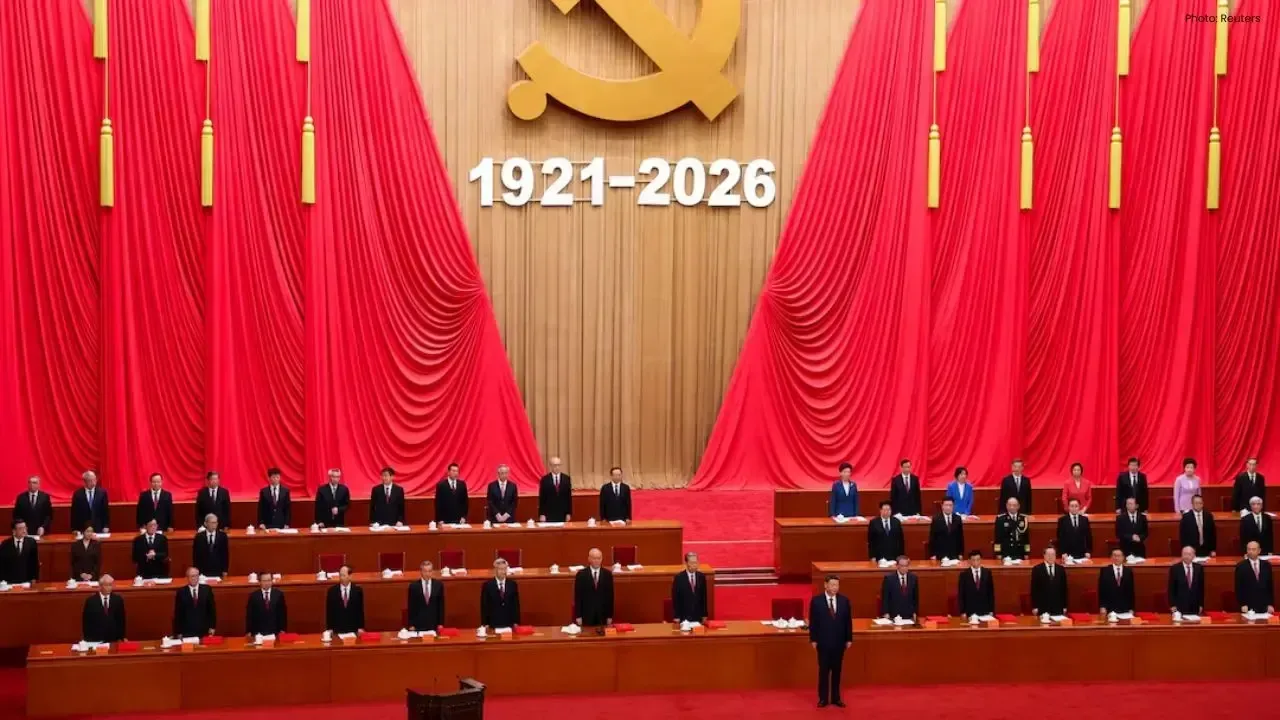
Anwar Congratulates Xi on CPC's 105th Anniversary
Malaysia reaffirms strong ties with China as PM Anwar Ibrahim sends a congratulatory letter to Presi