
You have not yet added any article to your bookmarks!
Join 10k+ people to get notified about new posts, news and tips.
Do not worry we don't spam!
Post by : Anis Farhan
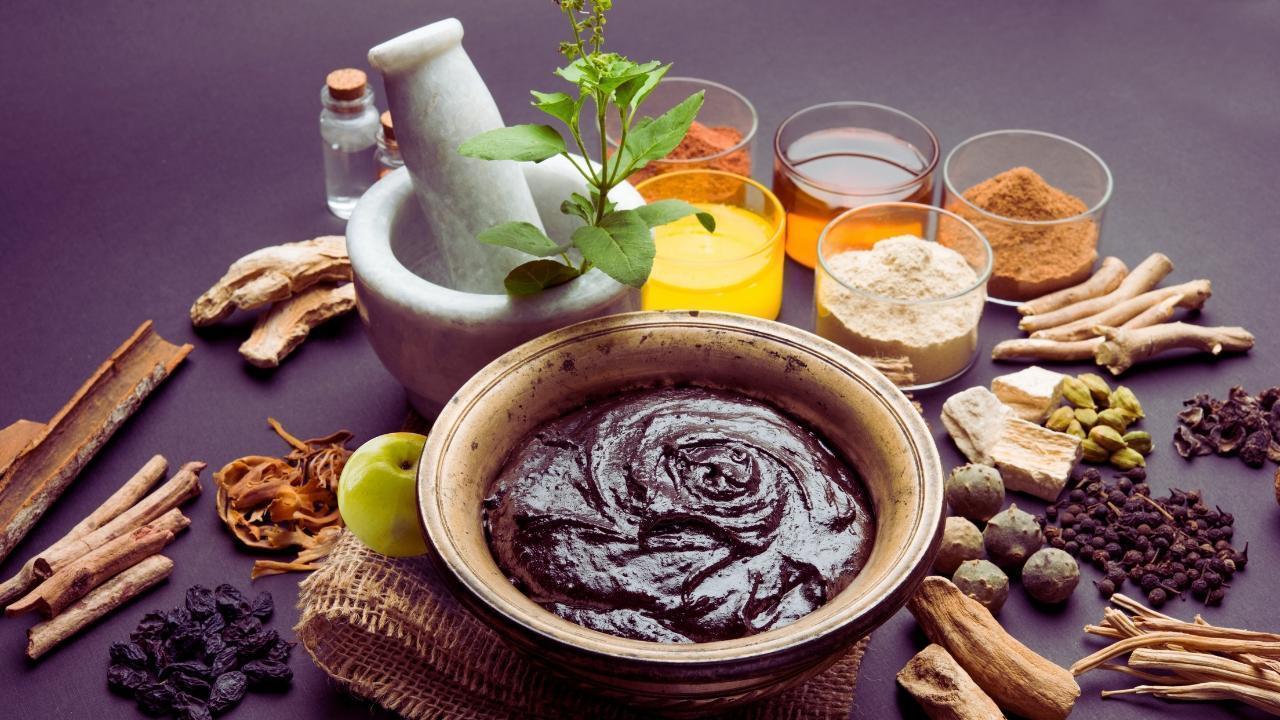
For centuries, Ayurveda — the traditional Indian system of medicine — has been regarded as a holistic path to balance and healing. Rooted in the belief that health is a delicate interplay of mind, body, and spirit, it emphasizes prevention over cure, nature over synthetic, and lifestyle over quick fixes.
Now, in the era of AI-driven diagnostics and DNA-based health solutions, Ayurveda isn’t fading into obscurity — it’s evolving. Welcome to Ayurveda 2.0, where centuries-old herbal formulations meet clinical trials, personalized dosha analysis meets genetic mapping, and natural remedies are being backed by hard data. A new age is dawning where tradition is not abandoned, but revalidated by science.
At its core, Ayurveda 2.0 is not a reinvention of Ayurveda — it is its integration with modern scientific approaches. It represents the growing global movement to validate and refine Ayurvedic practices using empirical data, technology, and regulatory standards.
This modern shift includes:
Evidence-based research into Ayurvedic herbs and treatments.
Integration into clinical settings alongside allopathic care.
Use of AI and machine learning to identify dosha patterns and suggest treatments.
Personalized wellness protocols based on Ayurvedic principles and genomics.
It’s a reboot of one of humanity’s oldest wellness systems, tailored for a generation that demands both authenticity and evidence.
One of the biggest criticisms Ayurveda has historically faced is the lack of rigorous scientific validation. That’s changing quickly.
Over the past decade, institutions like India’s Ministry of AYUSH, the All India Institute of Ayurveda, and international partners like Harvard Medical School and Stanford University have been investing in randomized controlled trials (RCTs), meta-analyses, and bioactive compound mapping.
Here are a few herbs and therapies that have gained scientific traction:
Ashwagandha (Withania somnifera): Proven to reduce stress, cortisol levels, and improve sleep and strength.
Turmeric (Curcuma longa): Its compound curcumin has shown potent anti-inflammatory and antioxidant effects.
Triphala: Backed by studies showing benefits for digestive health, gut microbiota balance, and detoxification.
Shatavari: Studied for its adaptogenic benefits in women’s reproductive health.
The outcome? More Ayurvedic medicines are being patented, tested in clinical settings, and even approved for use in global markets.
Dosha analysis — the Ayurvedic framework of classifying body constitutions into Vata, Pitta, and Kapha — has traditionally been based on observation, touch, and questionnaire-based methods. But Ayurveda 2.0 is revolutionizing this too.
Startups like NirogStreet, Jiva Ayurveda, and Ayugen Biosciences are building algorithms that analyze facial features, voice, medical history, and even biomarkers to identify doshic imbalances. Some platforms now offer AI-driven wellness dashboards where users receive customized meal plans, herbal recommendations, and lifestyle suggestions rooted in Ayurvedic logic, but delivered with Silicon Valley precision.
Additionally, wearables that track circadian rhythms and digestive efficiency are now being paired with Ayurvedic health plans — creating a dynamic, tech-integrated wellness ecosystem.
The global wellness industry, now valued at over $5 trillion, has opened its arms to Ayurveda. In places like the US, Germany, UAE, and Australia, Ayurvedic skincare, supplements, and therapies are no longer niche — they’re mainstream.
Luxury wellness retreats in Bali, Thailand, and Kerala now offer full-fledged Panchakarma detox programs, attracting not just spiritual seekers but also biohackers, CEOs, and wellness tourists.
Brands like Forest Essentials, Kama Ayurveda, and Sahajan have found success globally by fusing Ayurvedic wisdom with modern packaging, safety standards, and dermatological backing. In short, Ayurveda is now not just tradition — it’s a lifestyle product, wellness movement, and an economic force.
Despite its growing popularity, Ayurveda still faces skepticism — especially from Western medicine practitioners. Critics argue that:
Standardization is weak: One herb may have different potencies based on soil, season, or region.
Scientific validation is incomplete: Many formulations still lack high-quality studies.
Quality control issues: Contamination or heavy metal presence in some formulations has raised concerns.
In response, several Ayurvedic manufacturers and governing bodies have adopted Good Manufacturing Practices (GMP), pharmacovigilance systems, and double-blind studies to improve credibility.
There is also an emerging movement within Ayurveda itself to self-regulate, promote transparency, and encourage collaboration with allopathic practitioners — marking a departure from antagonism to synergy.
Where modern medicine often views mental health as biochemical, Ayurveda approaches it as a mind-body energy imbalance. Now, therapists, psychologists, and integrative health coaches are beginning to explore Ayurvedic tools for emotional regulation.
Practices like Abhyanga (oil massage), Nasya (nasal cleansing), Shirodhara (oil pouring on the forehead), and herbal treatments for stress, anxiety, and insomnia are gaining validation through EEG brain mapping and neuroimaging studies.
Combined with mindfulness, yoga, and plant-based nutrition, Ayurveda 2.0 presents a holistic framework for emotional and mental wellbeing — particularly valuable in today’s anxiety-driven world.
In India, the 2020 National Education Policy (NEP) recommends integrating AYUSH systems into mainstream healthcare education. Ayurvedic universities are now collaborating with medical colleges for interdisciplinary research.
Abroad, universities like University of California – San Diego, University of Westminster (UK), and National University of Singapore are offering elective courses or fellowships in Ayurvedic science.
With WHO formally recognizing traditional medicine systems and opening its first Global Centre for Traditional Medicine in India, Ayurveda’s future as a scientifically supported discipline looks bright.
Not everything branded "Ayurvedic" is inherently safe. Consumers should remain vigilant:
Look for clinically tested products with certifications like GMP or ISO.
Avoid unlicensed formulations or miracle cure claims.
Consult certified practitioners, especially for serious conditions or if you are combining treatments.
Just as with pharmaceuticals, Ayurvedic remedies can have side effects or interactions if used improperly.
Ayurveda 2.0 is more than a wellness trend — it’s a renaissance of healing that merges tradition with truth, heritage with healthcare. In an age dominated by data and diagnostics, it offers a return to simplicity, harmony, and preventive care — all while wearing the badge of science.
Whether you're sipping a turmeric latte in Singapore, attending a Panchakarma retreat in Bali, or exploring personalized Ayurveda apps in Dubai, one thing is clear — the future of wellness is deeply rooted in the past.
This article is a part of Newsible Asia’s editorial series on health and wellness. The information provided is for general awareness and educational purposes only. It is not intended to replace professional medical advice, diagnosis, or treatment. Readers are advised to consult certified Ayurvedic or medical practitioners before beginning any treatment protocol.










PM Modi Pays Tribute to Mahatma Gandhi, Urges People to Support Khadi
PM Modi pays tribute to Mahatma Gandhi on Gandhi Jayanti and urges citizens to support Khadi and the

Amazon Seeks to Offload $8 Billion in Nvidia Chips to Investors
Amazon plans to move $8 billion in Nvidia chips to investors, using a new financing model to strengt

Samsung Raises Galaxy S26 Prices as Memory Chip Costs Rise
Samsung raises Galaxy S26 prices in South Korea as rising memory chip costs put pressure on smartpho

Lewis Hamilton Calls Singapore Grand Prix One of F1's Toughest Races
Lewis Hamilton discusses the demanding Singapore Grand Prix and brings Plus44 and Almave to Singapor

Denmark's Pandora Opens World's Largest Jewellery Factory in Vietnam
Pandora opens its largest jewellery factory in Vietnam, expanding global production, strengthening s

Gautam Gambhir Questions Batting-Friendly Pitches After India's Record ODI Chase
Gautam Gambhir questions batting-friendly ODI pitches after India’s record chase, calling for a bett

