
You have not yet added any article to your bookmarks!
Join 10k+ people to get notified about new posts, news and tips.
Do not worry we don't spam!
Post by : Anis Farhan
Towering over Asia, the Himalayas are more than just mountains—they're the water towers of nearly two billion people. But what was once a frozen fortress is now melting at an alarming rate. In 2025, scientists are warning that the Himalayas are warming at nearly twice the global average, triggering a cascade of environmental, social, and political consequences.
From disappearing glaciers to flash floods, the changes unfolding in this high-altitude region offer a dramatic glimpse into the future of global climate disruption. The world may focus on sea-level rise or heatwaves, but what’s happening in the Himalayas is just as urgent—and possibly more dangerous.
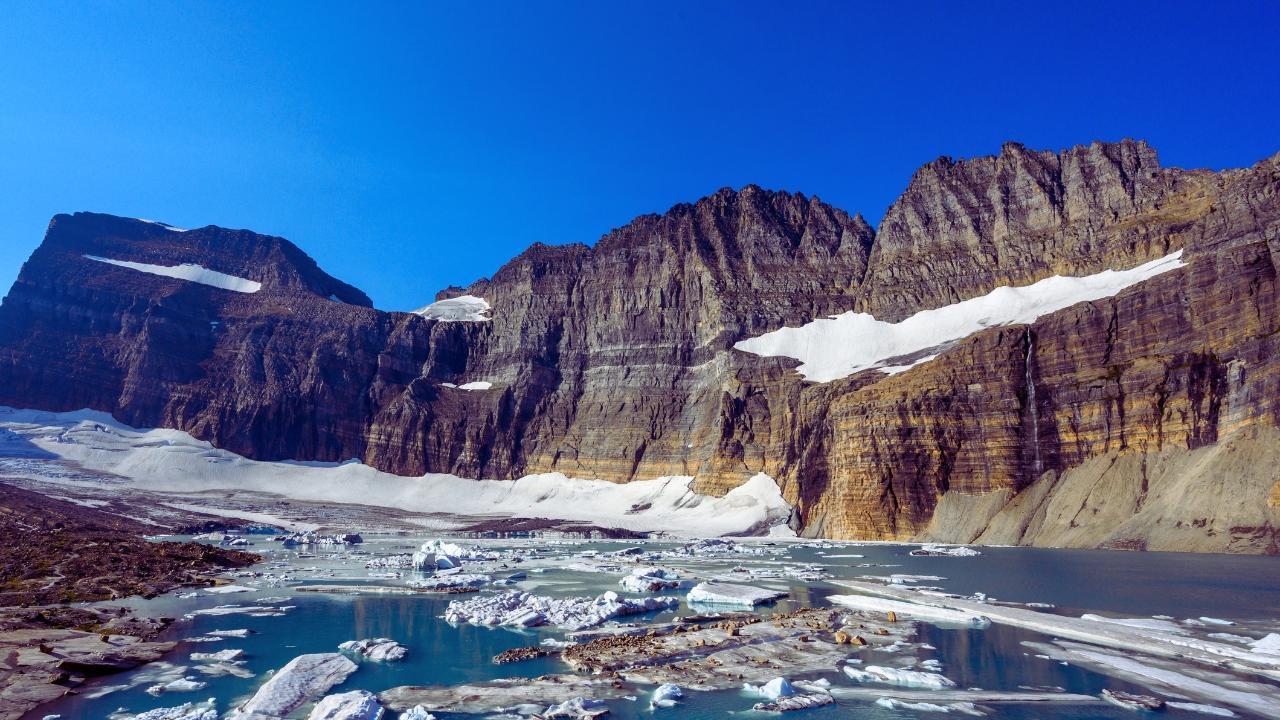
Glaciers in the Himalayas are disappearing faster than ever. According to recent studies, the region has lost over 40% of its ice mass in the past five decades, with the pace accelerating significantly since 2000. The culprit is a combination of rising temperatures, soot from industrial activity, and shifting weather patterns.
By 2100, up to two-thirds of Himalayan glaciers could be gone if current emission rates continue. This isn’t just a loss of scenic beauty—it’s a direct threat to rivers like the Ganges, Indus, Brahmaputra, Yangtze, and Mekong, which originate in these mountains. These rivers are lifelines for agriculture, drinking water, and industry across South and Southeast Asia.
Glacial meltwater sustains flow during dry seasons. As glaciers shrink, seasonal water scarcity could become the new norm in India, Bangladesh, Nepal, Bhutan, and beyond. The result? Increased pressure on irrigation systems, drinking water access, and cross-border river-sharing agreements.
The impacts of warming in the Himalayas are not limited to melting ice. Climate volatility is triggering more frequent and intense weather events across the region. In 2023 alone, Nepal witnessed its worst-ever monsoon-triggered landslides, while Bhutan recorded flash floods that swept away entire settlements.
Permafrost, once stable in the upper reaches, is now thawing rapidly, destabilizing mountain slopes and infrastructure. Entire villages in Ladakh and Arunachal Pradesh have had to relocate due to erosion and water scarcity.
As weather patterns shift, snowfall becomes unpredictable. Areas that once saw snow for 6–8 months now go snowless for weeks during winter, threatening ecosystems and traditional livelihoods such as yak herding and mountain agriculture. Local biodiversity—from high-altitude flora to endangered snow leopards—is being pushed toward extinction.
The Himalayas serve as a strategic water source across international boundaries, and as resources dwindle, tensions are rising. India and China, for instance, have long-standing disputes over water usage along the Brahmaputra River. Climate stress adds fuel to these disagreements.
In 2024, satellite imagery confirmed that several Himalayan glacial lakes had swollen beyond safe limits, raising fears of glacial lake outburst floods (GLOFs). These sudden events can devastate downstream areas with little warning. Countries like Nepal and Bhutan have had to install early warning systems, but coverage is still limited.
Transboundary water treaties in South Asia—many established decades ago—are not equipped to handle the rapidly changing realities of Himalayan hydrology. A lack of real-time data sharing and political mistrust hampers coordinated climate response.
The Himalayas are not just physical landmarks—they are sacred spaces. From Mount Kailash to the Gangotri Glacier, these mountains hold deep spiritual meaning for Hindus, Buddhists, and indigenous communities. Melting glaciers and retreating snowlines are erasing centuries-old pilgrimage paths and reshaping religious landscapes.
Local mountain communities who have lived sustainably for generations are now facing existential decisions: migrate, adapt, or perish. Traditional knowledge systems, already marginalized by modern policy, are struggling to keep pace with the speed of ecological collapse.
Festivals tied to seasonal snowmelt or sacred river origins are being disrupted. For many, this cultural loss is just as painful as environmental degradation.
Tourism in the Himalayas brings income but also increased ecological pressure. Trekking trails, mountain roads, and infrastructure projects are booming post-pandemic as domestic travel in India, Nepal, and Bhutan surges.
However, this growth comes at a cost. Overcrowding, plastic pollution, and unregulated construction are straining fragile ecosystems. Popular destinations like Manali, Leh, and Pokhara now face waste disposal crises and water shortages.
Hydroelectric dams, often promoted as green energy alternatives, have displaced communities and altered river flow. While these projects aim to reduce fossil fuel dependency, their ecological footprint in a delicate mountain region remains controversial.
Despite the crisis, there are rays of hope. Himalayan nations are investing in climate science like never before. Bhutan is setting an example with its carbon-negative policies and reforestation programs. Nepal is digitizing glacial monitoring and expanding early-warning systems for flash floods.
Community-led conservation models are gaining traction. In Sikkim, villagers are restoring alpine meadows and building check dams to conserve meltwater. In Ladakh, artificial ice reservoirs called “ice stupas” are being used to provide water in early summer when traditional sources run dry.
International collaboration is also increasing. Initiatives like the International Centre for Integrated Mountain Development (ICIMOD) are helping standardize data collection and coordinate regional adaptation strategies. But many experts argue that without deeper political will and stronger funding, these efforts may fall short.
What happens in the Himalayas doesn’t stay in the Himalayas. The region's accelerated warming is a stark preview of what lies ahead for other parts of the planet. Its glaciers are not just local assets—they’re global indicators.
The crisis challenges our understanding of resilience. These mountains have stood for millennia, weathering ice ages and tectonic shifts. But now, they are vulnerable—not because of nature, but because of human inaction.
The future of Asia’s great rivers, ecosystems, and cultures may well depend on what actions are taken today. Protecting the Himalayas is no longer a local issue—it’s a planetary imperative.
This article is for informational purposes only and reflects climate science and developments as of 2025. Readers are encouraged to consult local environmental agencies and scientific institutions for updates.










PM Modi Pays Tribute to Mahatma Gandhi, Urges People to Support Khadi
PM Modi pays tribute to Mahatma Gandhi on Gandhi Jayanti and urges citizens to support Khadi and the

Amazon Seeks to Offload $8 Billion in Nvidia Chips to Investors
Amazon plans to move $8 billion in Nvidia chips to investors, using a new financing model to strengt

Samsung Raises Galaxy S26 Prices as Memory Chip Costs Rise
Samsung raises Galaxy S26 prices in South Korea as rising memory chip costs put pressure on smartpho

Lewis Hamilton Calls Singapore Grand Prix One of F1's Toughest Races
Lewis Hamilton discusses the demanding Singapore Grand Prix and brings Plus44 and Almave to Singapor

Denmark's Pandora Opens World's Largest Jewellery Factory in Vietnam
Pandora opens its largest jewellery factory in Vietnam, expanding global production, strengthening s

Gautam Gambhir Questions Batting-Friendly Pitches After India's Record ODI Chase
Gautam Gambhir questions batting-friendly ODI pitches after India’s record chase, calling for a bett

