You have not yet added any article to your bookmarks!
Join 10k+ people to get notified about new posts, news and tips.
Do not worry we don't spam!
Post by : Anis Farhan
Healthcare diagnostics is undergoing a revolutionary shift, driven by artificial intelligence (AI) and machine learning (ML). Traditionally, diagnosing diseases relied heavily on manual analysis, lab tests, and the subjective judgment of doctors. However, the integration of AI algorithms and ML models has accelerated the speed, accuracy, and scope of medical diagnostics.
Machine learning systems can analyze large volumes of data, detect patterns invisible to the human eye, and generate predictive insights. From early detection of cancers and cardiovascular diseases to interpreting radiology images and managing patient records, AI is increasingly becoming an essential tool in modern medicine. The adoption of AI in healthcare diagnostics promises not only improved patient outcomes but also more efficient use of medical resources.
The ongoing COVID-19 pandemic further highlighted the need for faster, data-driven diagnostic tools. Hospitals and research centers worldwide turned to AI to track infection trends, identify high-risk patients, and optimize treatment protocols. In India, healthcare providers are beginning to embrace AI-powered diagnostic solutions to bridge gaps in infrastructure, reduce diagnostic errors, and make advanced healthcare accessible to a broader population.
Artificial intelligence refers to computer systems that can perform tasks typically requiring human intelligence, such as reasoning, learning, and decision-making. Machine learning, a subset of AI, involves training algorithms to learn from data and improve their performance over time without explicit programming.
In healthcare diagnostics, machine learning models analyze medical images, lab reports, genetic data, and electronic health records to identify anomalies or patterns indicative of disease. These models can be trained on thousands, or even millions, of cases to detect subtle markers that may escape human observation.
For instance, ML algorithms in radiology can identify early signs of lung cancer from chest X-rays or CT scans with remarkable accuracy. Similarly, AI systems can analyze retinal images to detect diabetic retinopathy or predict the risk of cardiovascular events using patient history and lab data. By combining computational power with medical expertise, AI enhances the diagnostic process, reducing errors and saving lives.
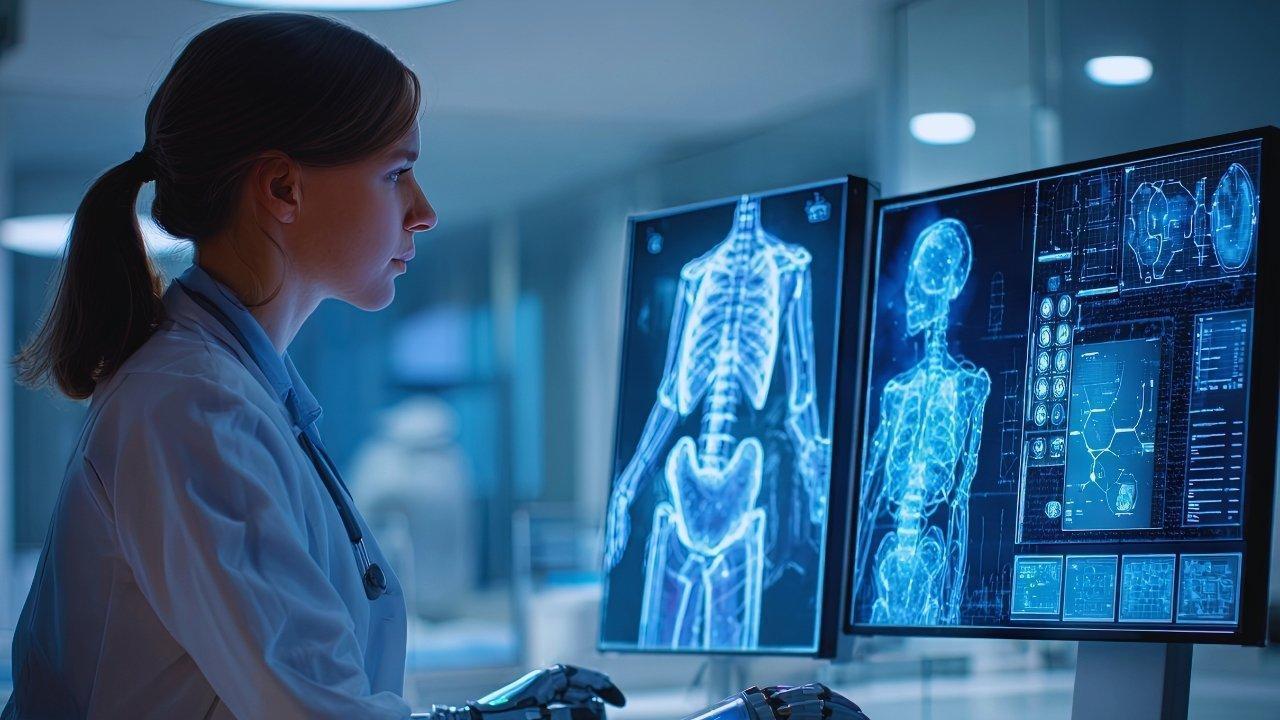
One of the most widely recognized applications of AI in healthcare diagnostics is medical imaging. Machine learning algorithms can analyze X-rays, MRIs, CT scans, and ultrasounds, highlighting areas of concern for radiologists.
AI-assisted imaging reduces human error and speeds up diagnosis. For example, AI models can detect tumors, fractures, or abnormal tissue growth within seconds, helping doctors make timely decisions. Hospitals in India are increasingly deploying AI-powered imaging tools to improve cancer detection, neurological assessments, and orthopedic evaluations.
Laboratory tests are critical in diagnosing infections, blood disorders, and genetic diseases. AI algorithms can automatically process and analyze lab results, flagging anomalies for further review. This reduces the time required for manual examination, increases accuracy, and helps labs handle higher volumes of tests without compromising quality.
Digital pathology, where slides are scanned and analyzed using AI, is gaining traction. Algorithms can detect malignant cells, classify tumor types, and even suggest potential treatment strategies, assisting pathologists in making informed decisions faster.
AI in diagnostics is not limited to detecting existing conditions; it also enables predictive healthcare. By analyzing patient data such as medical history, lifestyle factors, and genetic information, machine learning models can assess disease risk and predict potential health issues before they manifest.
Predictive diagnostics help doctors implement preventive measures, recommend lifestyle changes, and schedule timely screenings. This approach is particularly beneficial for chronic diseases like diabetes, hypertension, and heart conditions, where early intervention can significantly improve patient outcomes.
AI enables personalized diagnostics by analyzing individual patient profiles. Machine learning algorithms can suggest customized treatment plans based on a patient’s genetic makeup, medical history, and response to previous treatments.
This approach not only improves the effectiveness of therapies but also minimizes adverse effects. Personalized diagnostics, powered by AI, represents a shift from one-size-fits-all medicine to tailored healthcare solutions that meet the unique needs of each patient.
The integration of AI and machine learning in diagnostics offers multiple benefits:
Improved Accuracy: AI reduces human error by providing consistent, data-driven insights.
Faster Diagnosis: Machine learning models process large datasets quickly, accelerating diagnosis.
Early Detection: AI can identify diseases at early stages, improving treatment outcomes.
Resource Optimization: Hospitals can manage patient loads more efficiently and reduce workload on medical staff.
Cost Efficiency: Automated diagnostics lower operational costs and reduce unnecessary procedures.
Accessibility: AI tools can bring advanced diagnostics to remote areas, bridging the healthcare gap.
In India, where the doctor-to-patient ratio is low in many regions, AI-powered diagnostics can significantly improve healthcare access and quality, particularly in underserved rural areas.
Despite its potential, integrating AI in diagnostics comes with challenges:
Data Quality and Availability: Machine learning models require large volumes of high-quality data. Inconsistent or incomplete medical records can affect accuracy.
Regulatory Approvals: AI-driven diagnostic tools must meet stringent regulatory standards to ensure safety and efficacy.
Integration with Existing Systems: Hospitals must integrate AI solutions with electronic health records, lab systems, and workflows, which can be complex and costly.
Ethical Concerns: Patient privacy, consent, and potential biases in AI algorithms are critical ethical considerations.
Acceptance by Medical Professionals: Physicians need training and confidence in AI tools to incorporate them effectively into clinical practice.
Addressing these challenges requires collaboration between healthcare providers, technology companies, regulators, and policymakers. Ensuring transparency, accountability, and continuous validation of AI models is crucial for widespread adoption.
India’s healthcare startup ecosystem has seen a surge in AI-powered diagnostic companies. Startups like SigTuple, Niramai, and Qure.ai are leveraging machine learning to detect diseases through innovative methods.
SigTuple uses AI to analyze blood samples and automate pathology tests, increasing speed and reducing errors.
Niramai offers non-invasive breast cancer screening using thermal imaging and AI-based analysis, providing affordable diagnostic options.
Qure.ai focuses on radiology, using AI to interpret chest X-rays and CT scans for conditions like tuberculosis, pneumonia, and COVID-19.
These startups exemplify the potential of AI in diagnostics, combining cutting-edge technology with cost-effective solutions tailored for India’s diverse population.
Government initiatives are critical in promoting AI adoption in healthcare. Policies supporting digital health infrastructure, data sharing frameworks, and regulatory approvals for AI tools can accelerate innovation.
India’s National Digital Health Mission (NDHM) aims to create a digital ecosystem for health records, telemedicine, and AI-enabled diagnostics. By standardizing data formats and enabling secure data access, NDHM provides the foundation for AI algorithms to operate efficiently and safely.
Additionally, partnerships between public hospitals, private startups, and technology providers can ensure that AI diagnostics reach all segments of society, from urban centers to rural areas.
The future of AI in diagnostics is poised for rapid expansion. Emerging technologies such as deep learning, natural language processing, and predictive modeling will enhance the accuracy and scope of diagnostics further.
Integration with wearable devices and IoT sensors will allow continuous monitoring of vital signs and early detection of abnormalities. Telemedicine platforms powered by AI will offer real-time analysis and remote consultations, making healthcare more accessible and efficient.
As AI algorithms become more sophisticated, they may assist in drug discovery, outbreak prediction, and precision medicine, transforming not just diagnostics but the entire healthcare ecosystem.
Education and training of medical professionals to work alongside AI tools will be essential, ensuring that technology complements human expertise rather than replacing it. The combination of human judgment and AI-driven insights promises a new era of proactive, personalized, and data-driven healthcare.
Artificial intelligence and machine learning are redefining healthcare diagnostics, offering unprecedented accuracy, speed, and predictive power. By analyzing vast datasets, detecting patterns, and providing actionable insights, AI empowers doctors to make better-informed decisions, improving patient outcomes and operational efficiency.
In India, AI diagnostics is particularly impactful, addressing healthcare accessibility challenges, enhancing early detection, and optimizing resource allocation. While challenges remain in data quality, regulation, and ethical considerations, collaborative efforts between startups, healthcare providers, and policymakers can unlock the full potential of AI in diagnostics.
As technology continues to advance, AI will become an integral part of healthcare, not merely as a tool but as a partner in saving lives, personalizing care, and building a resilient medical system for the future.
This article is for informational and educational purposes only. It discusses AI applications in healthcare diagnostics and should not replace professional medical advice. Healthcare providers and policymakers should conduct thorough research and consult experts before implementing AI solutions.








George Russell Wins Dutch GP Sprint, Boosts Mercedes Morale
George Russell wins the Dutch GP Sprint from pole as Mercedes teammate Kimi Antonelli extends his F1

Australia 50/3 After Bangladesh Bowled Out for 64 in Second Test
Australia reached 50/3 after Bangladesh were bowled out for 64 in the second Test, with Mitchell Sta

Jordan Burroughs Returns to Wrestling with 2028 Olympic Dream
Jordan Burroughs returns to wrestling with Real American Freestyle as the Olympic champion eyes a po

Lamborghini Catches Fire on Singapore's ECP, Causing Heavy Traffic
A Lamborghini caught fire on Singapore's ECP, causing heavy traffic and bus delays. No injuries were

Bangkok Airport Duty-Free Area Flooded by Pipe Burst
A burst water pipe flooded the duty-free shopping area at Bangkok's Suvarnabhumi Airport on July 16,

Nine Monks Killed in Thailand Pickup Truck Tragedy
An 11-year-old boy driving a pickup truck crashed into monks during a pilgrimage in northeastern Tha