
You have not yet added any article to your bookmarks!
Join 10k+ people to get notified about new posts, news and tips.
Do not worry we don't spam!
Post by : Anis Farhan
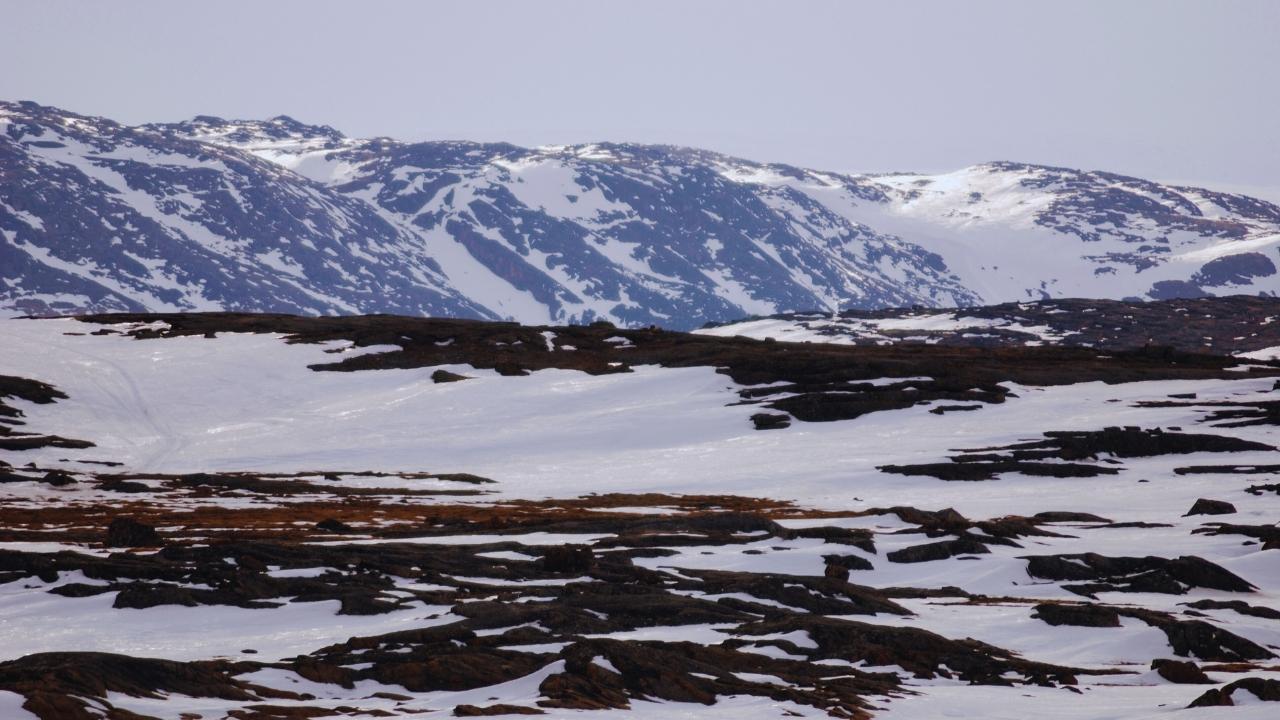
In July 2025, scientists confirmed what many climate models had only feared: for the first time in recorded history, the Arctic region experienced a snow-free summer. Vast stretches of land across Siberia, Greenland’s coastal edges, and the Canadian Arctic Archipelago were devoid of seasonal snow cover by mid-June—an event that stunned even the most seasoned climatologists.
This milestone is not just symbolic. It’s a climatic red flag—a signal that Earth’s northernmost frontier has crossed a dangerous threshold with global consequences. The Arctic’s vanishing snow cover doesn’t just affect polar bears or regional temperatures; it impacts everything from global weather systems to rising sea levels and food security in faraway nations.
The confirmation came from NASA’s MODIS and ESA’s Sentinel-2 satellites, which detected a 98% reduction in summer snow cover compared to the 1980–2010 average. In particular, snow in northern Siberia, Alaska’s Brooks Range, and parts of Greenland’s western edge melted 30–40 days earlier than historical norms.
Even higher-latitude zones, once protected by permafrost and glacial shielding, recorded snow-free terrain by late June—a month earlier than models predicted. The Arctic Snow and Ice Data Center called the development “an irreversible sign of Arctic amplification in full motion.”
Snow doesn’t just blanket landscapes; it regulates Earth’s thermostat. The bright white surface of snow reflects sunlight back into space, a phenomenon known as the albedo effect. When snow disappears, darker surfaces like soil, water, and vegetation absorb more heat, accelerating warming in a feedback loop.
This process—the albedo collapse—is especially dangerous in the Arctic, where temperatures are rising four times faster than the global average. With less snow:
Permafrost thaws, releasing methane, a potent greenhouse gas.
Sea ice melts faster, raising ocean temperatures.
Weather systems destabilize, leading to extreme heatwaves, floods, and unpredictable monsoons worldwide.
While long-term climate change is the overarching driver, scientists point to several 2025-specific factors that likely triggered the snow-free Arctic summer:
Record spring heatwaves: March and April saw temperatures in Arctic Russia and Canada 10°C above average.
Soot and wildfire ash: Forest fires from Siberia and Canada darkened snow, causing it to melt faster.
Jet stream shifts: Wavy atmospheric patterns brought more warm air to polar regions and delayed snowfall in spring.
What’s more alarming is that many climate models did not expect this scenario until the late 2030s, meaning global warming is likely outpacing even conservative projections.
The implications are widespread and deeply interconnected:
With snow reflecting less sunlight, Earth is absorbing more heat. Preliminary estimates suggest this could raise global average temperatures by 0.2°C by 2030, even if emissions remain steady.
Melting Arctic snow isn’t the biggest contributor to sea level rise (glaciers and ice sheets are), but its loss triggers permafrost melt and glacial runoff, which eventually feed oceans. Current projections now expect sea levels to rise an additional 8–10 cm by 2040 compared to pre-2025 estimates.
Climate-linked changes in the Arctic jet stream have caused droughts in Southern Europe and unexpected cold spells in North America. These anomalies have damaged wheat and maize crops in multiple countries, exacerbating food inflation.
The climate science community has reacted with urgency. Dr. Helga Rasmussen of the Norwegian Polar Institute warned that “we may have passed an irreversible climate threshold.” Others suggest revising the 1.5°C and 2°C Paris Agreement targets, as “tipping points like Arctic snow loss were not fully accounted for.”
The IPCC (Intergovernmental Panel on Climate Change) is now reportedly planning a special briefing for global policymakers, citing the Arctic snow collapse as “a transformative moment in climate modeling.”
Meanwhile, Arctic monitoring stations are increasing data collection efforts, hoping to improve short-term forecasting and long-term impact assessments.
Some governments have responded quickly. Norway, Canada, and Finland have pledged new climate adaptation funds to study and counteract Arctic feedback loops. The EU’s Green Deal may now include updated emission cuts based on the new findings.
However, critics point out that major emitters like China and the U.S. have yet to update their 2025–2030 climate action plans, even in light of these developments. Climate NGOs are urging G20 nations to fast-track net-zero commitments and redirect subsidies from fossil fuels to Arctic restoration research.
Despite the grim headlines, experts say some solutions remain:
Arctic geoengineering, such as ice-thickening techniques using reflective materials or aerosols, is being studied but remains controversial and technically risky.
Reforestation and afforestation in boreal regions can help restore some natural albedo.
Black carbon emission reduction (from ships, factories, and wildfires) could slow snow darkening and delay future melting.
On a broader scale, only a rapid, collective cut in greenhouse gas emissions will prevent worse tipping points—from Greenland’s ice sheet collapse to the destabilization of Antarctic glaciers.
The snow-free Arctic summer of 2025 is not a regional story. It is a global climate event, with cascading impacts on ecosystems, economies, and communities worldwide.
It signals that the climate emergency is no longer “something for our children to worry about.” It is happening now, and it’s moving faster than almost anyone expected.
Whether this will serve as a wake-up call or just another footnote in climate policy debates remains to be seen. But for scientists, activists, and residents of the Arctic—the alarm bells are no longer ringing—they’re screaming.
This editorial is published by Newsible Asia and reflects the latest scientific assessments and climate data available as of July 2025. It draws on satellite monitoring, academic research, and policy statements from multiple climate and environmental institutions.










PM Modi Pays Tribute to Mahatma Gandhi, Urges People to Support Khadi
PM Modi pays tribute to Mahatma Gandhi on Gandhi Jayanti and urges citizens to support Khadi and the

Amazon Seeks to Offload $8 Billion in Nvidia Chips to Investors
Amazon plans to move $8 billion in Nvidia chips to investors, using a new financing model to strengt

Samsung Raises Galaxy S26 Prices as Memory Chip Costs Rise
Samsung raises Galaxy S26 prices in South Korea as rising memory chip costs put pressure on smartpho

Lewis Hamilton Calls Singapore Grand Prix One of F1's Toughest Races
Lewis Hamilton discusses the demanding Singapore Grand Prix and brings Plus44 and Almave to Singapor

Denmark's Pandora Opens World's Largest Jewellery Factory in Vietnam
Pandora opens its largest jewellery factory in Vietnam, expanding global production, strengthening s

Gautam Gambhir Questions Batting-Friendly Pitches After India's Record ODI Chase
Gautam Gambhir questions batting-friendly ODI pitches after India’s record chase, calling for a bett

