You have not yet added any article to your bookmarks!
Join 10k+ people to get notified about new posts, news and tips.
Do not worry we don't spam!
Post by : Anis Farhan
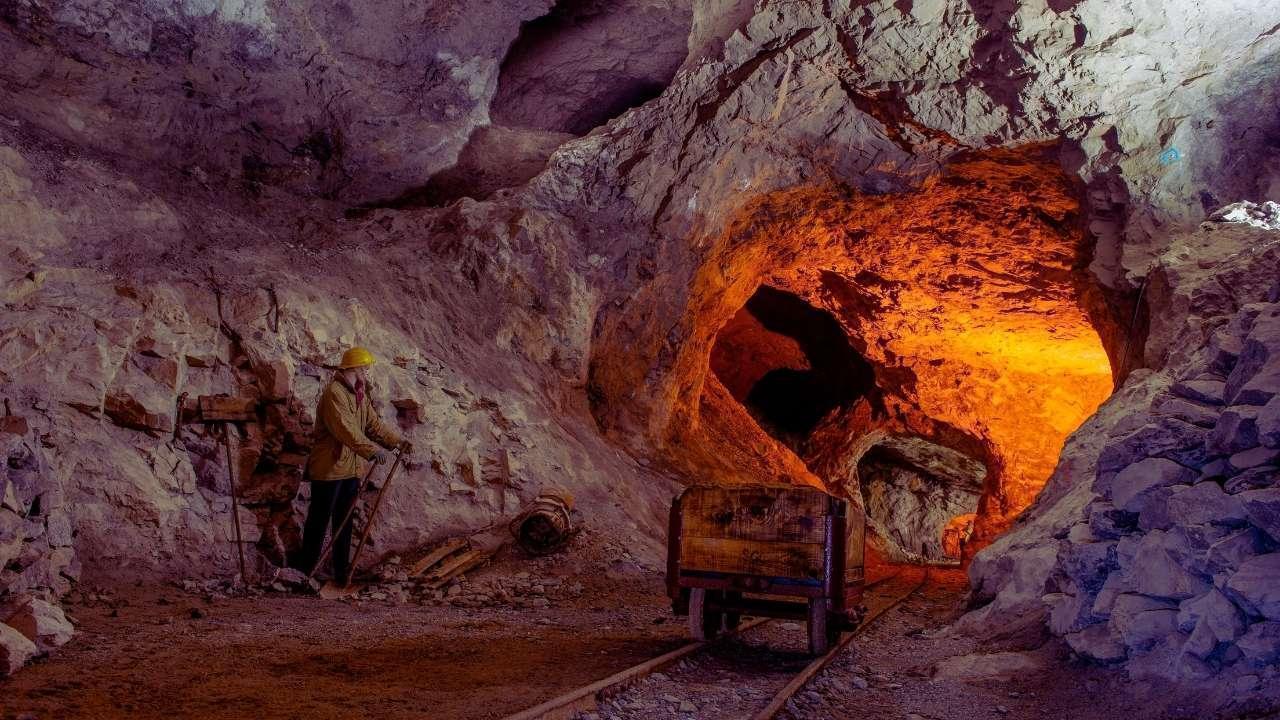
Afghanistan’s mountainous terrain conceals a wealth of mineral resources that could transform its economy. Estimates suggest the country holds tens of billions of dollars’ worth of untapped minerals, including lithium, copper, iron, gold, and rare earth elements critical to modern technology. From the rugged peaks of the Hindu Kush to remote desert basins, these minerals are scattered across a challenging but promising landscape.
The potential impact of fully exploiting these resources is enormous. Mining could create jobs, generate export revenue, and provide the foundation for industrial development. For a country struggling with poverty and limited infrastructure, mineral wealth represents a pathway to economic stabilization and growth.
Historically, Afghanistan has long been a source of minerals, though large-scale extraction remained limited. Small mines and artisanal operations produced copper, lapis lazuli, and gold for centuries. During the 20th century, sporadic exploration by foreign companies revealed significant deposits, but political instability prevented long-term investment.
Over the past few decades, decades of conflict disrupted both exploration and mining operations. Even when foreign investment was available, security concerns, corruption, and lack of infrastructure made large-scale projects extremely difficult. As a result, Afghanistan’s mineral wealth remained largely dormant, with only minor commercial exploitation occurring in isolated areas.
Several mineral categories make Afghanistan strategically important on the global stage:
Lithium and Rare Earth Elements: Essential for batteries, smartphones, electric vehicles, and renewable energy technology, these minerals are increasingly critical in the global transition to clean energy. Afghanistan’s deposits are estimated to be some of the largest in the world.
Copper and Iron: Vital for construction and industrial manufacturing, these metals have long-term industrial value. Large copper deposits in provinces such as Logar and Helmand are particularly promising.
Precious Metals: Gold and silver deposits offer potential revenue streams for export and investment. Artisanal gold mining remains active in some regions, though extraction efficiency is low.
Gemstones: Afghanistan is known for high-quality lapis lazuli, emeralds, and rubies. These have historical significance and continue to be exported, often through informal channels.
Other Industrial Minerals: Minerals such as chromite, bauxite, and talc have industrial applications, though their economic potential is less understood.
The combination of these minerals makes Afghanistan one of the most mineral-rich countries in the world, capable of contributing significantly to global supply chains if effectively developed.
Fully leveraging Afghanistan’s mineral resources could dramatically alter its economic landscape. Estimates suggest that mining and related industries could add billions of dollars annually to the country’s GDP. Local employment would rise, particularly in remote provinces where opportunities are currently limited.
Mining could also encourage infrastructure development, including roads, rail, and electricity, which would benefit both extraction projects and local communities. Additionally, foreign investment in the sector could bring technology transfer, technical expertise, and long-term partnerships, integrating Afghanistan more fully into the global economy.
Despite the obvious potential, multiple challenges prevent Afghanistan from realizing its mineral wealth:
Political Instability: Continuous conflict and governance issues create uncertainty, deterring foreign investors and increasing operational risk.
Security Concerns: Mines in remote regions are vulnerable to attacks, theft, and sabotage, making large-scale operations risky.
Infrastructure Deficiencies: Poor roads, limited power supply, and lack of modern transport networks increase operational costs and reduce efficiency.
Regulatory and Legal Hurdles: Inconsistent mining regulations, corruption, and weak enforcement complicate licensing and investment agreements.
Environmental and Social Impacts: Unregulated mining can harm local communities, degrade ecosystems, and provoke social unrest if benefits are not equitably shared.
These factors combine to create a situation where the potential wealth remains largely inaccessible without coordinated policy, security improvements, and investment planning.
Even under challenging circumstances, artisanal mining has persisted. Local communities extract gold, lapis lazuli, and other precious minerals on a small scale. While this provides essential livelihoods, it is often unregulated, leading to unsafe working conditions, environmental damage, and lost tax revenue.
Supporting artisanal miners through training, safety measures, and better market access could improve economic outcomes while preserving community livelihoods. Proper integration of small-scale operations into the formal economy is a potential strategy to gradually scale up Afghanistan’s mineral sector.
Afghanistan’s mineral potential has attracted the attention of global players. Companies from China, India, Russia, and the Middle East have expressed interest in exploration and extraction projects. Investments could provide much-needed capital and expertise to develop large-scale operations.
However, geopolitical considerations, security risks, and domestic opposition often complicate foreign involvement. Transparent agreements and equitable profit-sharing models are essential to ensure that Afghanistan benefits rather than foreign investors alone.
Mining in Afghanistan carries environmental risks, including deforestation, water contamination, and land degradation. Protecting fragile mountain ecosystems is crucial, particularly given the country’s vulnerability to climate change.
Sustainable mining practices, including environmental impact assessments, waste management systems, and responsible water use, are vital to ensuring that mineral extraction does not compromise long-term development or public health.
Beyond economic and environmental concerns, mining impacts local communities. Large-scale projects can displace families, disrupt traditional livelihoods, and create social tensions. Conversely, if managed responsibly, mining can bring education, healthcare, and employment opportunities to previously marginalized regions.
Community engagement, fair compensation, and inclusive planning are essential to ensure that mineral wealth translates into social benefit rather than exacerbating inequality.
Modern mining technology can significantly increase productivity and safety. Automated drilling, geological mapping software, and advanced processing methods allow for more efficient extraction of valuable minerals.
Afghanistan’s adoption of modern practices is limited but gradually improving. Partnerships with international firms and training programs for local engineers and technicians can provide the technical skills necessary to safely exploit mineral resources.
Afghanistan’s mineral wealth has global strategic implications. Lithium and rare earth deposits are particularly critical in the context of global energy transitions. Countries seeking to secure resources for electric vehicles, batteries, and high-tech industries view Afghanistan as a potential supplier.
This strategic value can be both an opportunity and a risk. Afghanistan could leverage its resources for diplomatic and economic gain, but competition and regional rivalries could also intensify security challenges and external interference.
The key to realizing Afghanistan’s mineral wealth lies in a combination of stability, governance, investment, and sustainable practices. Priority steps include:
Establishing a transparent and enforceable regulatory framework for mining.
Improving security around extraction sites.
Investing in infrastructure to facilitate transport and processing.
Training local workforces in modern mining techniques.
Engaging communities to ensure fair distribution of benefits.
If these steps are implemented, Afghanistan could transition from a country rich in untapped potential to a regional hub of mineral production, driving economic growth and social development for decades to come.
Afghanistan’s mineral wealth remains one of the most compelling untapped resources in the world. From lithium to gemstones, the country has the potential to redefine its economic landscape and provide opportunities for millions of citizens. However, without political stability, security improvements, and sustainable practices, these resources may remain out of reach.
Unlocking the minerals beneath Afghanistan’s mountains is not just about extraction—it is about nation-building, creating livelihoods, and positioning the country as a strategic player in global markets. With careful planning and international cooperation, Afghanistan’s minerals could become a cornerstone of its path toward prosperity.
This article is for informational purposes only. It analyzes the current state and potential of Afghanistan’s mineral sector in 2025 and does not constitute investment advice, legal guidance, or political recommendations.








George Russell Wins Dutch GP Sprint, Boosts Mercedes Morale
George Russell wins the Dutch GP Sprint from pole as Mercedes teammate Kimi Antonelli extends his F1

Australia 50/3 After Bangladesh Bowled Out for 64 in Second Test
Australia reached 50/3 after Bangladesh were bowled out for 64 in the second Test, with Mitchell Sta

Jordan Burroughs Returns to Wrestling with 2028 Olympic Dream
Jordan Burroughs returns to wrestling with Real American Freestyle as the Olympic champion eyes a po

Lamborghini Catches Fire on Singapore's ECP, Causing Heavy Traffic
A Lamborghini caught fire on Singapore's ECP, causing heavy traffic and bus delays. No injuries were

Bangkok Airport Duty-Free Area Flooded by Pipe Burst
A burst water pipe flooded the duty-free shopping area at Bangkok's Suvarnabhumi Airport on July 16,

Nine Monks Killed in Thailand Pickup Truck Tragedy
An 11-year-old boy driving a pickup truck crashed into monks during a pilgrimage in northeastern Tha