You have not yet added any article to your bookmarks!
Join 10k+ people to get notified about new posts, news and tips.
Do not worry we don't spam!
Post by : Rameen Ariff
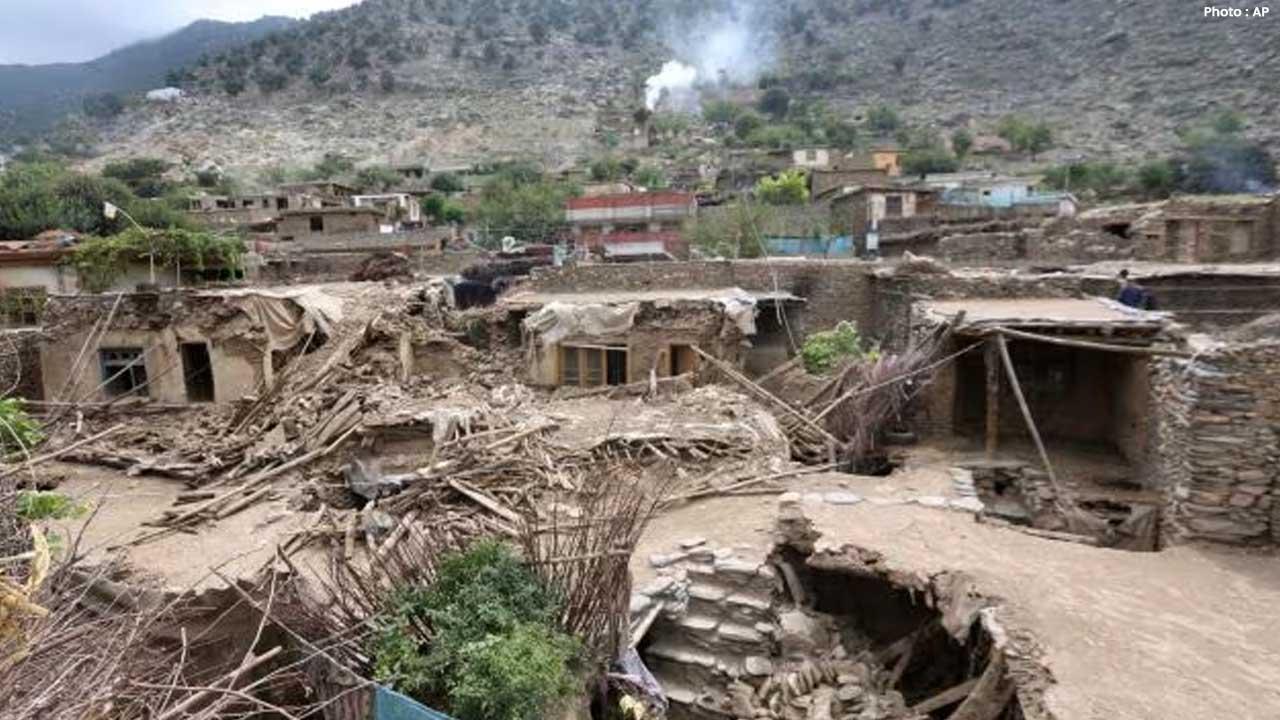
A powerful 6.3-magnitude earthquake struck near Mazar-e Sharif, Afghanistan, on Monday, leaving at least seven people dead and around 150 injured, according to local reports. The tremor has once again brought attention to Afghanistan’s long-standing vulnerability to seismic disasters.
The earthquake’s epicenter was located in the northern region of the country, where poorly built infrastructure and rugged terrain amplify the impact of such natural calamities. Emergency response teams were immediately deployed to assess the damage and provide medical assistance to the injured.
This latest disaster follows a series of devastating earthquakes that hit the nation last August, killing more than 2,200 people. Afghanistan’s position along the active fault lines between the Indian and Eurasian tectonic plates makes it one of the most earthquake-prone regions in the world.
Geologists explain that the Indian plate continues to push northward into the Eurasian plate, causing immense underground pressure. When this pressure releases, it triggers powerful earthquakes. The constant tectonic activity results in hundreds of measurable tremors each year, many of which go unreported due to remote locations and lack of monitoring systems.
Afghanistan’s history is filled with tragic earthquake events. In 2022, a 5.9-magnitude quake killed over 1,000 people, while a 1998 earthquake claimed 4,700 lives. Experts estimate that earthquakes are the deadliest natural disaster in the country, with an average annual death toll of around 560 people and damages exceeding $80 million.
The eastern and northeastern regions, including Kabul, remain at the highest risk. Kabul alone suffers approximately $17 million in annual earthquake damages, underscoring the urgent need for stronger infrastructure.
Experts stress the importance of earthquake-resistant construction, early warning systems, and public education to minimize future casualties. Retrofitting older buildings and enforcing modern safety standards are also critical steps toward improving resilience.
With Afghanistan already struggling under economic and political pressures, natural disasters like these further strain resources and humanitarian aid efforts. As the country mourns the loss of lives, global organizations are calling for immediate support to help rebuild affected communities and strengthen disaster preparedness.










Rabada Misses First Australia Test as South Africa Pick Two Spinners
Kagiso Rabada misses the opener as South Africa vs Australia begins, with Anrich Nortje returning an

Starc Compares Australia's Tough Year to McIlroy's Major Sweep
Mitchell Starc says Australia winning three away Test series and the World Cup would match Rory McIl

France’s Sesterce Plans $11 Billion AI Data Centre in Finland
Sesterce plans a $11 billion AI data centre in Finland, with major expansion, green energy plans and

Danaher to Launch AI-Powered Autonomous Research Lab in 2027
Danaher plans an AI research lab for 2027, combining robotics and automation to speed up drug discov

Musk Welcomes German Support for Tesla Driver Assistance Tech as EU Approval Push Continues
Elon Musk welcomes Germany's backing for Tesla FSD as the company seeks EU approval amid speed, safe

Microsoft and Nvidia CEOs to Unveil AI Laptop at San Francisco Event
Microsoft and Nvidia showcase a new AI laptop with RTX Spark chips as they push powerful local AI co