
You have not yet added any article to your bookmarks!
Join 10k+ people to get notified about new posts, news and tips.
Do not worry we don't spam!
Post by : Mikael Ariff
Skin cancer is increasingly prevalent globally, yet many individuals overlook initial signs. Initially, it may appear harmless—taking the form of a small blemish, a changing mole, or a dry skin patch. These changes often go unnoticed because they seem benign. Health professionals caution that waiting too long can allow the cancer to invade deeper layers of the skin, complicating treatment options.
Experts stress that early detection is vital. Identifying skin cancer at its outset allows for simpler treatments, quicker recovery, and notably better survival rates. Consequently, recognizing the signs is essential.
Here are five warning signs you should never overlook.
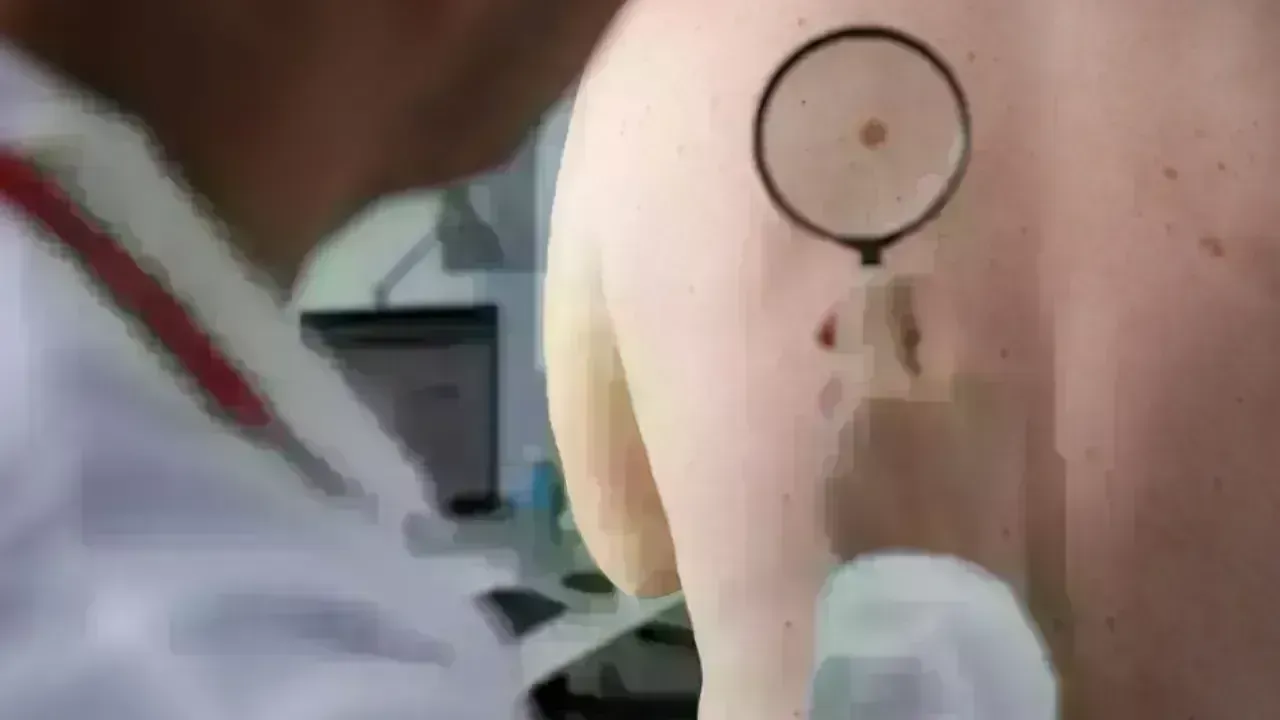
While most individuals have moles that pose no threat, any new mole or one that changes in appearance should raise concern.
Asymmetrical appearance or unusual shape
Rough or indistinct edges
Multicolored moles, including shades of brown, black, red, or grey
Growth in size over time
A mole appearing dissimilar to others on your body
This characteristic of a standout mole is referred to as the “ugly duckling sign.”
While small cuts usually heal within a few days, a sore persisting for three to four weeks could indicate skin cancer.
Frequent bleeding from the sore
Formation of a crust without complete healing
Healing followed by reopening
Lingering pain or itchiness
Cancer cells may hinder normal healing, so consistent non-healing sores should prompt a check-up.
Skin cancer can manifest as more than just raised moles; it may also appear as flat patches with different sensations.
Dry, scaly, or rough areas
Irritated or reddened patches
Recurring spots in the same region
Persistent itching or burning sensations
These signs can often be mistaken for eczema. If a patch doesn’t improve after several weeks, consulting a professional is advisable.
New bumps, especially ones that are shiny or firm and growing in size, should raise alarm bells regarding skin cancer.
Shiny or pearl-like bumps
Firm growths
Bumps that bleed easily
Persistent growth of the lump
These bumps are frequent on sun-exposed areas, including the face, ears, neck, chest, and back.
Even moles that have been present for a long time can become concerning. Any changes in their appearance warrant attention.
Medical professionals employ the ABCDE rule to identify suspicious moles:
A – Asymmetry: different halves
B – Border: unclear or uneven edges
C – Colour: multiple shades or darker hues
D – Diameter: larger than 6 mm, akin to an eraser
E – Evolving: any shift in size, shape, color, or behavior
Moles that start to itch, bleed, or elevate should be evaluated promptly.
Medical professionals cite various lifestyle and environmental factors leading to increased skin cancer rates:
Extended exposure to sunlight
Inconsistent sunscreen use
Frequent usage of tanning beds
Living in warm climates
Compromised immune systems
Family history of skin cancer
Individuals working outdoors or frequently in the sun are particularly at risk.
Skin cancer is often preventable through simple daily practices.
Here’s what specialists recommend:
Daily application of SPF 30 sunscreen or higher
Avoid sun exposure during peak hours (10 AM – 4 PM)
Wear protective clothing, sunglasses, and hats
Monthly skin checks for new or changing spots
Annual visits to a dermatologist for thorough skin examinations
You should seek medical evaluation if you notice:
An unusual mole or spot
A sore that fails to heal
Rapid changes in a mole
A new patch of irritated skin
A family history of skin cancer
Early intervention can mitigate severe complications.
Skin cancer is often subtle at first, making vigilance essential. By recognizing the early signs—altering moles, persistent sores, unusual patches, or enlarging bumps—you can take proactive steps for your health.
Your skin shields your body. Staying attentive to minor changes today can secure long-term health benefits.
This article is intended for general informational purposes and shouldn't replace professional medical guidance. Skin changes can arise for various reasons, and only a qualified health provider can give an accurate diagnosis. If you see new moles or persistent skin issues, consult a doctor promptly. Timely advice is the safest method for accurate diagnosis and care.










Josh Kerr and Jakob Ingebrigtsen Set for 1,500m Rivalry Rematch
Josh Kerr and Jakob Ingebrigtsen will renew their 1,500m rivalry at the Ultimate Championship in Bud

PSG Coach Luis Enrique Urges Players to Step Outside Comfort Zone
PSG coach Luis Enrique says players must leave their comfort zone and keep improving as the club tar

China’s Tiangong Sets New 400m Record at Robot Olympics
China’s Tiangong robot sets a new 400m record at the Robot Olympics, beating a South African robot i

George Russell Wins Dutch GP Sprint, Boosts Mercedes Morale
George Russell wins the Dutch GP Sprint from pole as Mercedes teammate Kimi Antonelli extends his F1

Australia 50/3 After Bangladesh Bowled Out for 64 in Second Test
Australia reached 50/3 after Bangladesh were bowled out for 64 in the second Test, with Mitchell Sta

Jordan Burroughs Returns to Wrestling with 2028 Olympic Dream
Jordan Burroughs returns to wrestling with Real American Freestyle as the Olympic champion eyes a po

