You have not yet added any article to your bookmarks!
Join 10k+ people to get notified about new posts, news and tips.
Do not worry we don't spam!
Post by : Saif Rahman
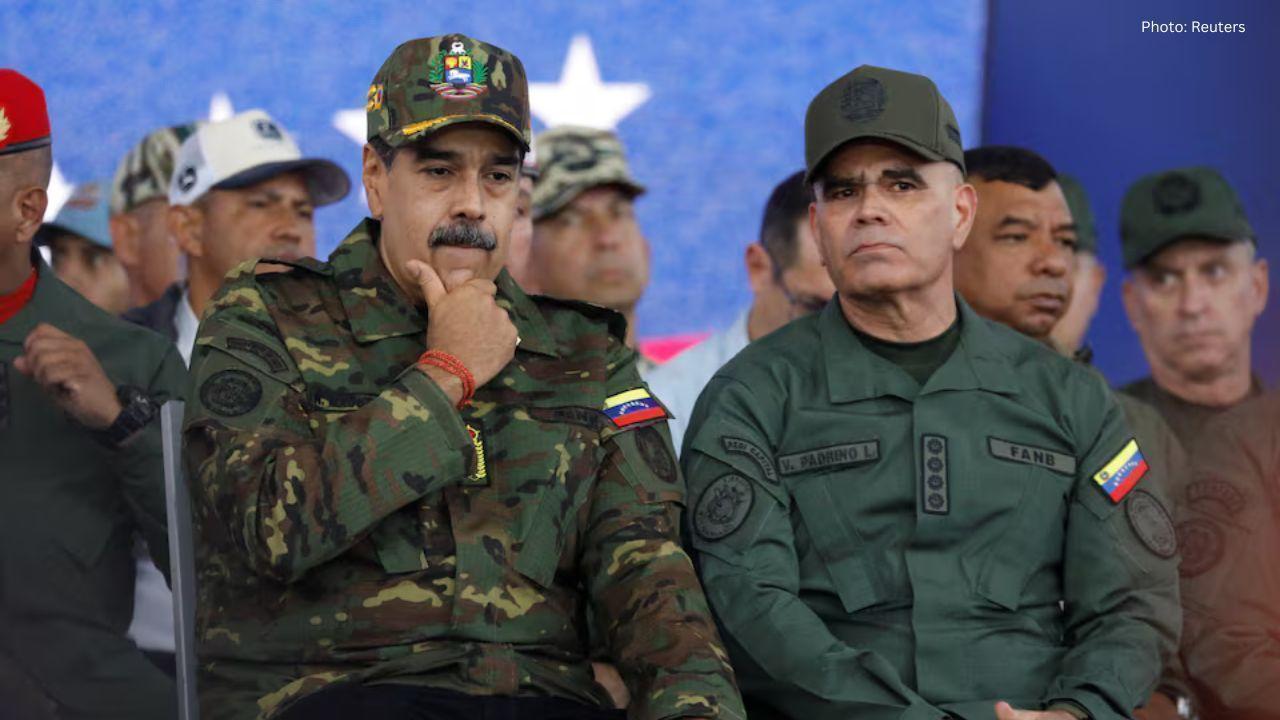
The political landscape in Venezuela shifted significantly on January 3 when the country's defense minister announced a strong refusal to allow foreign troops on Venezuelan soil. This declaration surfaced amid reports of U.S. military interventions and increasing speculation regarding President Nicolas Maduro's status.
In a video shared on Saturday morning, Defense Minister Vladimir Padrino Lopez reaffirmed Venezuela's commitment to defending its sovereignty, accusing the United States of executing attacks in residential areas, with ongoing investigations into casualties underway.
These comments came shortly after U.S. President Donald Trump claimed that President Maduro had been captured and was in the process of being ousted. Venezuelan authorities did not corroborate this assertion, leaving the clarity surrounding Maduro's actual location uncertain. Such ambiguity has sparked fear among citizens who are already contending with explosions, blackouts, and increased military activity.
Padrino further noted that the armed forces were on high alert, ready to counteract what he labeled as aggression, emphasizing that Venezuela would not yield its independence even in the face of intensified pressures. This message targeted not only Venezuelans but also the international spotlight, indicating that any foreign military engagement would encounter staunch resistance.
The Venezuelan administration has frequently condemned the United States for attempting to seize control over the nation’s oil and natural resources, claiming that recent actions reflect a broader plot to forcibly displace the current government. Conversely, Washington has denounced Maduro for clinging to power through alleged electoral fraud and has enacted rigorous sanctions over the years.
These developments transpire against a backdrop of escalating tensions, marked by increased U.S. military presence in the vicinity and hostile rhetoric from both nations. Many ordinary Venezuelans find the atmosphere troubling, fearing that ongoing confrontations could lead to heightened violence, civilian hardships, and prolonged instability.
As the situation evolves, the possibility of a broader conflict looms large. Global observers are closely monitoring whether diplomatic measures can mitigate the crisis or if it will descend into outright confrontation. Currently, Venezuela's stance is unapologetically clear: it stands resolute against any foreign military presence at all costs.




PSG Coach Luis Enrique Urges Players to Step Outside Comfort Zone
PSG coach Luis Enrique says players must leave their comfort zone and keep improving as the club tar

China’s Tiangong Sets New 400m Record at Robot Olympics
China’s Tiangong robot sets a new 400m record at the Robot Olympics, beating a South African robot i

George Russell Wins Dutch GP Sprint, Boosts Mercedes Morale
George Russell wins the Dutch GP Sprint from pole as Mercedes teammate Kimi Antonelli extends his F1

Australia 50/3 After Bangladesh Bowled Out for 64 in Second Test
Australia reached 50/3 after Bangladesh were bowled out for 64 in the second Test, with Mitchell Sta

Jordan Burroughs Returns to Wrestling with 2028 Olympic Dream
Jordan Burroughs returns to wrestling with Real American Freestyle as the Olympic champion eyes a po

Lamborghini Catches Fire on Singapore's ECP, Causing Heavy Traffic
A Lamborghini caught fire on Singapore's ECP, causing heavy traffic and bus delays. No injuries were