
You have not yet added any article to your bookmarks!
Join 10k+ people to get notified about new posts, news and tips.
Do not worry we don't spam!
Post by : Saif Rahman
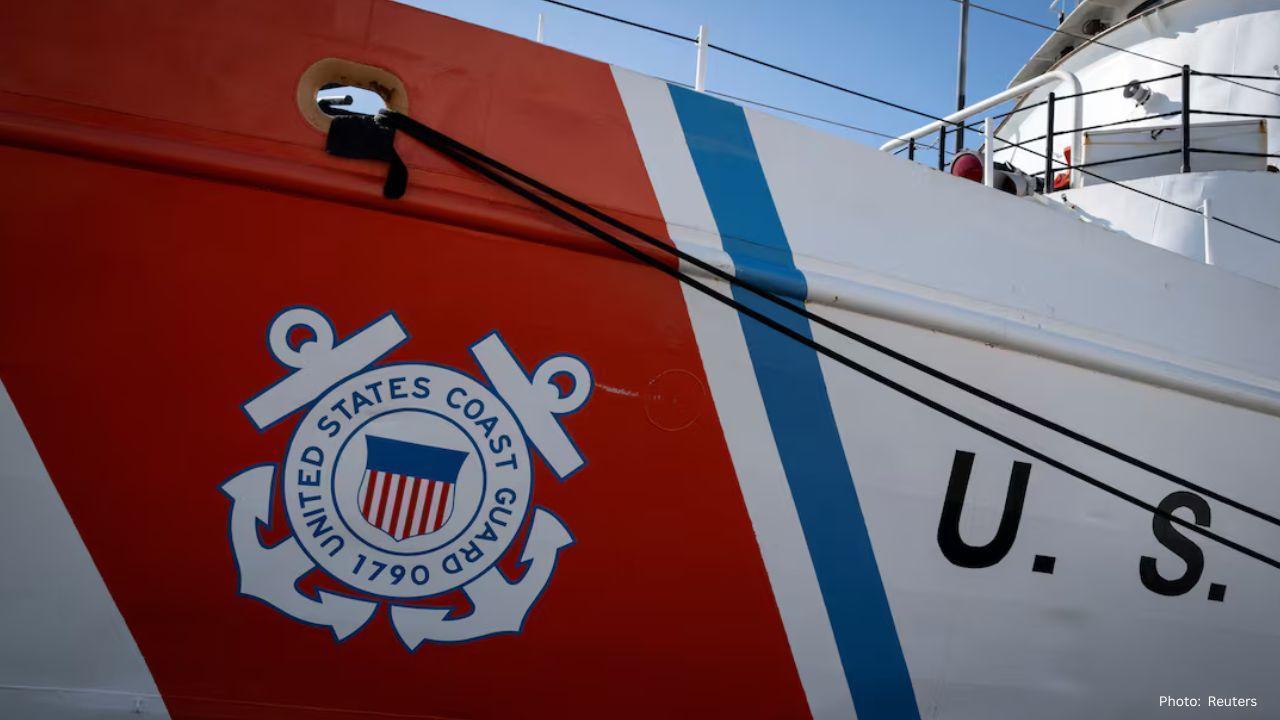
The United States is mobilizing extra Coast Guard assets to capture an oil tanker tied to Venezuela that has resisted cooperation with American officials. The vessel, recognized by maritime organizations as Bella 1, has been on a watchlist for several days and is believed to assist Venezuela in eluding U.S. sanctions.
Officials stated that the tanker has persistently rebuffed Coast Guard attempts to board. Due to this pushback, the mission may now necessitate involvement from one of the Coast Guard’s specialized units, known as Maritime Security Response Teams. These units are trained to conduct high-stakes boardings, including approaches via helicopters while the ship is in motion.
This situation highlights a rising dilemma. Despite directives from the Trump administration for aggressive action against sanctioned tankers in Venezuelan waters, the Coast Guard suffers from limited capabilities to undertake large, perilous operations. Unlike the Navy, the Coast Guard is empowered to enforce maritime laws, including the boarding and seizure of ships that breach sanctions.
Earlier this month, President Donald Trump pronounced a “blockade” aimed at sanctioned oil tankers navigating to and from Venezuela. This initiative seeks to intensify pressure on Venezuelan President Nicolas Maduro by cutting off unauthorized oil shipments. Recently, the Coast Guard has successfully intercepted two tankers in the area with the aid of special teams and helicopter missions that were later publicized.
However, analysts warn that these joint actions stretch the Coast Guard thin. The agency is tasked with multiple responsibilities, including combating drug trafficking, search and rescue missions, and safeguarding borders. Admiral Kevin Lunday, the Coast Guard's leader, has informed lawmakers of a significant readiness crisis that has been developing over the years.
While the U.S. military has dispatched formidable assets to the Caribbean, such as aircraft carriers and fighter jets, the Coast Guard operates with significantly fewer resources. This disparity raises concerns regarding the agency's ability to manage its increasing missions without compromising safety or operational effectiveness.
The government plans to augment Coast Guard funding in the upcoming years, but officials concede that financial support alone will not swiftly resolve personnel and training deficits. The pursuit of the Bella 1 illustrates the complexities inherent in modern maritime law enforcement.
Currently, the tanker is under diligent surveillance. It remains uncertain if U.S. forces will successfully board and seize it. Nevertheless, this episode underscores the essential need to align political aspirations with the practical capabilities of the agencies tasked with their execution.





PSG Coach Luis Enrique Urges Players to Step Outside Comfort Zone
PSG coach Luis Enrique says players must leave their comfort zone and keep improving as the club tar

China’s Tiangong Sets New 400m Record at Robot Olympics
China’s Tiangong robot sets a new 400m record at the Robot Olympics, beating a South African robot i

George Russell Wins Dutch GP Sprint, Boosts Mercedes Morale
George Russell wins the Dutch GP Sprint from pole as Mercedes teammate Kimi Antonelli extends his F1

Australia 50/3 After Bangladesh Bowled Out for 64 in Second Test
Australia reached 50/3 after Bangladesh were bowled out for 64 in the second Test, with Mitchell Sta

Jordan Burroughs Returns to Wrestling with 2028 Olympic Dream
Jordan Burroughs returns to wrestling with Real American Freestyle as the Olympic champion eyes a po

Lamborghini Catches Fire on Singapore's ECP, Causing Heavy Traffic
A Lamborghini caught fire on Singapore's ECP, causing heavy traffic and bus delays. No injuries were

