
You have not yet added any article to your bookmarks!
Join 10k+ people to get notified about new posts, news and tips.
Do not worry we don't spam!
Post by : Saif Rahman
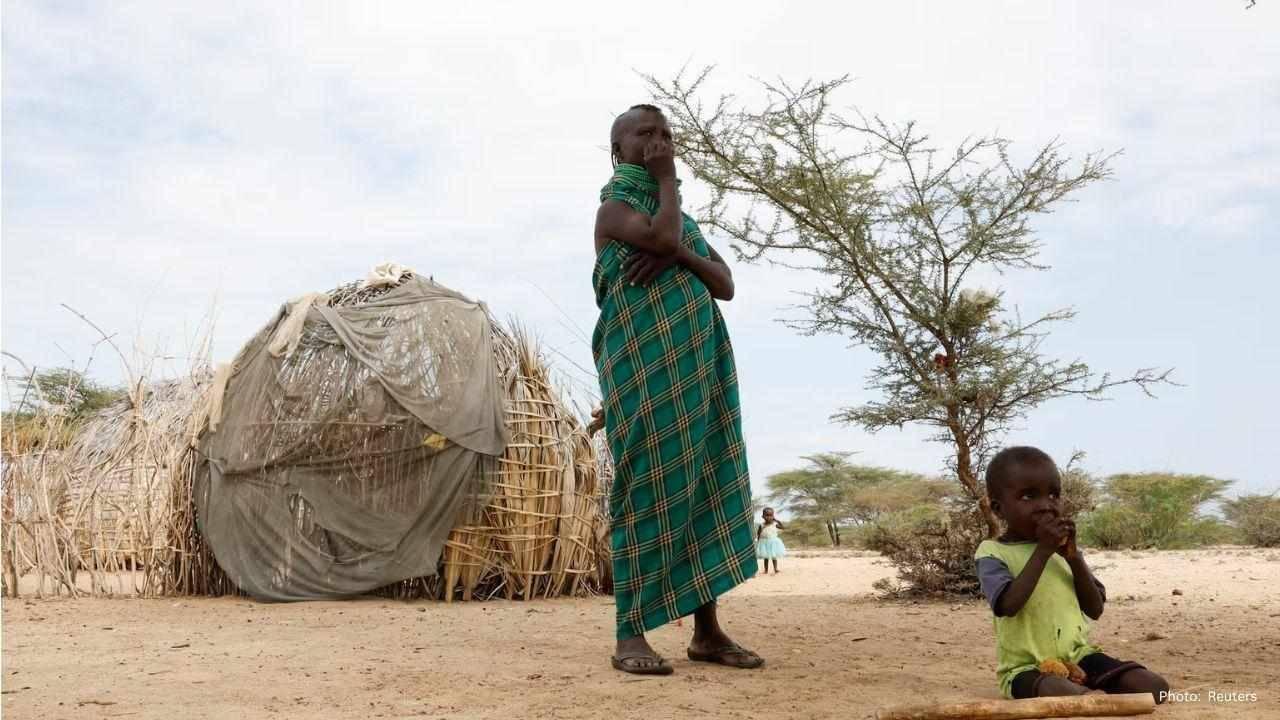
In the arid and unforgiving Turkana region of Kenya, countless parents are engaged in a relentless struggle to keep their children alive. One such parent is 30-year-old Hellen Etiman, who had hoped her four-year-old son, Peter Lokoyen, was finally on the mend thanks to a specialized treatment for severe malnutrition. However, that hope was shattered when the clinic ran out of essential food supplies that could save his life.
Peter's condition deteriorated, forcing his family to forage for wild fruits amid the drought-stricken landscape surrounding their village. By late October, Peter's weight had plunged to just 11.4 kilograms—far below the acceptable weight for his age. His younger sister, not even two, was fast approaching his height.
This distressing scenario underscores a broader crisis triggered by significant reductions in U.S. foreign aid. Earlier this year, the Trump administration dismantled the U.S. Agency for International Development (USAID) and slashed global aid programs. These funding cuts severely disrupted the supply of ready-to-use therapeutic food (RUTF), the peanut paste critical for treating severely malnourished children worldwide.
Prior to these cuts, the U.S. accounted for nearly half of the global supply of RUTF. For thousands of families in Kenya and other African nations, this nutritious paste was often their only lifeline. With funding pulled, clinics across Turkana and other regions are struggling with empty shelves and extensive waiting lists.
Health workers and aid organizations report an unprecedented level of shortages. Many children arrive at hospitals in dire condition, as community screening initiatives—previously funded by the U.S.—have been halted. Without early diagnosis, countless children find themselves too late for lifesaving treatment.
UNICEF, the largest global purchaser of RUTF, has stated that most U.S. funding was restored in March. However, rebuilding supplies is a slow process. A visit by Reuters to seven health clinics in Turkana in October revealed a dire situation, with nearly all having minimal or no RUTF available. Some had only one carton left.
Despite being one of East Africa's more stable economies, Kenya is facing a dire crisis in supply. Experts warn that if such shortages impact Kenya, the ramifications could be dire for poorer nations in the region.
The consequences of malnutrition extend far beyond immediate hunger, with long-term effects including stunted growth, weakened immunity, and permanent cognitive impairments. These challenges can severely affect children's future prospects, limiting their potential as adults.
While UNICEF has begun distributing new supplies to some clinics, many families are still in desperate need. For children like Peter, any delay could very well mean a matter of life or death.
Reports of malnourished children succumbing to hunger-related issues have also emerged from nations like Nigeria and the Democratic Republic of Congo after earlier U.S.-backed programs were put on hold. The U.S. government has refuted these claims; nevertheless, local health workers assert that the situation tells a different story.
The landscape of global aid is shifting as many European nations, including the UK, Germany, France, Sweden, and the Netherlands, have opted to reduce foreign aid budgets to prioritize domestic issues. With multiple nations withdrawing simultaneously, struggling areas like Turkana face escalating threats.
For parents in the drought-riddled regions of Kenya, the focus is alarmingly basic: they desperately wish for their children’s survival. However, without consistent international assistance, the hopes for recovery for thousands of malnourished children remain increasingly bleak.
This crisis highlights how decisions made in far-off political arenas can create life-threatening circumstances for families residing in remote areas. As global funding becomes less reliable, the world's most vulnerable children are at serious risk of being overlooked.






Josh Kerr and Jakob Ingebrigtsen Set for 1,500m Rivalry Rematch
Josh Kerr and Jakob Ingebrigtsen will renew their 1,500m rivalry at the Ultimate Championship in Bud

PSG Coach Luis Enrique Urges Players to Step Outside Comfort Zone
PSG coach Luis Enrique says players must leave their comfort zone and keep improving as the club tar

China’s Tiangong Sets New 400m Record at Robot Olympics
China’s Tiangong robot sets a new 400m record at the Robot Olympics, beating a South African robot i

George Russell Wins Dutch GP Sprint, Boosts Mercedes Morale
George Russell wins the Dutch GP Sprint from pole as Mercedes teammate Kimi Antonelli extends his F1

Australia 50/3 After Bangladesh Bowled Out for 64 in Second Test
Australia reached 50/3 after Bangladesh were bowled out for 64 in the second Test, with Mitchell Sta

Jordan Burroughs Returns to Wrestling with 2028 Olympic Dream
Jordan Burroughs returns to wrestling with Real American Freestyle as the Olympic champion eyes a po

