
You have not yet added any article to your bookmarks!
Join 10k+ people to get notified about new posts, news and tips.
Do not worry we don't spam!
Post by : Anis Farhan
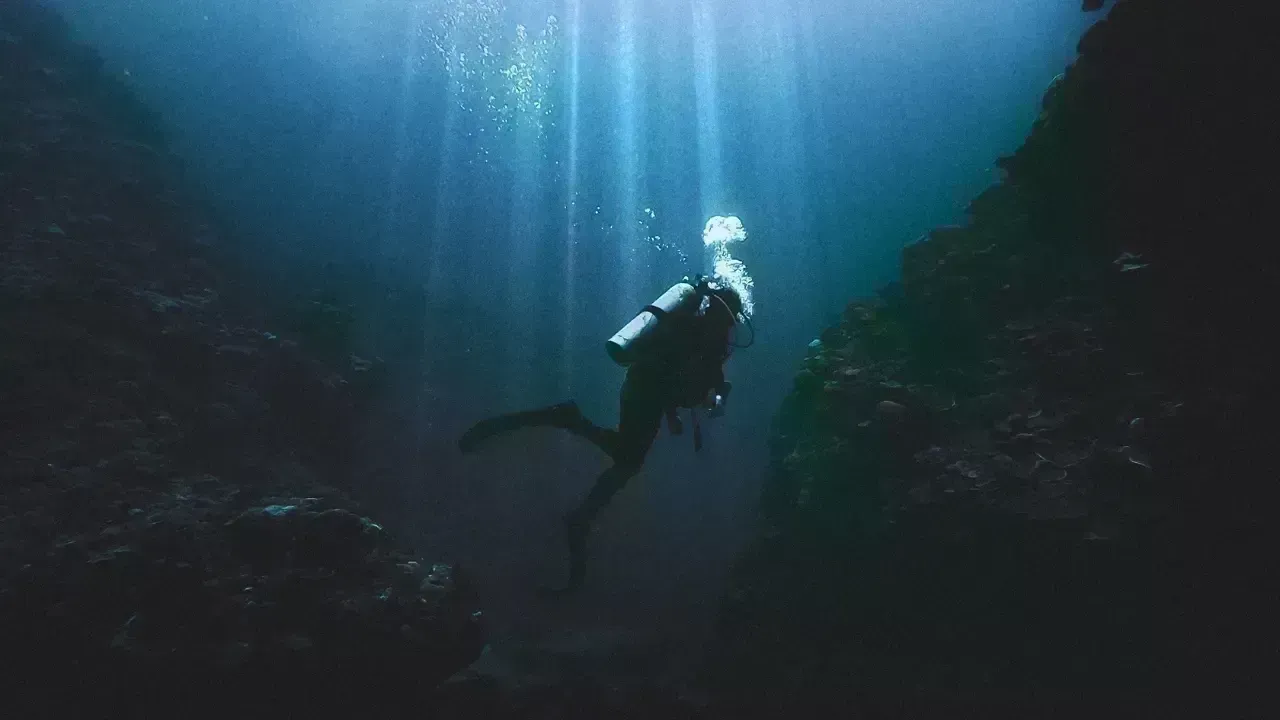
The deep ocean is one of the least explored places on Earth. Though our planet is dominated by water, humanity has probed only a tiny fraction of the ocean’s true depth. At nearly 10,000 meters below the surface lies an alien world — a place of crushing pressure, eternal darkness, and cold temperatures that challenge the limits of life. Yet this mysterious zone, known as the hadal realm, is teeming with strange organisms, complex ecosystems, and geological wonders that scientists are only beginning to understand.
Despite advances in deep-sea technology, the abyss remains more unexplored than the surface of the Moon or Mars. This vast unknown continues to captivate researchers, adventurers, and marine biologists, as each expedition uncovers something astonishing — a species previously unknown, geological formations never documented, or a clue to Earth’s early origins.
This article takes you deep into the ocean’s most extreme environment, exploring what lies at 10,000 meters, how life survives there, and why the secrets of the abyss could reshape our understanding of Earth itself.
The hadal zone begins roughly at 6,000 meters and extends to the deepest points of the ocean, such as the Mariana Trench, which plunges beyond 11,000 meters. At 10,000 meters:
Sunlight cannot penetrate
Water temperatures hover near freezing
Pressure exceeds 16,000 psi
Ecosystems rely on chemical, not solar, energy
This zone is named after “Hades,” the Greek underworld — an apt name for such an extreme environment.
At 10,000 meters below the surface, the pressure is more than a thousand times greater than at sea level. No human could survive such crushing force without advanced submersibles designed to withstand it.
Temperature ranges from:
1°C to 4°C
Nearly freezing, yet stable
The absence of sunlight and abundant nutrients makes survival exceptionally challenging.
Amphipods are small, shrimp-like creatures commonly found at extreme depths. At 10,000 meters, they grow much larger due to lack of predators and unique environmental pressures.
Their adaptations include:
Pressure-resistant cell membranes
Slow metabolism
Flexible proteins
Despite their small size, they are essential to deep-sea ecosystems.
Snailfish discovered at depths beyond 8,000 meters represent some of the deepest-living vertebrates known. At nearly 10,000 meters, scientists believe snailfish may still thrive due to:
Gelatinous bodies that resist compression
Flexible bones that do not shatter under pressure
Feeding strategies based on scavenging
Their translucent skin and lack of scales give them an almost otherworldly appearance.
Sea cucumbers at extreme depths play a vital role by consuming organic particles that drift from above. They help maintain the delicate balance of this hidden ecosystem.
Microbial communities represent some of the most fascinating life forms found at 10,000 meters. These microbes thrive on:
Methane
Hydrogen
Sulfur compounds
Metals from hydrothermal vents
Their existence has reshaped scientific understanding of how life can survive without sunlight.
The deepest points in the ocean are located at plate boundaries where one tectonic plate dives beneath another. These areas are:
Seismically active
Geologically complex
Constantly reshaping Earth’s crust
The hadal trenches serve as gateways into Earth’s interior.
Although hydrothermal vents are more common at mid-ocean ridges, chemical seepage and mineral-rich zones exist even at trench depths. These areas may:
Support unique bacterial colonies
Produce rare minerals
Offer clues to life’s early evolution
Sediment accumulation is extremely slow at 10,000 meters, creating layers that preserve:
Ancient minerals
Microfossils
Volcanic ash
Climate signatures
This natural archive helps researchers reconstruct Earth’s history.
To explore the abyss, technology must withstand pressures beyond what most materials can handle. Only a handful of submersibles can reach depths near 10,000 meters.
Deep-ocean missions involve:
Specialized ships
Robotic vehicles
Pressure-resistant instruments
This makes exploration rare and expensive.
Even with decades of exploration, over 80% of the ocean remains unmapped.
Deep-ocean microbes help scientists understand:
How life emerged
How organisms adapt to extremes
Possibilities of life on other planets
The deep sea stores massive amounts of:
Carbon
Heat
Nutrients
Understanding these dynamics is critical for predicting climate change.
Many deep-sea species produce unique compounds with potential applications in:
Medicine
Biotechnology
Industrial processes
As depth increases, pressure and darkness become even more intense. Yet scientists believe microbial life exists even below 10,000 meters.
Every expedition reveals new species, proving that the deep ocean still hides countless secrets waiting to be discovered.
The mysterious world 10,000 meters below the ocean’s surface remains one of Earth’s final untouched frontiers. It is a realm of extremes — crushing pressure, total darkness, bone-chilling temperatures, and remarkably resilient life forms. Despite limited exploration, what we know already challenges our traditional understanding of biology, geology, and the evolution of life.
The creatures and ecosystems at these depths illuminate how life adapts to unimaginable conditions. The geological structures reveal Earth’s inner workings. The microbial communities may even offer clues to life beyond our planet.
As technology advances and scientific curiosity deepens, the secrets of the abyss will continue to unfold. But for now, the deep ocean remains a place where mystery reigns, reminding us that our planet still possesses vast, unexplored worlds waiting to be understood.
This article is for educational and informational purposes only.










Josh Kerr and Jakob Ingebrigtsen Set for 1,500m Rivalry Rematch
Josh Kerr and Jakob Ingebrigtsen will renew their 1,500m rivalry at the Ultimate Championship in Bud

PSG Coach Luis Enrique Urges Players to Step Outside Comfort Zone
PSG coach Luis Enrique says players must leave their comfort zone and keep improving as the club tar

China’s Tiangong Sets New 400m Record at Robot Olympics
China’s Tiangong robot sets a new 400m record at the Robot Olympics, beating a South African robot i

George Russell Wins Dutch GP Sprint, Boosts Mercedes Morale
George Russell wins the Dutch GP Sprint from pole as Mercedes teammate Kimi Antonelli extends his F1

Australia 50/3 After Bangladesh Bowled Out for 64 in Second Test
Australia reached 50/3 after Bangladesh were bowled out for 64 in the second Test, with Mitchell Sta

Jordan Burroughs Returns to Wrestling with 2028 Olympic Dream
Jordan Burroughs returns to wrestling with Real American Freestyle as the Olympic champion eyes a po

