
You have not yet added any article to your bookmarks!
Join 10k+ people to get notified about new posts, news and tips.
Do not worry we don't spam!
Post by : Saif Rahman
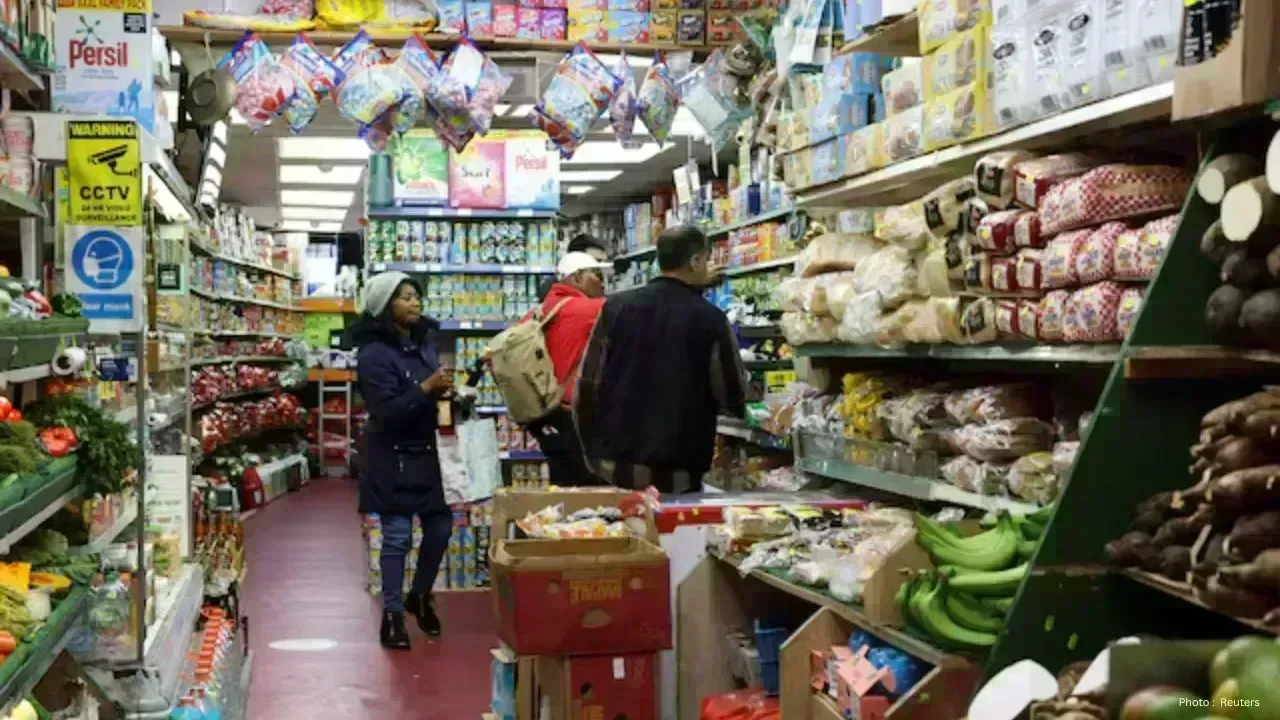
In the UK, grocery price inflation is showing signs of moderation, offering a brief respite to households faced with escalating living expenses in recent years. However, analysts caution that international conflicts and global supply issues may still impact food prices in the near future.
Recent market analytics indicate that the rate at which supermarket prices are increasing has slowed, a welcome shift from earlier trends that burdened consumers. This easing in grocery expenses brings some relief to families grappling with rising energy bills, housing costs, and other daily financial pressures.
Experts in retail note that enhanced supply-chain conditions and fierce competition among supermarkets are key factors in the deceleration of food price rises. Discount promotions, steady agricultural production, and modifications in supply logistics have also played roles in the gradual improvement seen across various product categories.
Despite these encouraging developments, the future remains uncertain, as international events could swiftly alter global market dynamics. Ongoing geopolitical tensions and disruptions to shipping routes or energy resources might still exert pressure on transportation and production costs.
Since the pandemic, the UK has dealt with significant inflation issues, with food and household expenses rising to the forefront of concerns for millions. This rise in prices has shifted consumer buying behaviors, pushing families to forgo luxuries in favor of more affordable alternatives.
Financial analysts emphasize that grocery inflation significantly impacts public sentiment, as food is a basic necessity. Minor increases in supermarket prices can have a profound effect on household budgets, particularly for low-income families.
With the ongoing cost-of-living crisis, supermarkets across the UK are competing fiercely for consumer loyalty. Retail chains have rolled out price cuts, customer loyalty programs, and promotional offers to sustain demand under pressures from suppliers and transport costs.
While a slowdown in inflation is promising, industry insiders caution that it does not equate to a return to previous price levels. Many products still carry higher price tags than in years past, although the rate of increases is beginning to slow.
The global energy landscape remains a key influencer of food prices, as fuel costs directly affect transport, manufacturing, and agricultural processes. Any disruptions in oil or shipping sectors can swiftly impact supply chains and escalate business operational costs.
Economic instability stemming from international affairs is another critical consideration. Financial markets remain vigilant regarding geopolitical shifts, as these can affect trade routes, commodity values, and overall economic stability.
Consumers are adapting their spending habits in light of persistent inflation, increasingly comparing prices, opting for store-brand items, and cutting back on non-essential expenditures to manage their monthly budgets.
Food producers and retailers are contending with challenges such as labor costs, climate volatility, and shifting supply demands. The agricultural sector throughout Europe has faced pressures from weather-related challenges and rising operational expenses in recent years.
Economists suggest that the recent slowdown in grocery inflation could bolster the wider economy by enhancing consumer confidence and alleviating financial pressures on households. Nevertheless, they caution that long-term sustainability hinges on international market dynamics and domestic economic strategies.
The Bank of England and government authorities are vigilantly monitoring inflation trends, recognizing that price stability remains crucial. Policymakers are expected to take a cautious approach in assessing interest rates and broader economic contexts.
Retail specialists predict that supermarkets will continue prioritizing affordability as competition remains intense. Shoppers are expected to stay price-sensitive until there is a more consistent improvement in living costs across various sectors.
Recent inflation numbers underscore the intricate relationship between local food prices and global economic shifts. Developments occurring far beyond the UK's borders can still influence supply chains, transport systems, and retail pricing in the nation.
As households in the UK brace for the coming months, they will likely keep a close eye on grocery prices. Any rise in energy costs or interruptions in international trade could again exert pressure on supermarket prices and consumer budgets.
Thus, while the recent lull in grocery inflation offers a glimmer of cautious optimism, it doesn't signal an end to economic challenges. With improvements compared to earlier surges in price, the uncertainty surrounding global markets keeps consumers and businesses prepared for potential future cost fluctuations.










PM Modi Pays Tribute to Mahatma Gandhi, Urges People to Support Khadi
PM Modi pays tribute to Mahatma Gandhi on Gandhi Jayanti and urges citizens to support Khadi and the

Amazon Seeks to Offload $8 Billion in Nvidia Chips to Investors
Amazon plans to move $8 billion in Nvidia chips to investors, using a new financing model to strengt

Samsung Raises Galaxy S26 Prices as Memory Chip Costs Rise
Samsung raises Galaxy S26 prices in South Korea as rising memory chip costs put pressure on smartpho

Lewis Hamilton Calls Singapore Grand Prix One of F1's Toughest Races
Lewis Hamilton discusses the demanding Singapore Grand Prix and brings Plus44 and Almave to Singapor

Denmark's Pandora Opens World's Largest Jewellery Factory in Vietnam
Pandora opens its largest jewellery factory in Vietnam, expanding global production, strengthening s

Gautam Gambhir Questions Batting-Friendly Pitches After India's Record ODI Chase
Gautam Gambhir questions batting-friendly ODI pitches after India’s record chase, calling for a bett

