
You have not yet added any article to your bookmarks!
Join 10k+ people to get notified about new posts, news and tips.
Do not worry we don't spam!
Post by : Shweta
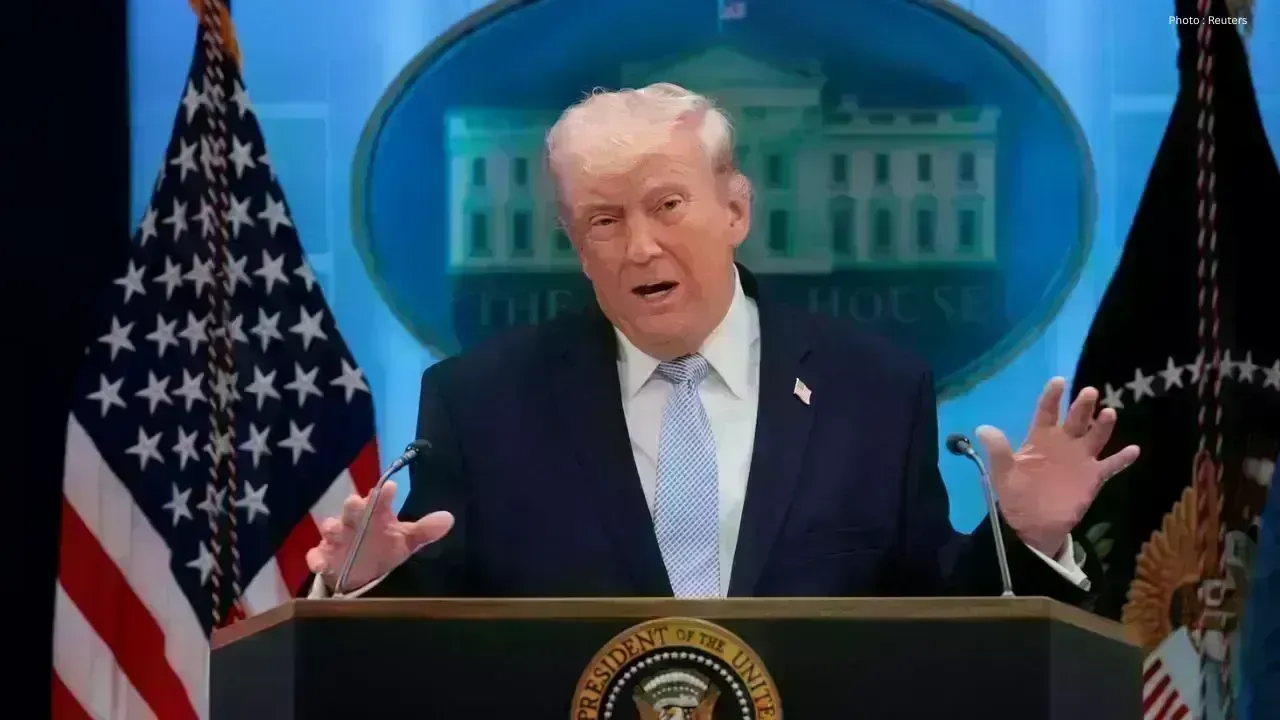
US President Donald Trump has stated that a potential agreement with Iran to ease tensions in the Middle East is “largely negotiated.” He indicated that discussions are progressing towards a final accord that could facilitate the reopening of the Strait of Hormuz, a vital oil shipping channel. This declaration emerged during ongoing diplomatic discussions involving several Middle Eastern nations and international negotiators.
Reports reveal that while final components of the deal are still being finalized, key elements of the proposed framework have been established. The prospective agreement is expected to target de-escalation of military hostilities, reopening the Strait of Hormuz to global maritime traffic, and initiating new talks concerning Iran’s nuclear ambitions. Trump has also suggested that regional leaders are advocating for the US to advance with this agreement to mitigate the risk of further Gulf conflicts.
Situated between Iran and Oman, the Strait of Hormuz is a strategically significant passage. Approximately one-fifth of global oil supplies transit through this narrow route daily. Rising tensions among Iran, the US, and Israel have led to significant disruptions in the region. Increased military activity and attacks on commercial vessels have heightened fears of a broader conflict, driving up global oil prices.
The proposed deal may entail a temporary ceasefire, clearance of naval mines in the Strait of Hormuz, and enhanced access for commercial maritime traffic. In exchange, the US might consider easing some limitations on Iranian ports and providing limited sanctions relief for oil exports. However, Iranian authorities have not fully validated Trump’s statements. Iranian media have indicated Tehran is seeking to retain control over security dynamics in the Strait and demands assurances against future US military interventions.
Diplomatic engagements have reportedly included officials from Pakistan, Saudi Arabia, Qatar, the UAE, Egypt, Jordan, and Turkey, all working towards reducing regional tensions. Pakistan’s leadership has expressed that recent discussions reflected “encouraging progress,” while ongoing dialogues between regional figures and Washington and Tehran aim to avert further military escalations.
US Secretary of State Marco Rubio confirmed the progress in negotiations, although key issues remain unresolved. These unresolved matters encompass Iran’s nuclear program, missile initiatives, and demands for sanctions alleviation. Analysts suggest that finalizing an agreement may require further time due to ongoing disagreements on essential security and political issues.
The prospect of reopening the Strait of Hormuz has already influenced global markets, with oil prices decreasing as diplomatic momentum suggests potential stabilization in the region and improved energy supplies. Experts believe that reaching a successful accord is crucial not just for the Middle East but for global commerce, oil markets, and international safety.










PM Modi Pays Tribute to Mahatma Gandhi, Urges People to Support Khadi
PM Modi pays tribute to Mahatma Gandhi on Gandhi Jayanti and urges citizens to support Khadi and the

Amazon Seeks to Offload $8 Billion in Nvidia Chips to Investors
Amazon plans to move $8 billion in Nvidia chips to investors, using a new financing model to strengt

Samsung Raises Galaxy S26 Prices as Memory Chip Costs Rise
Samsung raises Galaxy S26 prices in South Korea as rising memory chip costs put pressure on smartpho

Lewis Hamilton Calls Singapore Grand Prix One of F1's Toughest Races
Lewis Hamilton discusses the demanding Singapore Grand Prix and brings Plus44 and Almave to Singapor

Denmark's Pandora Opens World's Largest Jewellery Factory in Vietnam
Pandora opens its largest jewellery factory in Vietnam, expanding global production, strengthening s

Gautam Gambhir Questions Batting-Friendly Pitches After India's Record ODI Chase
Gautam Gambhir questions batting-friendly ODI pitches after India’s record chase, calling for a bett

