
You have not yet added any article to your bookmarks!
Join 10k+ people to get notified about new posts, news and tips.
Do not worry we don't spam!
Post by : Anis Farhan
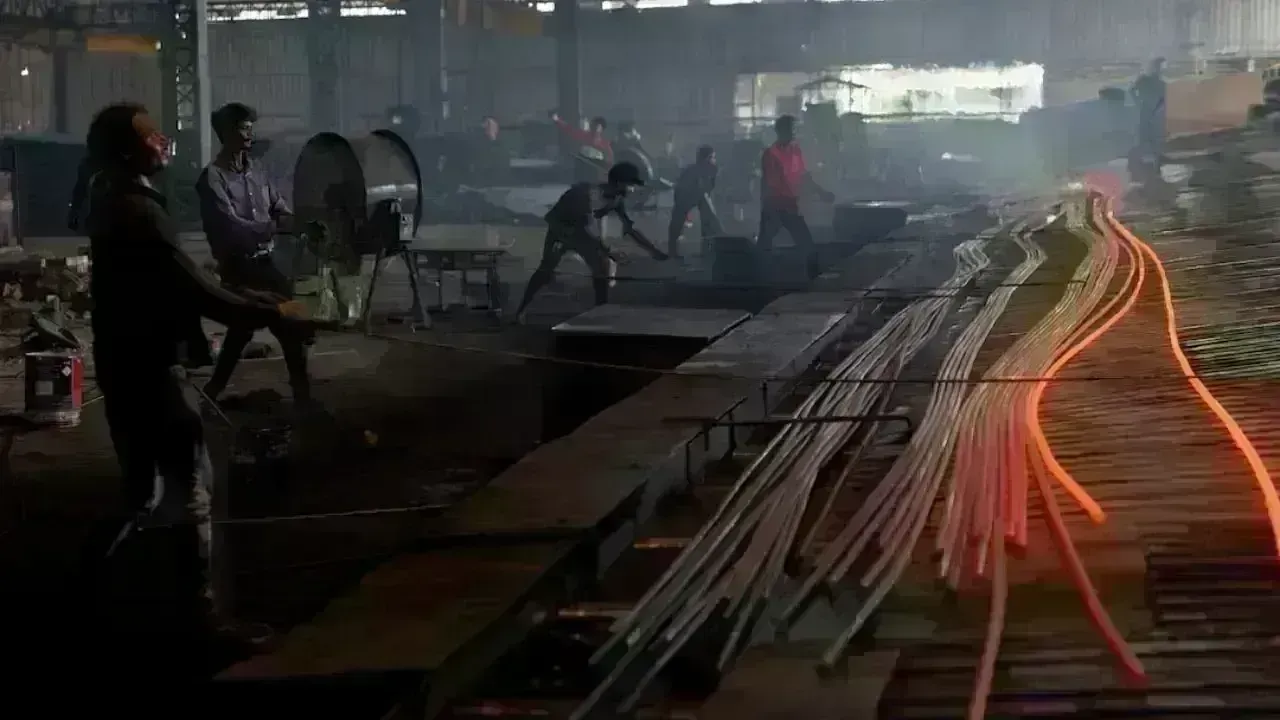
Trade policy usually feels distant from daily life. Tariffs, supply chains and import duties sound like business jargon meant for economists and industry insiders. But when it comes to steel, those decisions silently affect kitchens, garages and construction sites.
Steel is one of the most used materials in the economy. It sits behind walls, inside electric fans, under car bonnets and beneath railway tracks. When governments consider raising import tariffs on steel, the effect is never limited to factories. It slowly works its way into showroom prices and household budgets.
Most consumers never buy steel directly. But most things they buy contain it. That is what makes tariffs powerful. They influence nearly every major purchase without people realising how.
From the car you drive to the refrigerator in your kitchen, steel forms the skeleton of modern life. Washing machines, microwave ovens, water heaters, elevators, electrical cabinets and building frameworks all depend on steel.
When steel becomes expensive, manufacturers pay more to produce goods. These increased costs rarely stay inside factories. They are passed along the chain and eventually reach customers.
The moment steel prices rise, the ripple spreads across industries that rely on it extensively. Automotive companies adjust model pricing. Appliance brands revise manufacturing budgets. Construction contractors rework building estimates.
The consumer feels the outcome long after a government decision is made.
An import tariff is a tax placed on goods coming from other countries. When steel imports become costlier due to tariffs, domestic producers gain an advantage. They can charge more without losing customers, because cheaper imports are no longer easily available.
Governments use tariffs to protect local industries and encourage domestic production. But tariffs also reduce competition. When fewer suppliers operate freely, prices rise.
Higher tariffs mean:
Imported steel becomes expensive.
Domestic steel gains pricing power.
Manufacturers face higher raw material costs.
End-products become costlier for buyers.
No household remains untouched.
The automobile sector is among the largest consumers of steel. Car bodies, structural frames, engine parts and safety components are heavily steel-dependent. A rise in steel costs immediately reflects in manufacturing budgets.
Car companies have limited choices. They either absorb higher costs or pass them to buyers. Over time, most companies do the latter.
New models become costlier. Smaller cars see marginal increases. Larger vehicles and SUVs experience sharper hikes. Even spare parts become more expensive.
When steel prices rise, the price tag on four wheels moves soon after.
Anyone planning to build a house or renovate one knows how deeply steel is embedded in construction. Beams, rods, pipelines, railings, doors, roofing and flooring frameworks all rely on steel.
Import tariffs increase steel costs. Contractors raise quotes. Builders revise budgets.
The ripple effect pushes:
Cement demand up.
Hardware costs higher.
Labour charges upward.
Project timelines longer.
Home buyers suffer twice. First through higher prices and then through delays caused by material shortages and supplier issues.
Every refrigerator contains significant steel content. So do washing machines, refrigerators, ovens and air conditioners.
Manufacturers do not advertise steel as a feature. But it determines:
Durability.
Weight.
Structural integrity.
Life expectancy.
When raw material costs rise, appliance companies either:
Reduce features.
Compromise on material quality.
Or increase retail prices.
Most choose price adjustments.
Consumers feel it when upgrading appliances becomes costlier compared to last year.
Steel tariffs create inflation beyond steel.
When manufacturing becomes expensive:
Transport costs rise.
Storage expenses increase.
Packaging becomes costly.
Retail margins adjust.
All of this builds hidden inflation.
Consumers experience it as:
Higher EMIs.
Expensive repairs.
Costly upgrades.
Reduced affordability.
Inflation does not arrive in one big wave.
It trickles in through daily spending.
Tariffs are not passed randomly. Governments usually act to protect domestic industries from cheap imports that threaten local producers.
Steel production generates employment, tax revenue and infrastructure resilience. If domestic steel collapses, import dependency rises. That can destabilise national supply in times of conflict or crisis.
So while tariffs inconvenience consumers, policymakers consider:
Industrial growth.
National security.
Job stability.
Economic self-reliance.
The problem is balance.
Protecting industry without punishing households is a difficult equation.
Domestic steel producers benefit immediately. Their margins widen. Their market share improves.
But small manufacturers depending on imported steel suffer.
Construction firms loaded with contracts suffer.
Automobile suppliers suffer.
Households eventually suffer.
Tariffs can strengthen one sector while straining several others.
A temporary price rise can be managed.
Long-term cost pressure changes behaviour.
Households postpone home buying.
People delay upgrading appliances.
Vehicle purchases slow.
Repair costs rise.
Insurance premiums increase.
Over time, economic activity reduces.
Consumer confidence weakens.
Tariffs must be evaluated not just on industrial strength, but on household strain.
Tariff discussions may seem distant. But families can plan:
Avoid delaying essential purchases indefinitely.
Watch raw material trends before large expenses.
Compare brands carefully.
Budget for price fluctuations.
Avoid unnecessary upgrades during uncertainty.
Economic awareness is now part of personal finance.
Tariffs usually stay in place once introduced. They shift national supply chains and investment flows. Reversing them is politically difficult.
Much depends on:
Global steel supply.
Domestic manufacturing capacity.
Trade negotiations.
Economic priorities.
Temporary hikes may settle.
Structural changes often do not.
Is self-reliance worth a higher cost of living?
Every country answers this differently.
But for households, one truth remains:
When steel rises, everyday life becomes heavier.
Not emotionally.
Financially.
Steel import tariffs may appear technical. In reality, they shape what families can afford.
From buying a car to fixing a refrigerator, from building a home to buying furniture, steel sits quietly inside every decision.
And when something so deeply embedded becomes expensive…
Life becomes expensive.
Understanding that connection helps families prepare, not panic.
DISCLAIMER
This article is for informational purposes only and does not constitute financial, economic or investment advice. Policy outcomes may vary, and readers should consult official government notifications and financial professionals for precise guidance.









Josh Kerr and Jakob Ingebrigtsen Set for 1,500m Rivalry Rematch
Josh Kerr and Jakob Ingebrigtsen will renew their 1,500m rivalry at the Ultimate Championship in Bud

PSG Coach Luis Enrique Urges Players to Step Outside Comfort Zone
PSG coach Luis Enrique says players must leave their comfort zone and keep improving as the club tar

China’s Tiangong Sets New 400m Record at Robot Olympics
China’s Tiangong robot sets a new 400m record at the Robot Olympics, beating a South African robot i

George Russell Wins Dutch GP Sprint, Boosts Mercedes Morale
George Russell wins the Dutch GP Sprint from pole as Mercedes teammate Kimi Antonelli extends his F1

Australia 50/3 After Bangladesh Bowled Out for 64 in Second Test
Australia reached 50/3 after Bangladesh were bowled out for 64 in the second Test, with Mitchell Sta

Jordan Burroughs Returns to Wrestling with 2028 Olympic Dream
Jordan Burroughs returns to wrestling with Real American Freestyle as the Olympic champion eyes a po

