
You have not yet added any article to your bookmarks!
Join 10k+ people to get notified about new posts, news and tips.
Do not worry we don't spam!
Post by : Badri Ariffin
His Highness Sheikh Hamdan bin Mohammed bin Rashid Al Maktoum has sanctioned a series of impactful strategies and development projects, totaling AED18 billion, to elevate the quality of living in Dubai and bolster the emirate's long-term expansion.
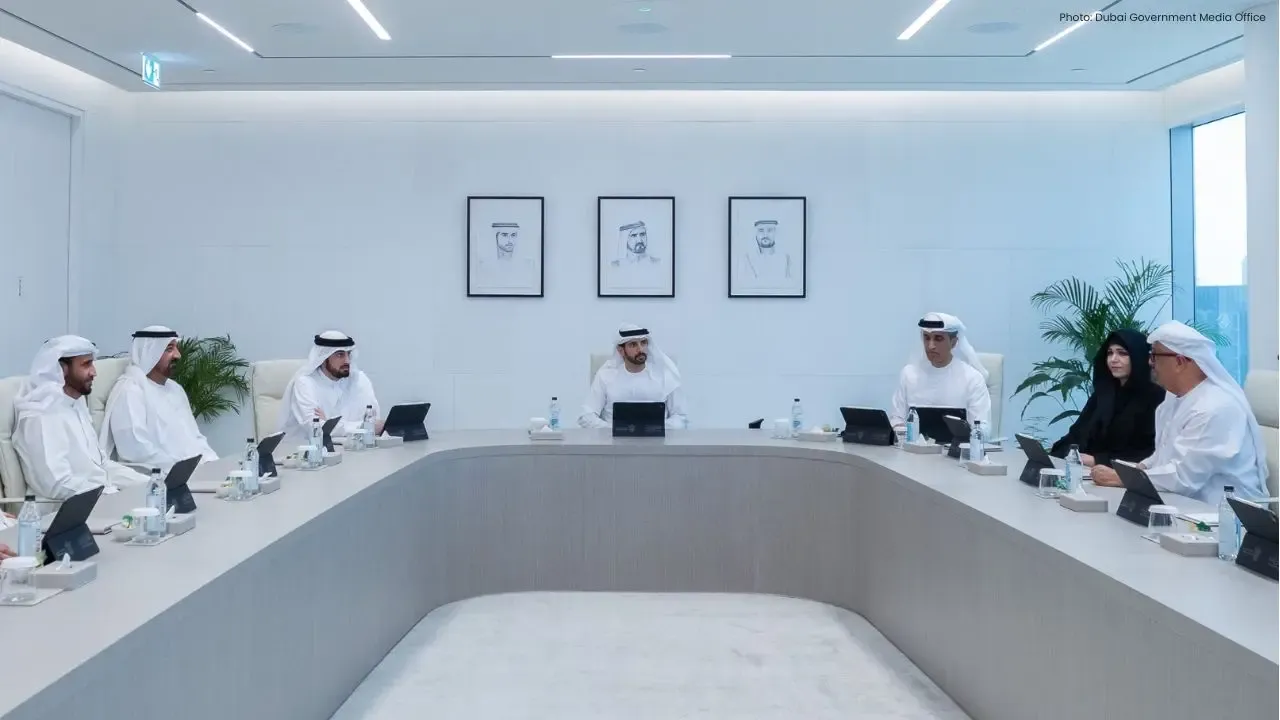
These initiatives span multiple crucial sectors, including culture, trade, infrastructure, Emiratisation, finance, investment, urban planning, and demographic data. These decisions emerged from a recent meeting of The Executive Council of Dubai convened at Emirates Towers.
The meeting saw the presence of His Highness Sheikh Ahmed bin Mohammed bin Rashid Al Maktoum.
During the meeting, Sheikh Hamdan emphasized Dubai's unwavering commitment to transforming its aspirations into tangible realities through decisive actions. He mentioned that under the guidance of His Highness Sheikh Mohammed bin Rashid Al Maktoum, Dubai is consistently developing for both the present and future while ensuring that every advancement contributes to sustainable progress.
Commenting on cultural initiatives, Sheikh Hamdan highlighted the Dubai Cultural Strategy 2033, headed by Her Highness Sheikha Latifa bint Mohammed bin Rashid Al Maktoum. This strategy is designed to complement the Dubai Plan 2033 and Dubai Social Agenda 33, aiming to position Dubai as a global cultural epicenter, while safeguarding the UAE’s heritage and fostering innovation and creativity.
Dubai is striving to make strides across various domains, including urban planning, data-informed policymaking, investment, talent cultivation, and emerging industries, reflecting the emirate’s broad objectives for present and future generations.
The Executive Council gave the green light to the Dubai Cultural Strategy 2033, which will be overseen by the Dubai Culture and Arts Authority.
This strategy is set to fortify Dubai’s position as a worldwide hub for culture, creativity, and innovation, while simultaneously protecting the UAE’s rich cultural tapestry. Its goals include attracting international talent, promoting social unity, and establishing Dubai as the preferred location for creative ventures.
Supported by four main pillars, the strategy envelops 40 initiatives and incorporates five sector indicators along with 23 key performance indicators.
Key initiatives encompass the Dubai Cultural and Creative Innovation Programme, the UAE Heritage Design Challenge, and the Future Talents Development Programme. The objective is to nurture over 6,000 local creative talents, draw 6,000 international creatives, augment Dubai’s cultural assets by over 200%, boost the cultural sector’s GDP contribution to 5.4%, and enhance public-private partnerships in the arena to AED2.75 billion.
Additionally, the Dubai Customs Strategy 2030 received formal approval from the Executive Council.
This strategy prioritizes streamlining trade operations, strengthening economic alliances, enhancing customs security and compliance, and improving customer and partner services. It aims to elevate Dubai’s competitive edge, safeguard the community, and reinforce the emirate’s positioning as a prominent global trading hub.
Approval was also granted for a significant road infrastructure project—the First Al Khail Street Development Plan.
This initiative involves the construction of a 15-kilometre elevated roadway featuring three lanes in each direction, which will run parallel to Sheikh Zayed Road.
Construction is slated to commence in the third quarter of 2027 and conclude in the fourth quarter of 2030. The project promises to utilize advanced construction methods to accelerate progress while minimizing traffic disruptions.
This development is projected to serve around 2.6 million residents, enhance access to Al Barsha, Al Quoz, Business Bay, and Meydan, cut travel time on Sheikh Zayed Road by 51% during peak hours, improve road performance, and expand traffic capacity by approximately 9,000 vehicles per hour.
The Real-Time Population Census and Growth Monitoring Initiative, dubbed ‘Dubai Population Now,’ was also approved by the Executive Council.
Managed by the Dubai Data and Statistics Establishment, a part of Dubai Digital Authority, this initiative will employ artificial intelligence and smart forecasting technology to provide an up-to-date population clock to assist in emirate-wide planning.
By the end of 2025, Dubai's population is anticipated to reach 4.58 million, growing by 332,000 individuals or 7.5% compared to 2024.
This initiative aims to enable authorities to make more informed decisions concerning housing, healthcare, education, and transportation.
Moreover, the Executive Council endorsed the Emirati Talents Strategy in Private Education.
Aligned with the Dubai Education Strategy 2033, the goal of this strategy is to enhance the count of Emiratis in private education roles to reach 3,000 by 2033.
Performance metrics will be evaluated based on indicators like the percentage of Emirati teachers and retention rates.
Major initiatives encompass the Teacher Qualification and Accreditation Academy (Bridge to Teach), the Success Partners Programme, Flex Emiratisation, TeachXperience, and strategies to employ retired professionals.
A new Dubai Investor Register has been approved for creating a unified database for enterprises, institutions, and investors operating within the emirate.
This register is in support of the Dubai Economic Agenda (D33), which aspires to achieve AED650 billion in foreign direct investment by 2033.
It will facilitate businesses and investors to function across various zones without the necessity of separate registrations, fulfilling Financial Action Task Force requirements while cutting costs and streamlining administrative processes through unified data management.
The Executive Council has also greenlit a new visual identity for Dubai’s address system.
The revamped signage will embody Dubai’s urban essence and classify addresses according to distinct urban sectors. This initiative is set to enhance navigation, solidify the identity of neighborhoods, and align the system with global standards.
The rollout of the project will gradually cover transport and residential services, with a target to implement changes across 186 areas by 2029.
The Executive Council also sanctioned the establishment of the Global Centre for Technology and Innovation in Islamic Finance.
Managed by the Dubai International Financial Centre, in collaboration with global organizations, this centre aspires to reinforce Dubai's standing as a leading hub for Islamic financial technology.
The Islamic finance sector is forecasted to surpass $9.31 trillion by 2030.
Expected initiatives include the Islamic Finance Innovation Challenge, a platform connecting Islamic banks with startups, and the Future Islamic Finance Forum, scheduled for November 4, 2026.
The DIFC Academy is also set to launch a talent development program with the goal of training over 3,000 individuals by 2031.
#Global News #Dubai News #UAE News #Global Updates #World News










PM Modi Pays Tribute to Mahatma Gandhi, Urges People to Support Khadi
PM Modi pays tribute to Mahatma Gandhi on Gandhi Jayanti and urges citizens to support Khadi and the

Amazon Seeks to Offload $8 Billion in Nvidia Chips to Investors
Amazon plans to move $8 billion in Nvidia chips to investors, using a new financing model to strengt

Samsung Raises Galaxy S26 Prices as Memory Chip Costs Rise
Samsung raises Galaxy S26 prices in South Korea as rising memory chip costs put pressure on smartpho

Lewis Hamilton Calls Singapore Grand Prix One of F1's Toughest Races
Lewis Hamilton discusses the demanding Singapore Grand Prix and brings Plus44 and Almave to Singapor

Denmark's Pandora Opens World's Largest Jewellery Factory in Vietnam
Pandora opens its largest jewellery factory in Vietnam, expanding global production, strengthening s

Gautam Gambhir Questions Batting-Friendly Pitches After India's Record ODI Chase
Gautam Gambhir questions batting-friendly ODI pitches after India’s record chase, calling for a bett

