
You have not yet added any article to your bookmarks!
Join 10k+ people to get notified about new posts, news and tips.
Do not worry we don't spam!
Post by : Saif Rahman
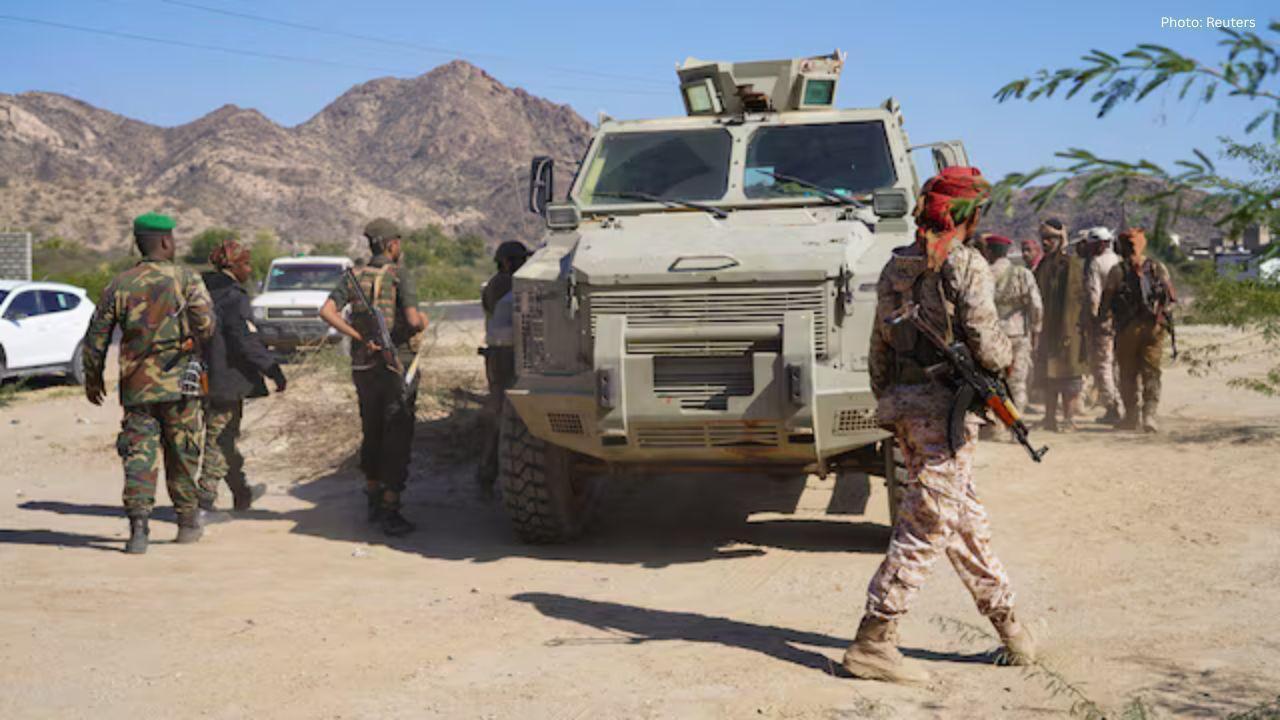
The ongoing conflict in Yemen has reached a critical juncture as the Saudi-led coalition formally cautioned the Southern Transitional Council (STC). The coalition emphasized its readiness to respond decisively to any military maneuvers in Hadramout that could jeopardize peace efforts and endanger civilians.
This stern warning follows the heightened concerns expressed by Yemen’s Presidential Leadership Council regarding the security landscape in Hadramout. Rashad al-Alimi, who leads the Council, has urged coalition intervention to ensure civilian safety from alleged violations orchestrated by armed factions associated with the STC. This plea underscores escalating anxieties that the power struggles in southern Yemen may spiral into renewed violence.
The STC, recognized as the leading separatist group in southern Yemen and supported by the UAE, has been intensifying its territorial claims recently. Over the last month, it has expanded its influence in southern regions, effectively ousting the internationally recognized government from its stronghold in Aden. This swift expansion has raised alarms among regional stakeholders concerned about the potential derailment of fragile peace initiatives.
Recently, STC forces have advanced into new territories, including parts of Hadramout and Mahra. Despite Saudi Arabia's pleas for withdrawal, the STC has dismissed the request, vowing to persist with what it refers to as security operations in these eastern provinces. This defiance has aggravated the already strained relations among former allies in the anti-Houthi coalition.
In a direct outreach to the STC leadership, Saudi Defence Minister Prince Khalid bin Salman emphasized the importance of engaging in Saudi-Emirati mediation to resolve disputes amicably. He urged STC forces to vacate the camps they had occupied and return them peacefully to local governance.
The minister reiterated that the resolution of Yemen's southern issues requires mutual agreement and trust among its people. He warned that resorting to armed conflict would exacerbate vulnerabilities and aid external adversaries while deepening internal fractures. His remarks reflect an increasing awareness that internal discord could undermine efforts towards a comprehensive political resolution.
As Yemen enters its eleventh year of war, countless individuals find themselves in dire need of humanitarian assistance, with the nation precariously teetering on the brink of collapse. Renewed conflict, particularly in relatively stable regions like Hadramout, threatens to worsen the humanitarian crisis and impede pathways to peace.
For the time being, the Saudi-led coalition has reaffirmed its commitment to calming hostilities while highlighting that the protection of civilian lives remains non-negotiable. The choice between dialogue and force by the STC could significantly influence the trajectory of Yemen's tumultuous path towards stability.






PSG Coach Luis Enrique Urges Players to Step Outside Comfort Zone
PSG coach Luis Enrique says players must leave their comfort zone and keep improving as the club tar

China’s Tiangong Sets New 400m Record at Robot Olympics
China’s Tiangong robot sets a new 400m record at the Robot Olympics, beating a South African robot i

George Russell Wins Dutch GP Sprint, Boosts Mercedes Morale
George Russell wins the Dutch GP Sprint from pole as Mercedes teammate Kimi Antonelli extends his F1

Australia 50/3 After Bangladesh Bowled Out for 64 in Second Test
Australia reached 50/3 after Bangladesh were bowled out for 64 in the second Test, with Mitchell Sta

Jordan Burroughs Returns to Wrestling with 2028 Olympic Dream
Jordan Burroughs returns to wrestling with Real American Freestyle as the Olympic champion eyes a po

Lamborghini Catches Fire on Singapore's ECP, Causing Heavy Traffic
A Lamborghini caught fire on Singapore's ECP, causing heavy traffic and bus delays. No injuries were

