You have not yet added any article to your bookmarks!
Join 10k+ people to get notified about new posts, news and tips.
Do not worry we don't spam!
Post by : Saif Rahman
This week, tensions soared between Russia and Western nations as Moscow cautioned that any foreign military personnel sent to Ukraine would be regarded as valid military targets. The warning was issued following announcements from Britain and France regarding plans to deploy a multinational force in the event of a ceasefire.
The Russian Foreign Ministry characterized recent comments from Western officials as hazardous, suggesting they could heighten instability across Europe. They asserted that Western soldiers, along with military bases or equipment positioned on Ukrainian territory, would be viewed as direct intervention, warranting a military response from Moscow.
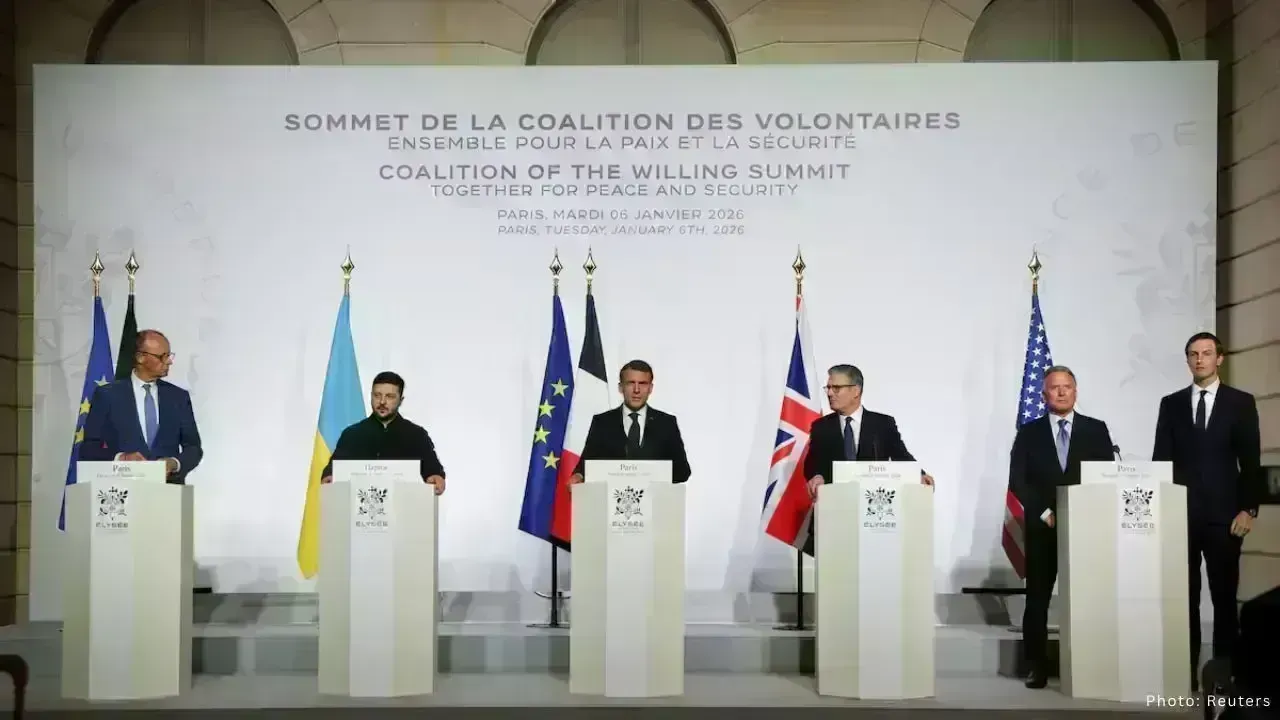
This escalation followed a gathering in Paris of a group dubbed the “coalition of the willing,” consisting of nations backing Ukraine. At this summit, Britain and France formalized an agreement indicating their intention to send forces to Ukraine if a ceasefire materializes. French President Emmanuel Macron mentioned that the plan could involve dispatching thousands of French troops, while British Prime Minister Keir Starmer emphasized the goal of safeguarding Ukraine's airspace and seas alongside aiding the reconstruction of its military.
Officials in Moscow have strongly repudiated this vision. They claimed that such a deployment not only jeopardizes Russia’s security but also poses risks to European safety. They referred to the Western initiative as part of an “axis of war,” warning that European citizens would ultimately face both financial and security ramifications.
Since launching its full-scale invasion in February 2022, Russia has firmly opposed any Western military presence in Ukraine. Moscow maintains that it intervened to prevent Ukraine from joining NATO and posing a military threat. They have repeatedly highlighted their unwillingness to accept foreign military forces on Ukrainian soil.
Conversely, Ukraine and its allies vehemently dispute Russia’s assertions, accusing Moscow of attempting to annex Ukrainian territories, with nearly one-fifth of the country currently under Russian occupation. Ukrainian authorities insist that robust security guarantees are crucial to avert future assaults if peace negotiations succeed.
The United States has clarified that it will refrain from sending troops to Ukraine directly. However, American officials have conveyed support for security arrangements aimed at deterring further Russian hostilities. This adds another layer of complexity to the crisis, as Europe contemplates a wider role in the defense of Ukraine.
Russia’s warning underscores the precariousness of the current situation, where even peace discussions are intertwined with new threats and military strategies. Any developments involving foreign troops are likely to escalate the conflict beyond Ukraine’s borders.
As diplomatic efforts persist, the stakes are notably high. Choices made in the upcoming months could not only determine Ukraine's future but also the broader security and stability landscape of Europe for years ahead.






China’s Tiangong Sets New 400m Record at Robot Olympics
China’s Tiangong robot sets a new 400m record at the Robot Olympics, beating a South African robot i

George Russell Wins Dutch GP Sprint, Boosts Mercedes Morale
George Russell wins the Dutch GP Sprint from pole as Mercedes teammate Kimi Antonelli extends his F1

Australia 50/3 After Bangladesh Bowled Out for 64 in Second Test
Australia reached 50/3 after Bangladesh were bowled out for 64 in the second Test, with Mitchell Sta

Jordan Burroughs Returns to Wrestling with 2028 Olympic Dream
Jordan Burroughs returns to wrestling with Real American Freestyle as the Olympic champion eyes a po

Lamborghini Catches Fire on Singapore's ECP, Causing Heavy Traffic
A Lamborghini caught fire on Singapore's ECP, causing heavy traffic and bus delays. No injuries were

Bangkok Airport Duty-Free Area Flooded by Pipe Burst
A burst water pipe flooded the duty-free shopping area at Bangkok's Suvarnabhumi Airport on July 16,