
You have not yet added any article to your bookmarks!
Join 10k+ people to get notified about new posts, news and tips.
Do not worry we don't spam!
Post by : Saif Rahman
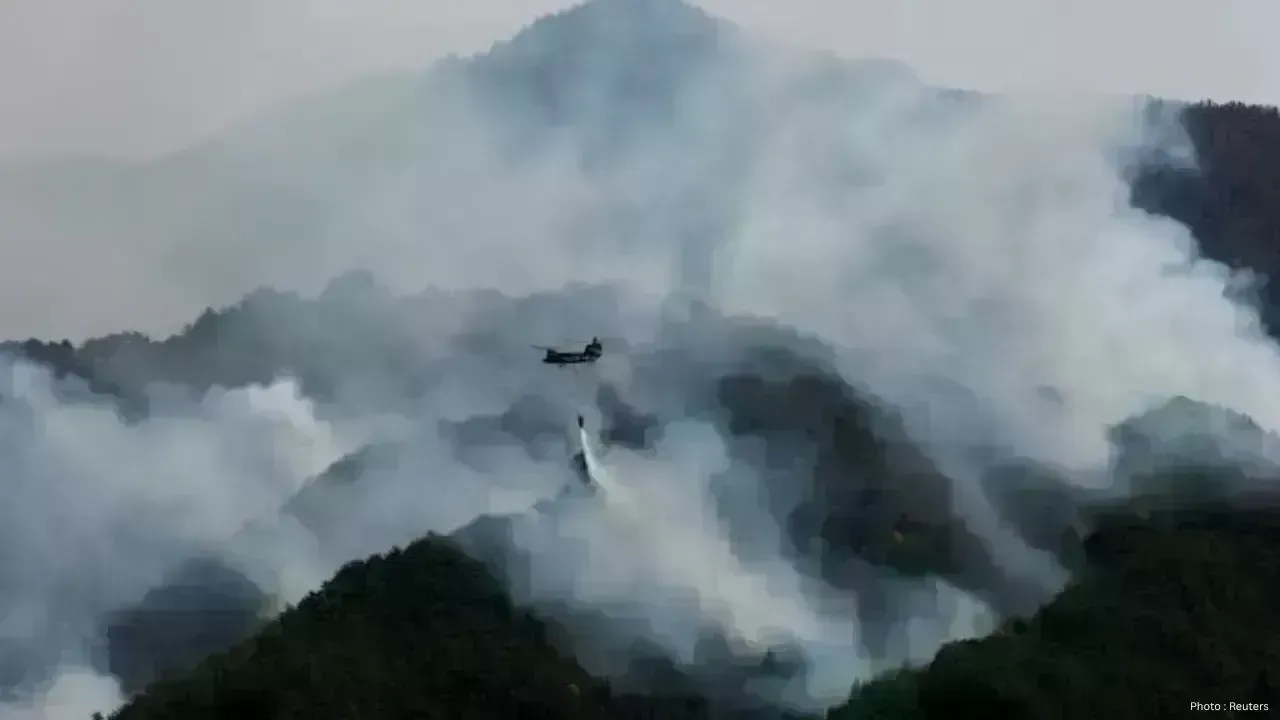
Wildfires are blazing across numerous regions around the globe at unprecedented levels, triggering deep concerns among scientists and environmental authorities. Recent data reveals that fire outbreaks have surged to some of the highest figures on record, driven by perilous heatwaves and worsening weather patterns attributed to climate change.
Experts caution that many nations might face even more terrible fires in the subsequent months, as temperatures are expected to escalate further in the summer heat. The increasing frequency of wildfires is already impacting forests, wildlife, air quality, agriculture, and public health in various areas.
Researchers identify the potent combination of extreme heat, parched conditions, and vigorous winds as primary contributors to this surge in fire activity. These elements render forests and grasslands highly susceptible to ignition, leading to rapid fire spread.
This year, countries across Europe, North America, South America, Asia, and Australia have reported unusually large fire outbreaks. In various locales, wildfires have devastated homes, prompted evacuations, and inflicted significant environmental harm.
Climate scientists argue that global warming is intensifying the frequency and severity of these calamities. Rising temperatures desiccate soil, vegetation, and forests, creating prime conditions for extensive fires. The lengthening duration of heatwaves, coupled with decreased rainfall, heightens the risks in many territories.
Environmental research underscores that the real impacts of climate change are more visible than ever. Wildfires that were once confined to specific seasons are now occurring earlier, enduring longer, and spreading wider.
This crisis is rapidly escalating into a public health dilemma. Smoke from wildfires contains hazardous particles that can harm lung health, particularly among children, the elderly, and individuals with preexisting conditions. In various countries, degraded air quality from wildfire smoke has led to school closures and has kept residents indoors.
Moreover, wildlife is also being significantly affected; forest fires obliterate natural habitats, kill animals, and damage ecosystems, many of which may take years to rehabilitate. Certain endangered species are now facing heightened threats due to repeated fire events degrading their habitats.
Experts are particularly concerned about forests crucial for moderating global climate. Large-scale fires in regions like the Amazon rainforest, Canadian woodlands, and parts of Southeast Asia emit vast quantities of carbon dioxide, further exacerbating global warming and creating a vicious cycle.
The economic ramifications from wildfires are escalating swiftly. Governments are allocating billions towards firefighting, disaster recovery, rebuilding initiatives, and mending damaged infrastructures. Farmers in various areas are experiencing crop and livestock losses due to fire-related harm and drought.
This escalating wildfire dilemma is evolving into a political issue as international climate discussions loom. Advocacy groups urge world leaders to adopt stronger measures to curb greenhouse gas emissions and enhance investments in climate protective strategies.
Simultaneously, firefighters globally are under increasing strain. Many nations grapple with combating multiple extensive fires concurrently, particularly during extreme heat episodes when resources are scarce.
Experts assert that fire prevention must be prioritized alongside emergency responses. Governments are being urged to enhance forest management practices, establish early warning systems, fortify evacuation protocols, and educate the public on fire safety.
This situation underscores how climate challenges in specific regions can have worldwide repercussions. Smoke from significant wildfires can traverse borders, while rising global temperatures disrupt weather patterns on an international scale.
Scientists warn that if current warming trends persist, future wildfire seasons may become even more perilous, with some areas potentially experiencing unprecedented heat and fire conditions in contemporary history.
Despite the dire circumstances, experts believe enhanced international collaboration and accelerated climate initiatives could mitigate long-term threats. Investment in renewable resources, forest conservation, cleaner industrial practices, and sustainable environmental regulations may aid in curbing the escalating climate crisis.










PM Modi Pays Tribute to Mahatma Gandhi, Urges People to Support Khadi
PM Modi pays tribute to Mahatma Gandhi on Gandhi Jayanti and urges citizens to support Khadi and the

Amazon Seeks to Offload $8 Billion in Nvidia Chips to Investors
Amazon plans to move $8 billion in Nvidia chips to investors, using a new financing model to strengt

Samsung Raises Galaxy S26 Prices as Memory Chip Costs Rise
Samsung raises Galaxy S26 prices in South Korea as rising memory chip costs put pressure on smartpho

Lewis Hamilton Calls Singapore Grand Prix One of F1's Toughest Races
Lewis Hamilton discusses the demanding Singapore Grand Prix and brings Plus44 and Almave to Singapor

Denmark's Pandora Opens World's Largest Jewellery Factory in Vietnam
Pandora opens its largest jewellery factory in Vietnam, expanding global production, strengthening s

Gautam Gambhir Questions Batting-Friendly Pitches After India's Record ODI Chase
Gautam Gambhir questions batting-friendly ODI pitches after India’s record chase, calling for a bett

