You have not yet added any article to your bookmarks!
Join 10k+ people to get notified about new posts, news and tips.
Do not worry we don't spam!

Post by : Anis Farhan
On October 18, 2024, Malaysia's Prime Minister Anwar Ibrahim presented the nation's largest-ever budget, totaling RM421 billion. This budget aims to address pressing economic challenges, enhance public services, and stimulate growth across various sectors. Notably, allocations for Small and Medium Enterprises (SMEs), healthcare, education, and defense have been prioritized. This article examines these allocations and compares them with the 2025 budgets of neighboring countries, Singapore and Thailand, to understand regional fiscal strategies and their implications.
SMEs are the backbone of Malaysia's economy, contributing significantly to employment and GDP. Recognizing their importance, the government has earmarked substantial funds to support their growth and resilience.
Financial Assistance: The government has introduced various financial schemes, including grants and low-interest loans, to facilitate access to capital for SMEs.
Digital Transformation: Allocations have been made to assist SMEs in adopting digital technologies, enhancing their competitiveness in the global market.
Training and Development: Funds are set aside for capacity-building programs to upskill the SME workforce, ensuring they remain adaptable to market changes.
The healthcare sector has received a significant boost in Budget 2025, reflecting the government's commitment to improving public health services.
Infrastructure Development: Allocations have been made for the construction and upgrading of hospitals and clinics, particularly in underserved areas.
Human Resources: Funds are designated for the recruitment and training of healthcare professionals to address shortages and improve service delivery.
Public Health Initiatives: Investments are directed towards preventive healthcare programs, aiming to reduce the burden of non-communicable diseases.
Education remains a top priority, with substantial funds allocated to enhance the quality of learning and infrastructure.
Curriculum Enhancement: Allocations are made to update and diversify the national curriculum, incorporating 21st-century skills and technology.
Infrastructure Improvement: Funds are designated for the construction and renovation of schools, particularly in rural areas, to provide conducive learning environments.
Teacher Training: Investments are directed towards professional development programs for educators, ensuring they are equipped with the necessary skills and knowledge.
National security is paramount, and the defense sector has been allocated significant funds to modernize and strengthen the military.
Modernization Programs: Allocations are made for the procurement of advanced defense equipment and technology to enhance operational capabilities.
Personnel Welfare: Funds are designated for improving the welfare of military personnel, including better housing and healthcare provisions.
Strategic Initiatives: Investments are directed towards enhancing cybersecurity and intelligence capabilities to address emerging threats.
Singapore's Budget 2025 emphasizes sustainability, innovation, and social welfare.
SMEs: The government has introduced schemes to support SMEs in digital transformation and international expansion. Financial assistance is provided through grants and loans, and tax incentives are offered to encourage innovation.
Healthcare: Significant investments are made in healthcare infrastructure, with a focus on aging population needs. The government is expanding eldercare services and promoting healthy living initiatives.
Education: Allocations are directed towards lifelong learning programs, ensuring that citizens can adapt to changing job markets. Investments are also made in research and development to foster innovation.
Defense: The defense budget is increased to enhance military capabilities and ensure national security. Investments are made in advanced technology and personnel training.
Thailand's Budget 2025 focuses on economic recovery, infrastructure development, and social welfare.
SMEs: The government has introduced financial schemes to support SMEs, including low-interest loans and grants. Programs are also in place to assist SMEs in adopting digital technologies.
Healthcare: Allocations are made for the construction and upgrading of healthcare facilities, particularly in rural areas. Investments are directed towards improving the quality of healthcare services and expanding coverage.
Education: Funds are designated for the development of educational infrastructure and the enhancement of curriculum to meet international standards.
Defense: The defense budget is increased to modernize the military and enhance national security. Investments are made in advanced defense technology and personnel welfare.
| Sector | Malaysia (RM Billion) | Singapore (SGD Billion) | Thailand (THB Billion) |
|---|---|---|---|
| SMEs | 2.5 | 1.2 | 1.0 |
| Healthcare | 45.27 | 13.4 | 9.0 |
| Education | 64.1 | 15.6 | 12.7 |
| Defense | 15.0 | 23.4 | 3.8 |
Note: Figures are approximate and based on available data.
SMEs: The increased financial support and digital transformation initiatives are expected to enhance the competitiveness and sustainability of SMEs, leading to job creation and economic growth.
Healthcare Recipients: The expansion of healthcare infrastructure and services will improve access to quality healthcare, particularly in underserved areas.
Students and Educators: The emphasis on education quality and infrastructure will provide better learning environments and opportunities for students, while educators will benefit from professional development programs.
Military Personnel: The modernization of defense capabilities and improved welfare provisions will enhance the operational effectiveness and well-being of military personnel.
High-Income Individuals: The restructuring of subsidies and increased taxes may lead to higher living costs for high-income individuals.
Non-Residents: The introduction of targeted subsidies may result in reduced benefits for non-residents, particularly in areas like fuel and healthcare.
Certain SMEs: While many SMEs will benefit from support programs, those unable to adapt to digital transformation may face challenges in remaining competitive.
Malaysia's Budget 2025 reflects a strategic approach to addressing the nation's economic challenges and enhancing public services. By prioritizing sectors like SMEs, healthcare, education, and defense, the government aims to foster sustainable growth and improve the quality of life for its citizens. However, the implementation of targeted subsidies and tax reforms may have varying impacts across different segments of the population. As the budget is rolled out, continuous monitoring and adjustments will be essential to ensure that the intended benefits are realized and that any adverse effects are mitigated.
This article provides an analysis of Malaysia's Budget 2025 and compares it with the budgets of Singapore and Thailand. The information presented is based on publicly available data and is intended for informational purposes only. Readers are advised to consult official government sources for the most accurate and up-to-date information.









George Russell Wins Dutch GP Sprint, Boosts Mercedes Morale
George Russell wins the Dutch GP Sprint from pole as Mercedes teammate Kimi Antonelli extends his F1

Australia 50/3 After Bangladesh Bowled Out for 64 in Second Test
Australia reached 50/3 after Bangladesh were bowled out for 64 in the second Test, with Mitchell Sta

Jordan Burroughs Returns to Wrestling with 2028 Olympic Dream
Jordan Burroughs returns to wrestling with Real American Freestyle as the Olympic champion eyes a po

Lamborghini Catches Fire on Singapore's ECP, Causing Heavy Traffic
A Lamborghini caught fire on Singapore's ECP, causing heavy traffic and bus delays. No injuries were

Bangkok Airport Duty-Free Area Flooded by Pipe Burst
A burst water pipe flooded the duty-free shopping area at Bangkok's Suvarnabhumi Airport on July 16,
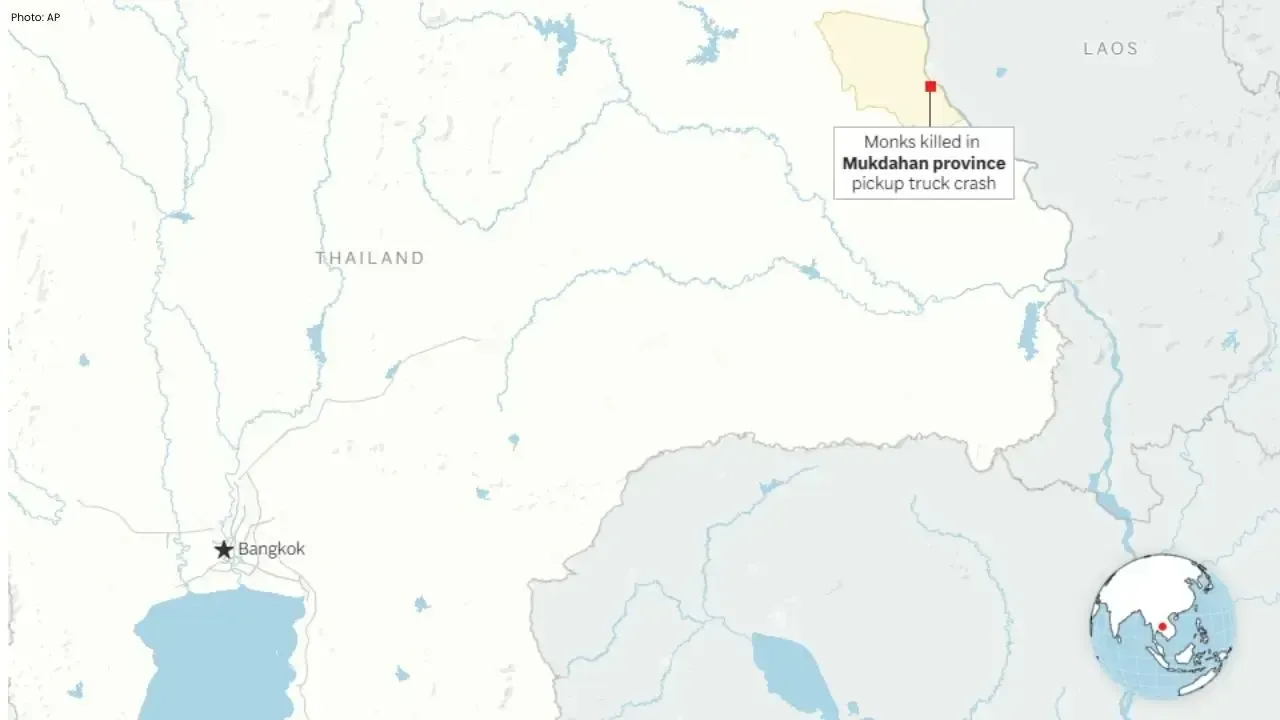
Nine Monks Killed in Thailand Pickup Truck Tragedy
An 11-year-old boy driving a pickup truck crashed into monks during a pilgrimage in northeastern Tha