
You have not yet added any article to your bookmarks!
Join 10k+ people to get notified about new posts, news and tips.
Do not worry we don't spam!
Post by : Saif Rahman
Japan’s recent 7.5-magnitude earthquake and the subsequent tsunami alert underscore the vulnerability of communities in disaster-prone areas. Although the tsunami warnings were eventually withdrawn and no significant damage occurred, the event has prompted critical discussions about safety protocols, readiness, and the resilience of a nation that frequently faces natural calamities.
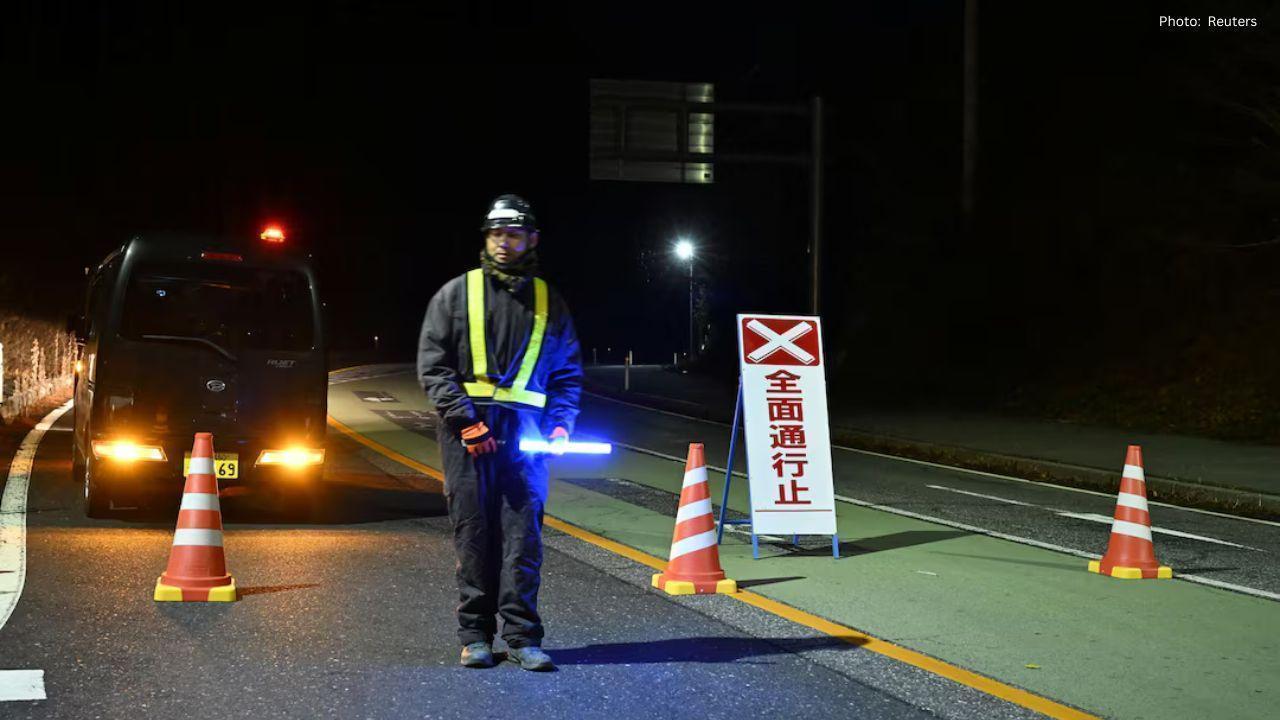
The earthquake occurred late at night near the northeastern coast. The tremors were so intense in certain locations that standing upright became nearly impossible for some. In a swift response, government officials issued tsunami warnings, advising nearly 90,000 residents to evacuate to safer regions. Waves measuring between 20 and 70 centimeters were recorded at multiple ports, leaving people on edge as they awaited the possibility of more substantial waves.
Fortunately, by early morning, the alerts were deemed unnecessary and eventually rescinded. Nonetheless, at least 30 individuals sustained injuries, and one fire was reported. Train operations faced disruptions, roadways were closed, and thousands temporarily experienced power outages. Even though physical repercussions were relatively minor, the psychological toll, especially for those recalling the disastrous events of 2011, was significant.
Japan ranks among the most earthquake-affected nations globally, experiencing tremors almost daily within the “Ring of Fire,” where tectonic plates are in constant flux. The 2011 tragedy, during which a powerful earthquake and tsunami claimed nearly 20,000 lives and triggered a nuclear incident at Fukushima, remains a poignant memory.
In response to that catastrophic event, Japan has developed comprehensive early warning systems and emergency protocols. In this instance, these mechanisms proved effective. Alerts were issued promptly, evacuations organized swiftly, and nuclear facilities inspected without any alarming findings. Power was restored rapidly, highlighting the essential role of preparation and coordination in safeguarding lives.
However, this situation serves as a stark reminder that the threat may still linger. Authorities caution that significant aftershocks may follow within the week. Once the earth shifts, further tremors are often imminent, instilling anxiety among families residing in high-risk zones.
From an editorial perspective, Japan's proactive measures warrant recognition, but the specter of massive earthquakes illustrates the notion that no system is infallible. Continued investment in infrastructure, public education, and technological advancements remains vital. Citizens must also be vigilant and adhere rigorously to safety recommendations.
This occurrence sends a vital lesson to the global community. Climate change and evolving geological conditions are fueling the unpredictability of natural events. Other nations, particularly those situated along coastlines or in seismic zones, should adopt Japan's model of preparedness, emphasizing early warning systems, adherence to stringent construction standards, and regular emergency drills as essential components of public safety.
Moreover, the significance of effective communication is key. Rapid, transparent, and accurate updates from officials helped mitigate potential panic. This level of openness fosters trust and encourages calm responses in critical situations.
Ultimately, Japan's earthquake and tsunami alarm transcend mere headlines; they serve as a poignant reminder. Nature's powers may be uncontrollable, yet with foresight, regulatory frameworks, and respect for scientific principles, the impact can be mitigated.
Japan benefited from good fortune on this occasion, but the threat remains real. The clear takeaway: preparedness is the most robust shield against nature’s forces.








Josh Kerr and Jakob Ingebrigtsen Set for 1,500m Rivalry Rematch
Josh Kerr and Jakob Ingebrigtsen will renew their 1,500m rivalry at the Ultimate Championship in Bud

PSG Coach Luis Enrique Urges Players to Step Outside Comfort Zone
PSG coach Luis Enrique says players must leave their comfort zone and keep improving as the club tar

China’s Tiangong Sets New 400m Record at Robot Olympics
China’s Tiangong robot sets a new 400m record at the Robot Olympics, beating a South African robot i

George Russell Wins Dutch GP Sprint, Boosts Mercedes Morale
George Russell wins the Dutch GP Sprint from pole as Mercedes teammate Kimi Antonelli extends his F1

Australia 50/3 After Bangladesh Bowled Out for 64 in Second Test
Australia reached 50/3 after Bangladesh were bowled out for 64 in the second Test, with Mitchell Sta

Jordan Burroughs Returns to Wrestling with 2028 Olympic Dream
Jordan Burroughs returns to wrestling with Real American Freestyle as the Olympic champion eyes a po

