
You have not yet added any article to your bookmarks!
Join 10k+ people to get notified about new posts, news and tips.
Do not worry we don't spam!
Post by : Badri Ariffin
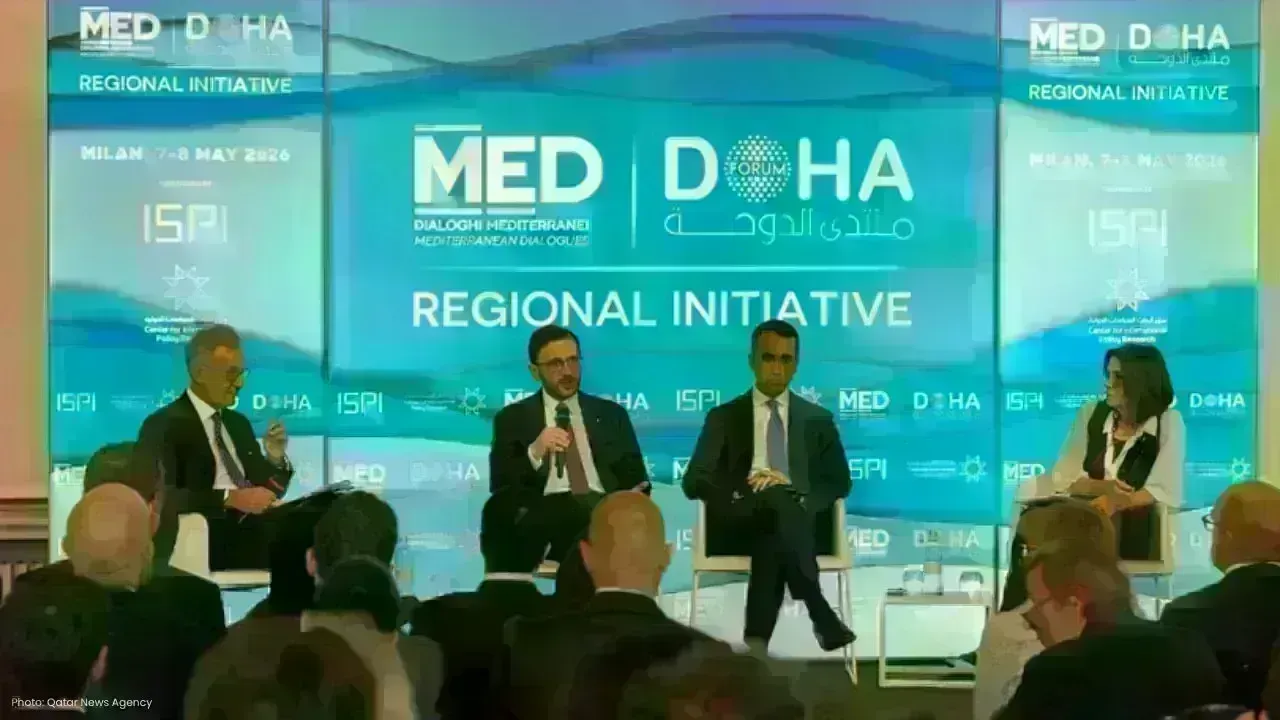
On Friday, senior officials and experts from Europe and the Gulf convened in Milan for a pivotal gathering aimed at fortifying cooperation between the European Union and the Gulf Cooperation Council (GCC) amid escalating regional unrest.
Hosted at the historic Palazzo Clerici, this significant event was orchestrated by Doha Forum and MED Dialogues, in collaboration with the Italian Institute for International Political Studies and the Center for International Policy Research.
Under the overarching theme, “Bridging Stability: EU-GCC Cooperation in an Era of Fragmentation,” dialogue focused on collaborative solutions to emerging regional issues and the evolving geopolitical climate in the aftermath of recent Middle Eastern conflicts.
Central to the discussions were the ongoing tensions involving Iran and their broader implications on regional order, global energy markets, and economic security. Participants underscored the critical necessity for enhanced cooperation between the EU and GCC in sectors such as security, crisis response, energy sustainability, and trade.
Particular emphasis was placed on developments in the Gulf, the Levant, and key maritime trade routes deemed vital for international commerce and energy supplies.
The plenary session showcased insights from Dr Majed bin Mohammed Al Ansari, Adviser to the Prime Minister and official spokesperson for Qatar’s Ministry of Foreign Affairs, alongside Luigi Di Maio.
In his remarks, Dr Al Ansari framed the Gulf as “a steadfast ally for Europe in terms of security and energy,” reiterating that the current regional turmoil highlights shared interests between the two parties. He emphasized the need for sustained and structured cooperation to navigate periods of instability and escalating tensions.
Luigi Di Maio echoed this sentiment, stating that security concerns for both the Gulf and Europe are “intrinsically linked and indivisible,” calling for stronger partnerships and trust to effectively tackle mutual challenges.
Closed-door sessions addressed the future regional landscape following the conflict, defense partnerships, energy security, and industrial strategy. Participants highlighted the need to transform diplomatic discussions into actionable and coordinated initiatives.
The event wrapped up with a reception hosted by the Qatari Consulate in Milan.
Furthermore, organizers confirmed that the 24th iteration of the Doha Forum is scheduled for December 5–6, 2026, in Doha, under the theme “Redefining Global Trust.” The forum promises to attract global leaders and policymakers to deliberate on international cooperation and confidence-building in our rapidly shifting global landscape.










PM Modi Pays Tribute to Mahatma Gandhi, Urges People to Support Khadi
PM Modi pays tribute to Mahatma Gandhi on Gandhi Jayanti and urges citizens to support Khadi and the

Amazon Seeks to Offload $8 Billion in Nvidia Chips to Investors
Amazon plans to move $8 billion in Nvidia chips to investors, using a new financing model to strengt

Samsung Raises Galaxy S26 Prices as Memory Chip Costs Rise
Samsung raises Galaxy S26 prices in South Korea as rising memory chip costs put pressure on smartpho

Lewis Hamilton Calls Singapore Grand Prix One of F1's Toughest Races
Lewis Hamilton discusses the demanding Singapore Grand Prix and brings Plus44 and Almave to Singapor

Denmark's Pandora Opens World's Largest Jewellery Factory in Vietnam
Pandora opens its largest jewellery factory in Vietnam, expanding global production, strengthening s

Gautam Gambhir Questions Batting-Friendly Pitches After India's Record ODI Chase
Gautam Gambhir questions batting-friendly ODI pitches after India’s record chase, calling for a bett

