
You have not yet added any article to your bookmarks!
Join 10k+ people to get notified about new posts, news and tips.
Do not worry we don't spam!
Post by : Shweta
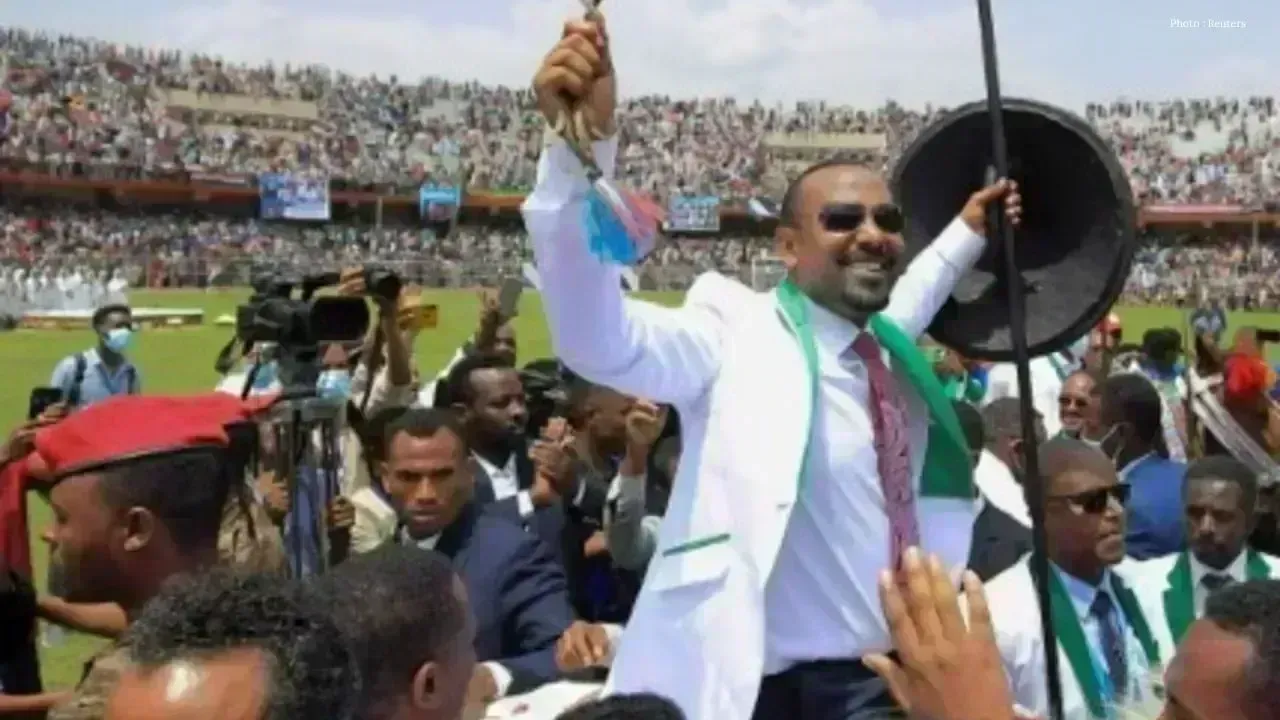
Ethiopia is on the verge of a crucial national election as millions prepare to cast their votes, influencing the country's future. This election is set against a backdrop of substantial hurdles like economic reforms, security threats, regional unrest, and democratic governance debates. With over 50 million registered voters, it's poised to be one of Africa's largest electoral exercises, though some areas may miss out on the voting due to ongoing instability.
The focal point of this election is Prime Minister Abiy Ahmed, who aims to secure a second term with his ruling Prosperity Party. Abiy’s leadership began in 2018 following widespread protests that led to transformative political shifts. Initially, he garnered global accolades for initiating reforms and fostering ties with Eritrea, earning the Nobel Peace Prize. However, his tenure has also faced scrutiny due to internal conflicts, escalating political tensions, and claims of diminishing democratic freedoms. Despite these adversities, Abiy continues to be a pivotal figure in Ethiopian politics.
The Prosperity Party is widely anticipated to emerge as the leading force in the elections. Formed in 2019 through the unification of several regional parties from the former ruling coalition, it promotes themes of national unity, economic modernization, and enhanced federal authority. Government representatives have frequently pointed to economic growth metrics, infrastructure advancements, and governance reforms as key milestones achieved under Abiy's administration.
Challenging the ruling party is the National Movement of Amhara (NaMA), which is gaining traction among voters in the Amhara region. Focusing on regional rights, security issues, and representation for Amhara people, NaMA has carved out a notable space as a visible opposition force. However, it grapples with formidable obstacles against the ruling party's extensive political infrastructure.
Additionally, the Ethiopian Citizens for Social Justice, abbreviated as EZEMA, also stands out as a significant opposition group. Positioning itself as a national movement devoid of ethnic connotations, EZEMA advocates for democratic reforms, robust institutional frameworks, and economic growth, while seeking to bridge divides between varied ethnic communities. The party's aim is to attract urban voters disillusioned with both ethnic-based politics and the ruling party's control.
Beyond these principal entities, a multitude of smaller political organizations are vying for influence in the elections. With approximately 47 registered parties participating, many represent distinct ethnic and regional interests, reflecting Ethiopia's multifaceted political landscape influenced by ethnic federalism, granting considerable political sway to various regions but also triggering competitions between regional and national priorities.
Unlike some nations where presidential candidates are directly elected, Ethiopia operates under a parliamentary system. Voters cast their ballots for representatives in the House of Peoples' Representatives, the lower house of parliament, with the party or coalition securing the majority of seats entrusted with appointing the prime minister. A total of 547 parliamentary positions are up for grabs in this election.
The unfolding security situation significantly impacts the election process. Voting in the Tigray region is prohibited due to persistent instability and tensions following the civil war that transpired between 2020 and 2022. Similarly, the Amhara and Oromia regions face ongoing security hazards arising from armed conflicts and insurgent activity, raising concerns about voter turnout and the inclusivity of the electoral process.
Political analysts predict that the opposition's fragmentation might inadvertently benefit the ruling Prosperity Party. Although numerous parties challenge the government, they struggle to form a cohesive national coalition capable of countering Abiy Ahmed's influence effectively. Allegations of the government suppressing political engagement and limiting fair chances remain contested, with federal authorities denying such claims.
This election also represents a significant test of Ethiopia's democratic ideals. Supporters of the administration claim that the process showcases political advancement and institutional growth, whereas critics question the integrity of the elections amidst ongoing regional conflicts and organizational hurdles faced by opposition entities.
The electoral outcomes will significantly shape Ethiopia's trajectory over the next five years. Core issues at stake include economic development, national cohesion, inter-ethnic relations, security challenges, foreign policy directions, and constitutional changes. Regardless of the results, this election is bound to have far-reaching implications not just for Ethiopia, but also for the broader Horn of Africa.
As speculation mounts about Prime Minister Abiy Ahmed and the Prosperity Party possibly clinching another victory, the spotlight is now on voter engagement, regional participation, and the election management processes. Ultimately, the outcome will influence Ethiopia's path toward political tranquility or a continuation of the profound challenges defining its recent past.










PM Modi Pays Tribute to Mahatma Gandhi, Urges People to Support Khadi
PM Modi pays tribute to Mahatma Gandhi on Gandhi Jayanti and urges citizens to support Khadi and the

Amazon Seeks to Offload $8 Billion in Nvidia Chips to Investors
Amazon plans to move $8 billion in Nvidia chips to investors, using a new financing model to strengt

Samsung Raises Galaxy S26 Prices as Memory Chip Costs Rise
Samsung raises Galaxy S26 prices in South Korea as rising memory chip costs put pressure on smartpho

Lewis Hamilton Calls Singapore Grand Prix One of F1's Toughest Races
Lewis Hamilton discusses the demanding Singapore Grand Prix and brings Plus44 and Almave to Singapor

Denmark's Pandora Opens World's Largest Jewellery Factory in Vietnam
Pandora opens its largest jewellery factory in Vietnam, expanding global production, strengthening s

Gautam Gambhir Questions Batting-Friendly Pitches After India's Record ODI Chase
Gautam Gambhir questions batting-friendly ODI pitches after India’s record chase, calling for a bett

