
You have not yet added any article to your bookmarks!
Join 10k+ people to get notified about new posts, news and tips.
Do not worry we don't spam!
Post by : Saif Rahman
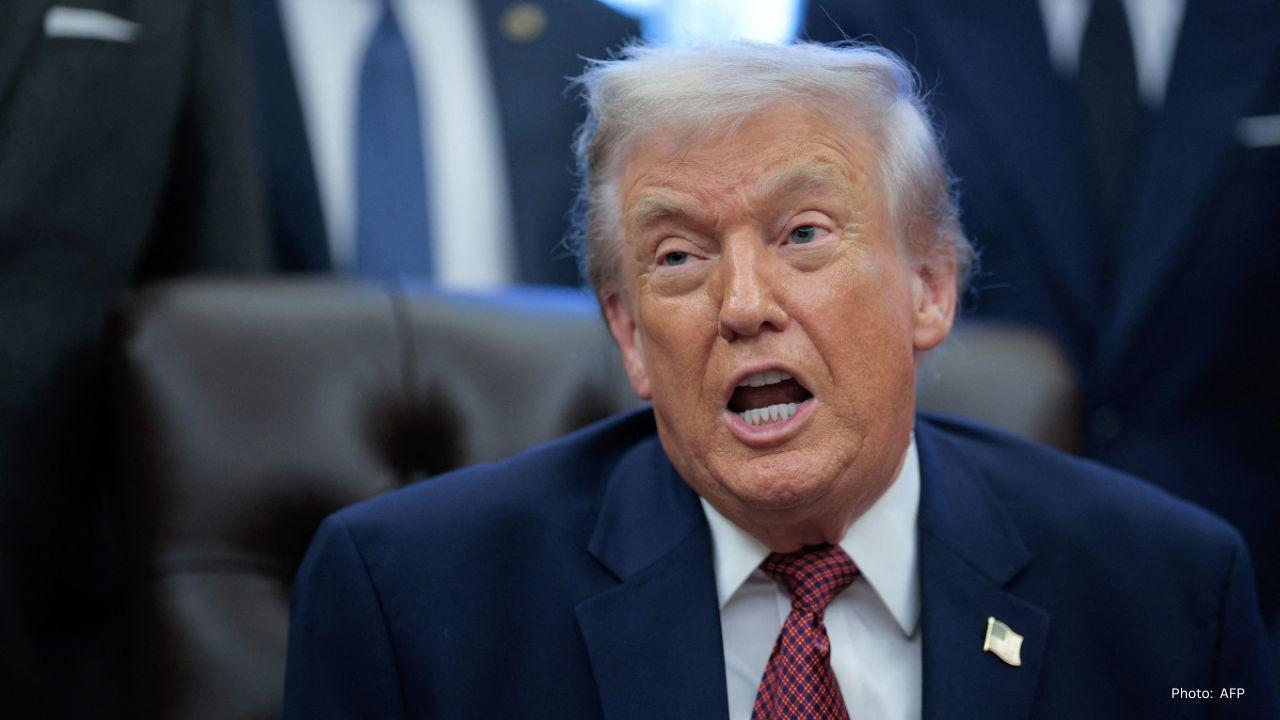
Intensified clashes have erupted once more along the border between Thailand and Cambodia, with each nation blaming the other for civilian casualties. This renewed conflict comes just months after a ceasefire was established in July, revitalizing anxieties about a broader confrontation. As the violence surged on Wednesday, former U.S. President Donald Trump asserted he would make a call to quell the hostilities and revive the fragile peace he had previously helped secure.
The longstanding disputes over territorial rights and significant historical sites, particularly near the renowned Preah Vihear temple, serve as the backdrop for these tensions. While both nations had previously arrived at a truce this year, lasting peace has remained elusive. Recent escalations have resulted from allegations of new landmines, drone strikes, and military maneuvers at the border. Following the severe injury of a soldier due to what Thailand claims was a new Cambodian landmine, it halted de-escalation initiatives last month—an assertion Cambodia vehemently disputes.
The current hostilities commenced on Monday, with both sides accusing each other of launching attacks that endangered civilian and military lives. Thailand has reported that BM-21 rockets from Cambodian forces struck near the Phanom Dong Rak Hospital in Surin, forcing staff and patients to seek refuge in shelters. There have also been reports of drones and tanks being used in assaults near the contentious temple vicinity.
Conversely, Cambodia has charged Thailand with employing artillery and armed drones to hit villages in Pursat and Battambang. Cambodian officials allege that Thai F-16s intruded into their airspace, bombing areas near civilian residences. These escalating charges underscore the precarious nature of the situation and the difficulties in restoring peace.
The fighting has inflicted significant disturbances in both nations, with each claiming the evacuation of hundreds of thousands from border areas to safer spaces. Cambodia reported nine civilian fatalities since the onset of violence on Monday, along with twenty additional serious injuries. Thailand disclosed losses of four soldiers killed and sixty-eight wounded. The clashes have also impacted regional activities, as Cambodia withdrew its athletes from the Southeast Asian Games hosted in Thailand due to safety concerns.
Efforts at diplomatic engagement are faltering. Thailand's foreign minister indicated that the climate is unsuitable for negotiations and cautioned against any tariffs intended to coerce discussions. Cambodia, expressing a readiness for dialogue at any time, affirmed its commitment to peace. While Cambodia is open to talks, Thai officials feel aggravated by what they perceive as ongoing violations and heightened aggressions.
During a rally in Pennsylvania, Trump boasted of having averted major conflicts in the past and claimed he would now intervene in this turmoil. He vowed to make a phone call "to stop a war between two very powerful nations," namely Thailand and Cambodia. In response, Cambodia projected calm, emphasizing its focus on peace, while a Thai representative was unable to confirm whether Trump had communicated with their prime minister due to parliamentary duties.
Despite Trump's earlier mediation efforts, the two countries now look far from achieving a stable agreement. Recent hostilities reveal just how tenuous the peace is, underscoring the rapid return to violence driven by deep-seated distrust. The border region, populated by villages, agricultural lands, and historical landmarks, has once again reverted to a battleground where everyday citizens bear the brunt of the conflict.
The resurgence of violence emphasizes the pressing need for restraint and clear communications. An increase in weaponry, drone usage, and mutual accusations will only exacerbate the delicate situation. A robust and transparent diplomatic initiative is critical before matters spiral further out of control.
Currently, residents near the Thai-Cambodian border can only hope that leaders from both sides will choose dialogue over hostilities, finding a pathway toward peace. The global community will keenly observe whether promises of tranquility can be rejuvenated or if the region is destined for deeper turmoil.






Josh Kerr and Jakob Ingebrigtsen Set for 1,500m Rivalry Rematch
Josh Kerr and Jakob Ingebrigtsen will renew their 1,500m rivalry at the Ultimate Championship in Bud

PSG Coach Luis Enrique Urges Players to Step Outside Comfort Zone
PSG coach Luis Enrique says players must leave their comfort zone and keep improving as the club tar

China’s Tiangong Sets New 400m Record at Robot Olympics
China’s Tiangong robot sets a new 400m record at the Robot Olympics, beating a South African robot i

George Russell Wins Dutch GP Sprint, Boosts Mercedes Morale
George Russell wins the Dutch GP Sprint from pole as Mercedes teammate Kimi Antonelli extends his F1

Australia 50/3 After Bangladesh Bowled Out for 64 in Second Test
Australia reached 50/3 after Bangladesh were bowled out for 64 in the second Test, with Mitchell Sta

Jordan Burroughs Returns to Wrestling with 2028 Olympic Dream
Jordan Burroughs returns to wrestling with Real American Freestyle as the Olympic champion eyes a po

