
You have not yet added any article to your bookmarks!
Join 10k+ people to get notified about new posts, news and tips.
Do not worry we don't spam!
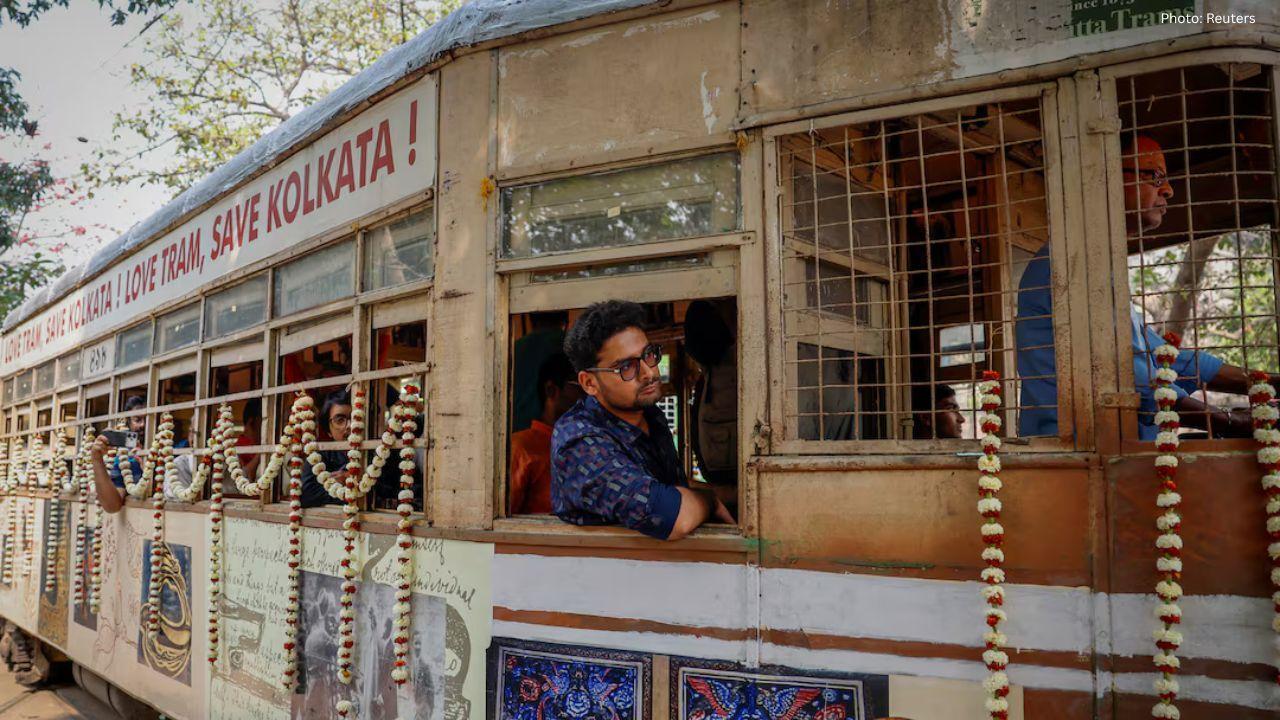
Post by : Saif Rahman
For over 150 years, trams have been a hallmark of Kolkata’s urban landscape, their melodic sounds resonating through the lives of countless commuters. First introduced in 1873 as horse-drawn vehicles and electrified by 1902, these trams became integral to the daily rhythms of city life, navigating past colonial architecture and vibrant communities. Today, however, Kolkata’s cherished tram system is on the verge of significant reduction, as authorities opt to close most routes in favor of contemporary transport solutions.
At its height, the network boasted over 340 trams servicing the city. Currently, just around 10 trams operate on two designated routes. The government is dismantling depots and scrapping older models, citing the necessity to modernize infrastructure and mitigate traffic congestion. Kolkata’s roadways are becoming increasingly trafficked, impeding trams’ ability to compete with buses, taxis, and newly expanded metro services.
“These trams have been part of our lives since childhood,” reminisced Abha Maity, 44, recalling her daily rides to school. “I can’t envision Kolkata without them.” Many locals share a profound emotional bond with the trams, considering them emblematic of the city’s rich heritage and cultural identity.
Conductor Bacchu Sidda, who has spent 36 years working on the trams, remarked on the stark decline. “When I started, we had over 340 trams in operation. Now it’s reduced to just seven or eight,” he explained, pointing to the inventory list at the last active depot in Gariahat.
Residents and heritage supporters have rallied to save the tram network. The Calcutta Tram Users Association (CTUA), operating since 2016, has taken legal measures to safeguard the remaining routes. “I love my trams more than anything,” expressed Deep Das, 19, a journalism student and CTUA advocate. “If they vanish, it will feel like a part of me has gone missing.”
Despite community protests, the West Bengal government is investing significantly in metro development, expanded roadways, and new highways for more rapid transportation. These initiatives symbolize the city's advancement towards modernization while addressing rising traffic requirements.
The fate of Kolkata’s aging tram system awaits a judicial ruling. Until then, the remaining trams continue to transport passengers, serving not just as a means of travel but also as vibrant reminders of the city’s deep-rooted heritage.
The prospective closure of Kolkata’s tram system signifies the conclusion of a chapter. While modernizing is essential to address current demands, residents hope for the preservation of at least a single heritage route to maintain a tangible link to their past for the coming generations.










PSG Coach Luis Enrique Urges Players to Step Outside Comfort Zone
PSG coach Luis Enrique says players must leave their comfort zone and keep improving as the club tar

China’s Tiangong Sets New 400m Record at Robot Olympics
China’s Tiangong robot sets a new 400m record at the Robot Olympics, beating a South African robot i

George Russell Wins Dutch GP Sprint, Boosts Mercedes Morale
George Russell wins the Dutch GP Sprint from pole as Mercedes teammate Kimi Antonelli extends his F1

Australia 50/3 After Bangladesh Bowled Out for 64 in Second Test
Australia reached 50/3 after Bangladesh were bowled out for 64 in the second Test, with Mitchell Sta

Jordan Burroughs Returns to Wrestling with 2028 Olympic Dream
Jordan Burroughs returns to wrestling with Real American Freestyle as the Olympic champion eyes a po

Lamborghini Catches Fire on Singapore's ECP, Causing Heavy Traffic
A Lamborghini caught fire on Singapore's ECP, causing heavy traffic and bus delays. No injuries were

