
You have not yet added any article to your bookmarks!
Join 10k+ people to get notified about new posts, news and tips.
Do not worry we don't spam!
Post by : Saif Rahman
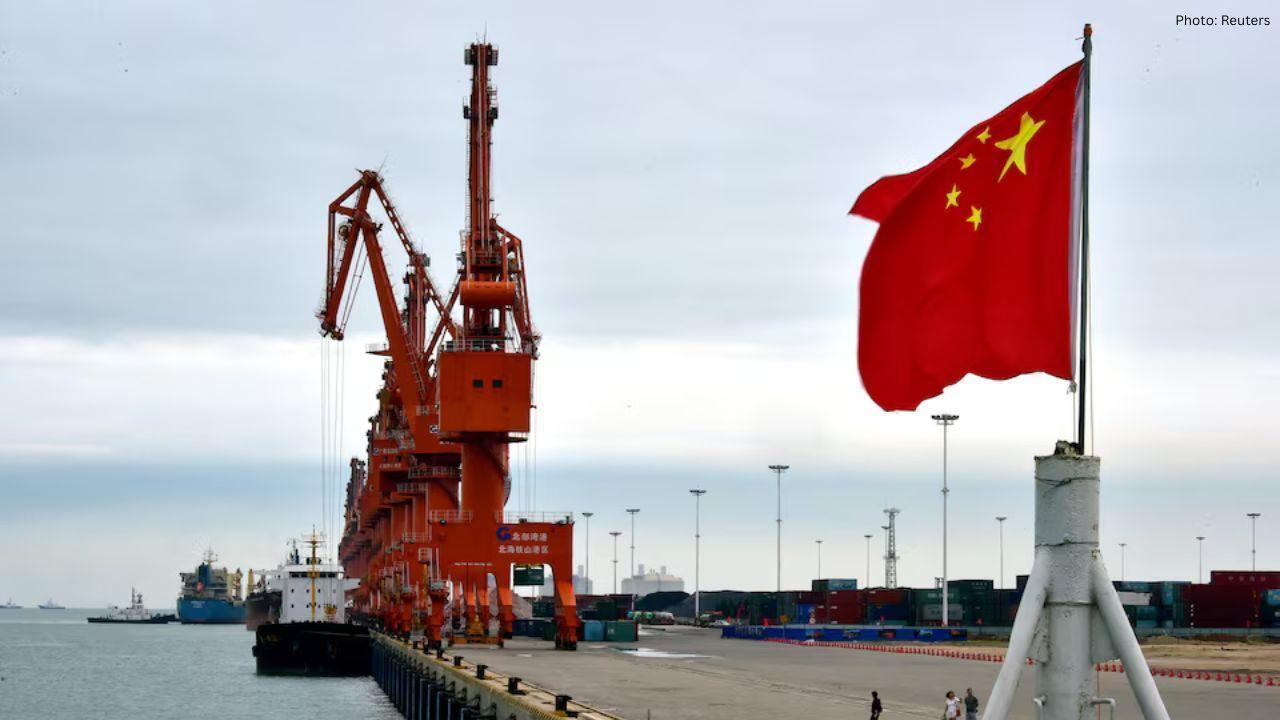
China has enacted significant revisions to its Foreign Trade Law, signaling its readiness for intensifying global trade conflicts while also seeking to further liberalize certain sectors of its economy. The amended legislation was ratified by the nation’s supreme legislative authority and will be effective from March 1, 2026, as reported by state media.
The modified law empowers the government with enhanced legal mechanisms to counteract restrictions imposed by other nations on Chinese exports. In recent years, China has encountered mounting trade challenges, particularly from the United States and several allied nations. By bolstering its legal infrastructure, Beijing aims to safeguard its enterprises and affirm its standing in international trade.
Adopted initially in 1994, China’s Foreign Trade Law has undergone several amendments, with the latest one occurring in 2022. These changes are typically initiated in response to significant shifts in global trading dynamics. The new format incorporates unambiguous language emphasizing that foreign trade should facilitate China's economic and social advancement while establishing the country as a formidable trading entity.
A primary objective of these alterations is to align China’s trade regulations more closely with the standards set by leading international trade organizations, particularly the Comprehensive and Progressive Agreement for Trans-Pacific Partnership. While this trade bloc was designed in part to counter China’s expanding influence, Beijing aspires that these legal adjustments will foster closer ties and lessen its reliance on the U.S. market.
The update also emphasizes emerging trade domains, including digital commerce and eco-friendly trade, which are gaining traction globally as nations invest in cutting-edge technology, sustainable energy, and green products. Additionally, the law fortifies intellectual property protections, an area where China has faced significant scrutiny from foreign stakeholders.
Another crucial element of the revision is the explicit regulation of exports concerning sensitive or contentious items. The government seeks to eliminate legal ambiguities when it imposes restrictions on shipments for political, security, or social reasons. As Chinese private companies increasingly challenge governmental actions legally, officials are exercising more caution.
Experts in trade suggest that Chinese authorities prefer clear, documented guidelines prior to halting or limiting exports, mitigating the risk of legal disputes and public backlash. Recent controversies, including issues surrounding online platforms and restricted imports, highlight the complexities involved when private enterprises are implicated in such decisions.
This revised law equips China to navigate potential future discord with trading partners. As global rivalry escalates and political matters intertwine with trade, Beijing seeks to ensure robust legal support for any counteraction it might consider.
In summary, the updated Foreign Trade Law underscores China’s endeavor to maintain a balance between openness and regulation. While the nation aspires to attract foreign investments and foster modern trade fields, it simultaneously seeks solid legal instruments to protect its interests amid trade disputes. The adjustments reflect China's strategic thinking as it prepares for a future where trade norms and economic authority hold paramount importance on the global stage.









PSG Coach Luis Enrique Urges Players to Step Outside Comfort Zone
PSG coach Luis Enrique says players must leave their comfort zone and keep improving as the club tar

China’s Tiangong Sets New 400m Record at Robot Olympics
China’s Tiangong robot sets a new 400m record at the Robot Olympics, beating a South African robot i

George Russell Wins Dutch GP Sprint, Boosts Mercedes Morale
George Russell wins the Dutch GP Sprint from pole as Mercedes teammate Kimi Antonelli extends his F1

Australia 50/3 After Bangladesh Bowled Out for 64 in Second Test
Australia reached 50/3 after Bangladesh were bowled out for 64 in the second Test, with Mitchell Sta

Jordan Burroughs Returns to Wrestling with 2028 Olympic Dream
Jordan Burroughs returns to wrestling with Real American Freestyle as the Olympic champion eyes a po

Lamborghini Catches Fire on Singapore's ECP, Causing Heavy Traffic
A Lamborghini caught fire on Singapore's ECP, causing heavy traffic and bus delays. No injuries were

