
You have not yet added any article to your bookmarks!
Join 10k+ people to get notified about new posts, news and tips.
Do not worry we don't spam!
Post by : Rameen Ariff
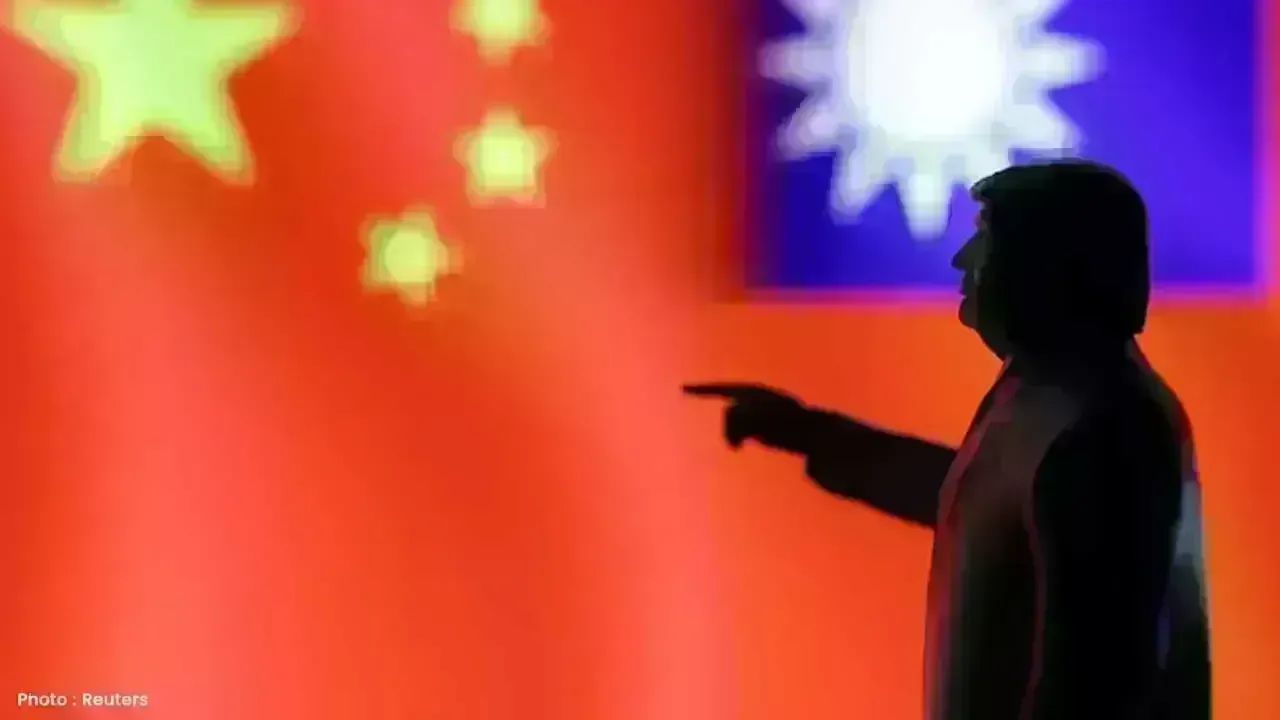
China has strongly responded to the United States’ latest National Security Strategy, pledging to defend its sovereignty and warning against any form of external interference. The U.S. strategy, unveiled on Friday, outlines Washington’s plans to strengthen military capabilities to deter potential conflicts with Beijing, particularly over Taiwan, one of the most sensitive issues in global diplomacy.
The announcement comes amid heightened tensions in East Asia, where China last week conducted its largest maritime display to date, deploying a significant number of naval and coast guard vessels across regional waters. Chinese officials emphasized that such measures are a necessary defense of national sovereignty and a warning against foreign powers attempting to influence or challenge China’s territorial claims.
Experts say the U.S. strategy reflects Washington’s commitment to counterbalance China’s growing regional influence and to reinforce security partnerships with allies in the Indo-Pacific. Beijing, however, views these moves as provocations that could escalate tensions further. Analysts also note that China’s assertive naval activity signals its readiness to respond to perceived threats in the Taiwan Strait and surrounding areas.
While the National Security Strategy focuses on deterrence, China’s response highlights the delicate balance in U.S.-China relations, with both sides seeking to assert strategic influence without triggering open confrontation. The situation underscores the ongoing geopolitical competition in the Indo-Pacific and the challenges of maintaining regional stability amid rising military and diplomatic pressures.
China’s stance signals its determination to protect sovereignty while cautioning the U.S. and other nations against interfering in matters it considers internal, particularly regarding Taiwan. The developments are expected to influence future diplomatic engagements, military planning, and economic interactions between the two global powers, with implications for regional security and international relations.
This rising tension between the U.S. and China marks a critical moment in East Asian geopolitics, where both nations are recalibrating strategies to safeguard their interests while managing the risks of escalation in the Taiwan Strait and surrounding maritime regions.







Josh Kerr and Jakob Ingebrigtsen Set for 1,500m Rivalry Rematch
Josh Kerr and Jakob Ingebrigtsen will renew their 1,500m rivalry at the Ultimate Championship in Bud

PSG Coach Luis Enrique Urges Players to Step Outside Comfort Zone
PSG coach Luis Enrique says players must leave their comfort zone and keep improving as the club tar

China’s Tiangong Sets New 400m Record at Robot Olympics
China’s Tiangong robot sets a new 400m record at the Robot Olympics, beating a South African robot i

George Russell Wins Dutch GP Sprint, Boosts Mercedes Morale
George Russell wins the Dutch GP Sprint from pole as Mercedes teammate Kimi Antonelli extends his F1

Australia 50/3 After Bangladesh Bowled Out for 64 in Second Test
Australia reached 50/3 after Bangladesh were bowled out for 64 in the second Test, with Mitchell Sta

Jordan Burroughs Returns to Wrestling with 2028 Olympic Dream
Jordan Burroughs returns to wrestling with Real American Freestyle as the Olympic champion eyes a po

