
You have not yet added any article to your bookmarks!
Join 10k+ people to get notified about new posts, news and tips.
Do not worry we don't spam!
Post by : Shakul
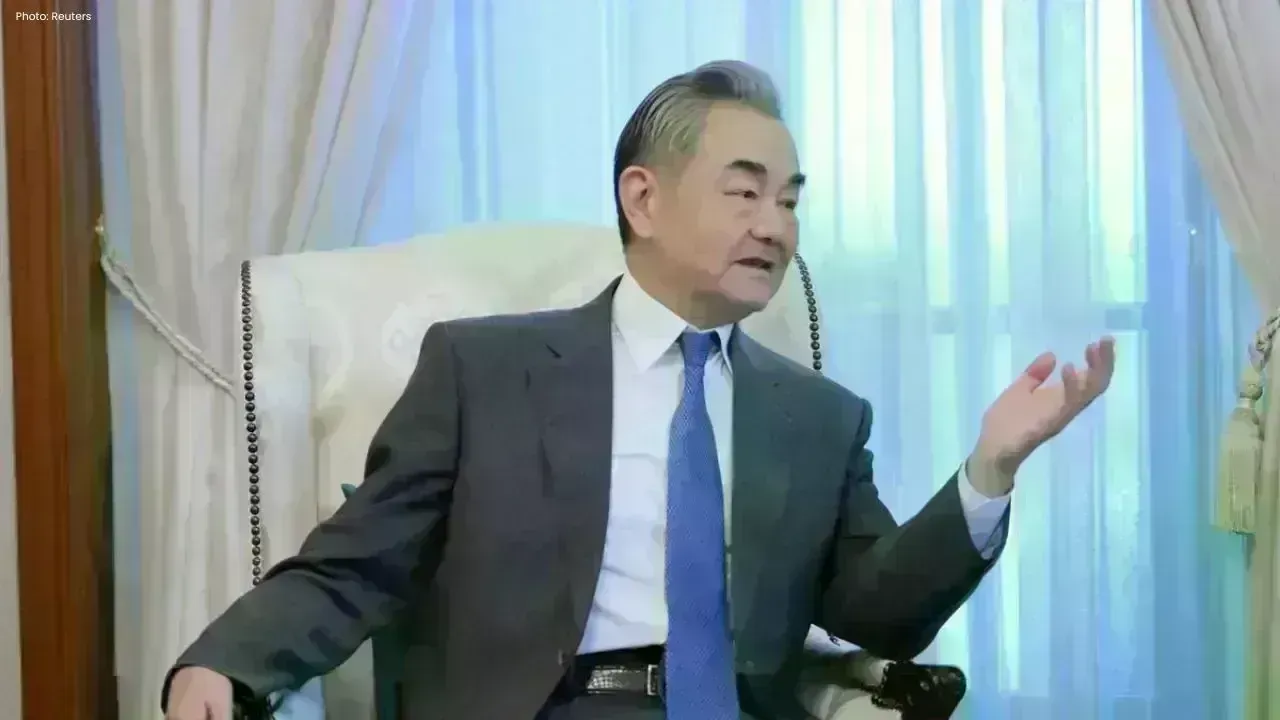
China has confirmed that Foreign Minister Wang Yi will not attend the upcoming BRICS Foreign Ministers’ meeting scheduled to take place in New Delhi on May 14 and 15. China’s Foreign Ministry stated that the decision was taken due to “scheduling reasons” and also indicated that no other senior Chinese representative would attend the important diplomatic gathering.
The absence of China’s top diplomat from the BRICS meeting has attracted international attention because the event comes at a time of major global political and economic developments. The meeting in New Delhi is expected to focus on international trade, geopolitical tensions, economic cooperation among BRICS nations, and global security issues. China’s absence at a high diplomatic level could influence the tone and direction of discussions during the summit.
The timing of the development is particularly significant because the BRICS meeting overlaps with the scheduled visit of U.S. President Donald Trump to China. Trump is expected to arrive in Beijing on May 13 for high-level talks with Chinese leadership. Analysts believe preparations and discussions surrounding the American President’s visit may have played a role in China’s decision to avoid sending its foreign minister to India during the same period.
Relations between India and China have remained sensitive in recent years due to border tensions, strategic competition, and regional influence in Asia. However, both countries continue to cooperate through multilateral platforms such as BRICS, which also includes Brazil, Russia and South Africa. Diplomatic observers say the absence of Wang Yi may not necessarily indicate a diplomatic breakdown, but it still sends an important political signal during a critical international meeting.
The BRICS Foreign Ministers’ meeting in New Delhi is expected to bring together representatives from member countries to discuss economic coordination, trade partnerships, technology cooperation, climate challenges and reforms in global governance institutions. India is expected to use the platform to strengthen cooperation among emerging economies and highlight the role of BRICS in shaping the future global economic order.
Chinese officials have not provided detailed explanations beyond citing scheduling conflicts. The Foreign Ministry in Beijing also did not announce whether a lower-ranking delegation would join the discussions virtually or in person. This has led to speculation among international observers about the diplomatic implications of China’s decision at a time when global powers are carefully balancing strategic partnerships and regional interests.
Political analysts believe the developments surrounding the BRICS meeting and Trump’s China visit reflect the increasingly complex geopolitical environment in Asia and across the world. As major powers continue to compete economically and strategically, international forums like BRICS are becoming more important for diplomatic coordination among developing nations. The coming days are expected to provide clearer indications about the direction of China’s diplomatic priorities and regional engagement.










PM Modi Pays Tribute to Mahatma Gandhi, Urges People to Support Khadi
PM Modi pays tribute to Mahatma Gandhi on Gandhi Jayanti and urges citizens to support Khadi and the

Amazon Seeks to Offload $8 Billion in Nvidia Chips to Investors
Amazon plans to move $8 billion in Nvidia chips to investors, using a new financing model to strengt

Samsung Raises Galaxy S26 Prices as Memory Chip Costs Rise
Samsung raises Galaxy S26 prices in South Korea as rising memory chip costs put pressure on smartpho

Lewis Hamilton Calls Singapore Grand Prix One of F1's Toughest Races
Lewis Hamilton discusses the demanding Singapore Grand Prix and brings Plus44 and Almave to Singapor

Denmark's Pandora Opens World's Largest Jewellery Factory in Vietnam
Pandora opens its largest jewellery factory in Vietnam, expanding global production, strengthening s

Gautam Gambhir Questions Batting-Friendly Pitches After India's Record ODI Chase
Gautam Gambhir questions batting-friendly ODI pitches after India’s record chase, calling for a bett

